The Cinémathèque Celebrates Marilyn’s 100th Birthday
- SUBSCRIBE
- ALREADY SUBSCRIBED?
BECOME A BONJOUR PARIS MEMBER
Gain full access to our collection of over 5,000 articles and bring the City of Light into your life. Just 80 USD per year.
Find out why you should become a member here.
Sign in
Fill in your credentials below.
Marilyn Monroe is turning 100 and the Cinémathèque Française is giving her a bash worthy of the forever young and sultry icon. The mega–exhibit runs nearly four months, from April 8 to July 26. To some, Monroe may seem a dated icon who belongs to the bygone universe of the 1950s and ‘60s (she died in 1962). For the French she’s a symbol of a kind of American womanhood they adore: full of life and physicality, with a sex appeal that obliterated American Puritanism, redolent of platinum and sequined glamour. Her two husbands were baseball legend Joe DiMaggio and playwright Arthur Miller, but the French are more attuned to her romance with JFK and affair with their own Yves Montand.
A short time ago ads with oversized close–ups of her face graced Paris bus–stops courtesy of the Marilyn Monroe Estate, still going strong after 64 years. Aside from the Cinémathèque, popular magazines are commemorating her centennial by putting her image on their covers. One offering I saw recently at a news kiosk was selling a supposed 3D likeness.
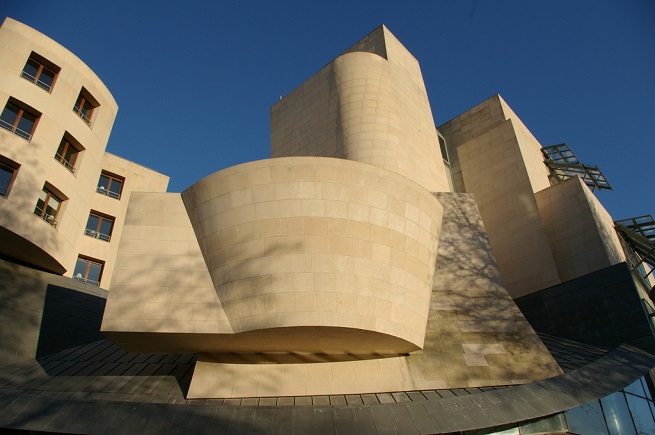
La Cinémathèque Française. Photo: Yann Droneaud/ Flickr
The woman born Norma Jean Baker, not quite blonde let alone platinum, came from Los Angeles and died there. Still, her life story evokes the origin myth beloved by the French, of the outsider who comes from the provinces to conquer the big city. She laid claim to the decade of the 1950s and quickly owned it, as much as Elvis Presley did. Hollywood had a bigger impact on 4th Republic France than rock–and–roll (Elvis imitator Johnny Hallyday emerged only in the early ‘60s). Her erotic aura — she seemed like Jung’s anima incarnate — drew others to her, but she in turn was fascinated by sources of power: sporting, intellectual, political and cultural, including the Old World charm of Montand (their affair tolerated by his redoubtable partner Simone Signoret).
She had her femme fatale side: three marriages ended in divorce, the Kennedy brothers died prematurely. Clark Gable, who met Monroe on the set
of The Misfits, gently demurred from a dalliance — he died soon after anyway. Death from a barbiturate overdose at age 36 completed a tragic pop myth of the dying American Century goddess.
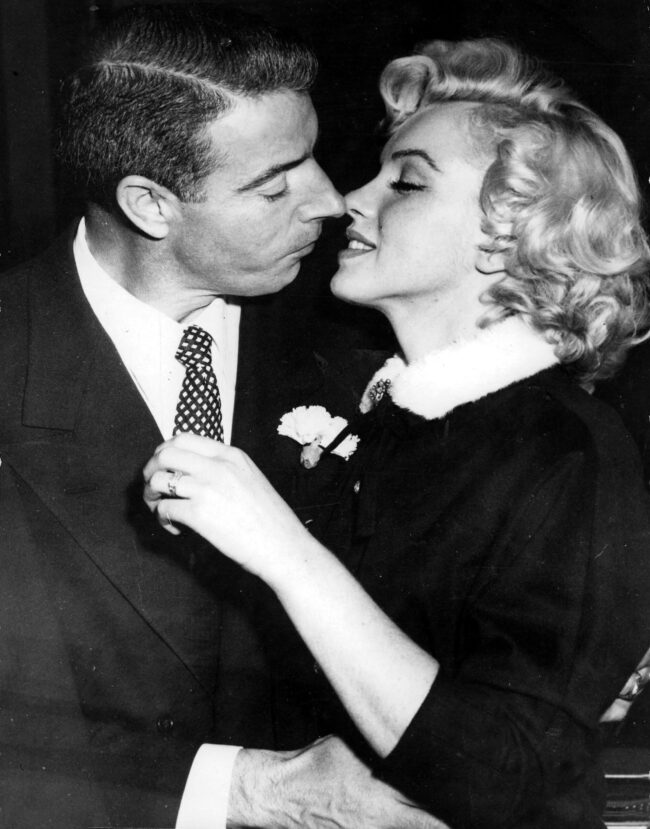
Monroe and Joe DiMaggio shortly after their wedding, January 1954. Public domain
The Cinémathèque calls all these myths into question. As curator Florence Tissot notes, Marilyn’s persona has served as a prismatic mirror describing those who would define her. For a certain Mad Men mentality she was a dumb blond whose attempts at being a serious actress, taking lessons from Lee Strasberg, only put her dumbness into greater relief. Today there are different prisms and mirrors, including those of feminism and the MeToo movement.
The exhibit is a massive and diverse affair, as impressive as the recent one dedicated to Orson Welles. There are clips from famous and obscure films, some on a large screen, and others on smaller screens with earphones. My favorite: a documentary montage created by Pier Paolo Pasolini, whose life had weird parallels to hers, and also died a tragic death.
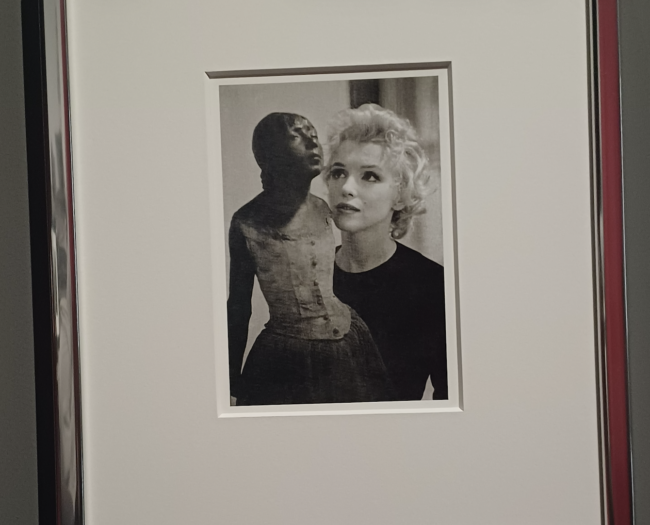
There are photos of every conceivable type: arty portraits, pin-ups, posters, press photos, movie stills, studio publicity shots. (Another personal fave: Monroe gazing hauntingly at Edgar Degas’ sculpture of a ballerina, The Little Dancer of Fourteen Years, one of those young girls exploited as she was.) There are old magazines with ads that featured her — we learn that her modeling career was longer than we thought. Also telegrams from studio officials about her latest films, contracts, pages from scripts. We see clothes from some of her films and also her personal wardrobe, as well as examples of popular appliances that she promoted.
Marilyn Monroe exhibit at the Cinémathèque Française. Photo: Dimitri Keramitas
The exhibit gives us a strong sense of how Monroe was an important symbol of the 1950s, but also subverted them. Many see the ’50s either as prosperous, conformist “happy days,” or in terms of McCarthyism, but there was an enormous cultural underground percolating as well. (Books published smack in the middle of the ’50s: On the Road, Invisible Man, The Adventures of Augie March, The Recognitions, Catcher in the Rye.) Monroe supported civil rights and was friendly with Ella Fitzgerald, struggled against oppressive studio contracts, and formed her own production company. She spent time away from Hollywood, in left-leaning New York circles, immersed herself in the Actors Studio.
There are some gaps: There’s not much on her family or her marriages. She had close friendships but we don’t learn about those, either. She had a complicated relationship with the photographer-producer Milton Greene (producer thanks to her), of which we get glimpses without much explanation.
The French take pride in seeing beyond the myths, to her genuine talent and intelligence. Another dimension of the Cinémathèque’s commemoration is a retrospective of what seems to be every film Monroe featured in, quite a number more than one would have thought. Taking center stage (as it were) are the obvious classics: Some Like It Hot, The Seven Year Itch, Gentlemen Prefer Blondes, How to Marry a Millionaire. Also the less-obvious classics like Love Happy (featuring the Marx Brothers), Monkey Business (with Cary Grant), All About Eve, The Prince and the Showgirl (with Laurence Olivier).
Interestingly, the films that first shot her to fame were in the film noir genre: Niagara, The Asphalt Jungle, Clash by Night. A conference about Monroe as an actress is being led by Marguerite Chabrol, who considers her as a “hybrid actress”, the result of the confluence of Hollywood tradition, modernity, the Actors Studio, and her own complicated personality. Three screenings (of Bus Stop, Niagara, and The Seven Year Itch) will be accompanied by talks. A showing of Home Town Story, a rare early film, will be introduced by Elias Herody.
See the Cinémathèque web site (www.cinematheque.fr) for more information.
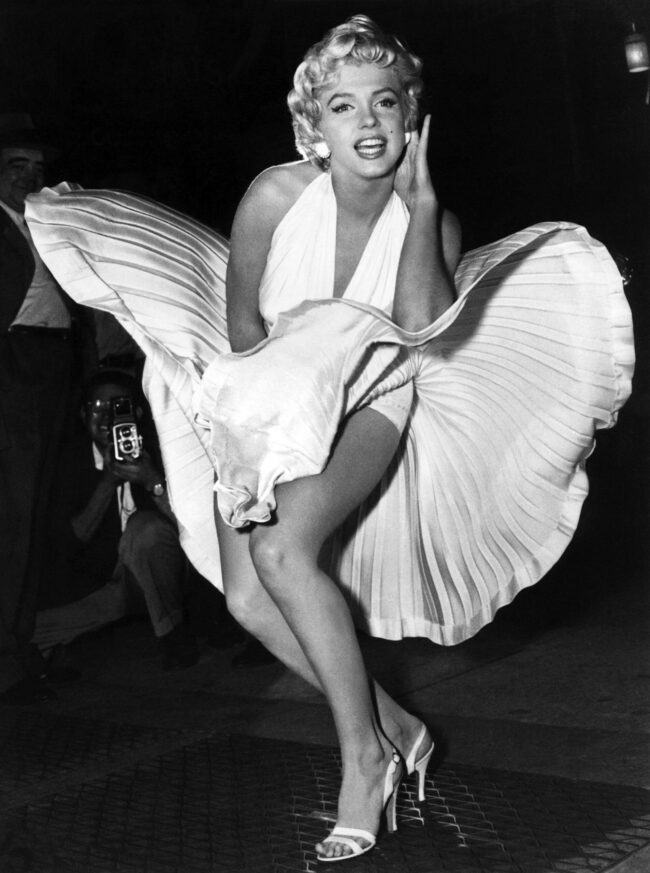
Monroe posing for photographers in “The Seven Year Itch” (1955). Public domain
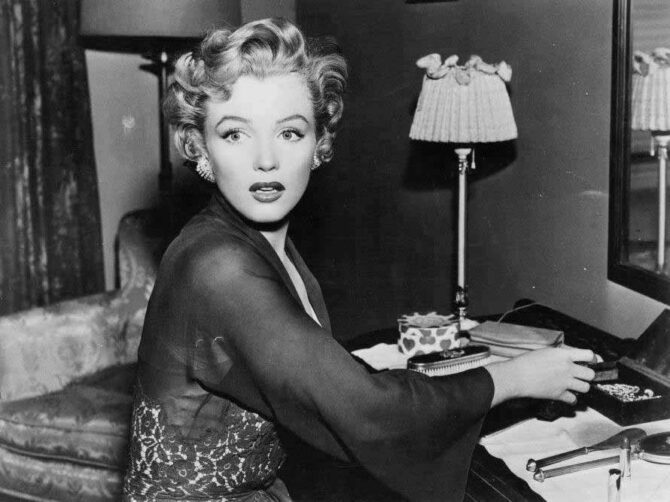
Lead photo credit : Marilyn Monroe in "Don't Bother to Knock" (1952). Public domain
More in La Cinémathèque Française, Marilyn Monroe
Related Articles