
Renoir and Love and a Soupçon of Jealousy
- SUBSCRIBE
- ALREADY SUBSCRIBED?
BECOME A BONJOUR PARIS MEMBER
Gain full access to our collection of over 5,000 articles and bring the City of Light into your life. Just 80 USD per year.
Find out why you should become a member here.
Sign in
Fill in your credentials below.
A deep dive into two iconic paintings on loan for the blockbuster Orsay exhibit
The Musée d’Orsay along with London’s National Gallery and the Museum of Fine Arts in Boston has gathered a small but important selection of works from Renoir’s early career for the exhibition Renoir and Love. Renoir’s La Grenouillère is on loan from Stockholm, Nationalmuseum, Les Parapluies from the National Gallery in London, La Promenade from the Getty Museum, La Danse à Bouvigal from the Boston Museum of Fine Arts, and the pièce de résistance, Le Déjeuner des canotiers on exceptional loan from the Phillips Collection in Washington. It’s the first time in 40 years that a Renoir retrospective has been organized in Paris. It runs until July 19, 2026.
The exhibition Renoir and Love highlights themes of romance, camaraderie, and modern life. Delving into two paintings that are on loan, we can examine Renoir’s thoughts of these attributes. Art history reveals that there are other emotions besides love hiding just beneath the surface. Love goes hand in hand with jealousy. Here’s a little about two of the paintings and their backstories.
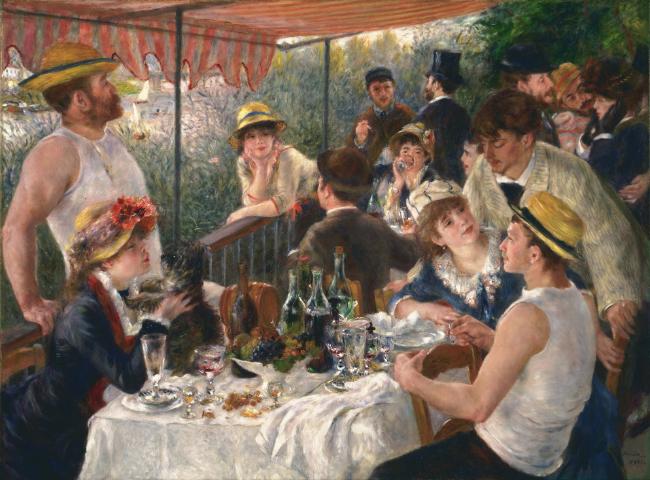
Le Déjeuner des canotiers, aka Luncheon of the Boating Party 1880-81, on loan from the Phillips Collection, is the antithesis of the squalor once found in Paris. With the decline of France’s rural population and the onset of industrialization, the city became a crowded hotbed of poverty and vice. Parisians abiding in wretched dwellings had to contend with polluted water, polluted air, and putrid odors.
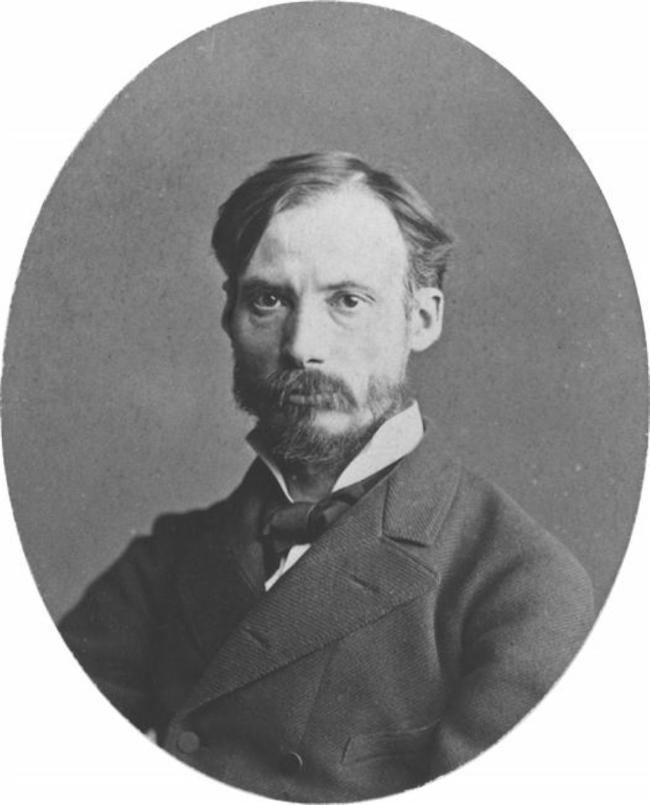
Pierre-Auguste Renoir, around 1875. author unknown. Musée d’Orsay, Dist. RMN-Grand Palais / Patrice Schmidt
Even if the subject was morally ambiguous, Impressionists were closely tied to painting the life they were familiar with. What was important for them was to catch the transient moment on canvas whether it be found backstage at the ballet, café concerts, cabarets, or bordellos.
Pierre-Auguste Renoir avoided the darker reality of urban Paris. He did not paint young ladies with their eyes dulled by absinthe as did his colleagues Degas (Absinthe) and Manet (The Plum). Subjects like beggars, prostitutes and their madames never made it on to Renoir’s canvases.
Renoir said, “To my mind, a picture should be something pleasant, cheerful, and pretty, yes pretty! There are too many unpleasant things in life as it is without creating still more of them.”
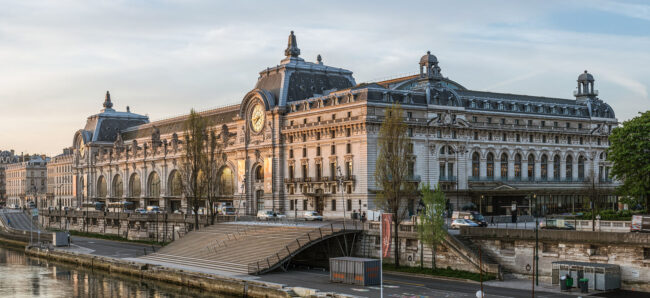
Exterior of the Orsay Museum. Photo credit: Daniel Vorndran/ Wikimedia commons
Between 1852 and 1870, Paris was redesigned to be a more liveable city. It became a rail hub linking the city center to the countryside. Pleasure-seeking Parisians found a way to escape the grind of the city by making day trips to the riverside suburbs of Bougival, and Chatou on the Île Saint Martin, where the air was fresh. The transient moment so important to the Impressionists now included uninhibited swimming, boating, and picnicking along the banks of the Seine. Renoir captured the conviviality of such a day at the Maison Fournaise in his Luncheon of the Boating Party.
The planning for this painting began in 1880. It was Renoir’s tribute to friendship, and the new-found suburban leisure. Though the painting gives the impression of the fleeting moment, this painting was composed over several weeks. On the terrace of La Fournaise, Renoir arranged 14 friends – models, and colleagues from a wide range of classes and occupations – to pose for his painting. By including celebrities and working women, sportsmen in singlets, and top-hatted gents, Renoir shaped an Eden of social harmony and in turn the universal notion of love. Renoir’s models included artist and patron Gustave Caillebotte, the son and daughter of the owner of the establishment, an editor, a journalist, an actress, and an artists’ model who was one step away from prostitution. Posed with her lapdog was a seamstress who made her own dress. She would one day become Madame Renoir.
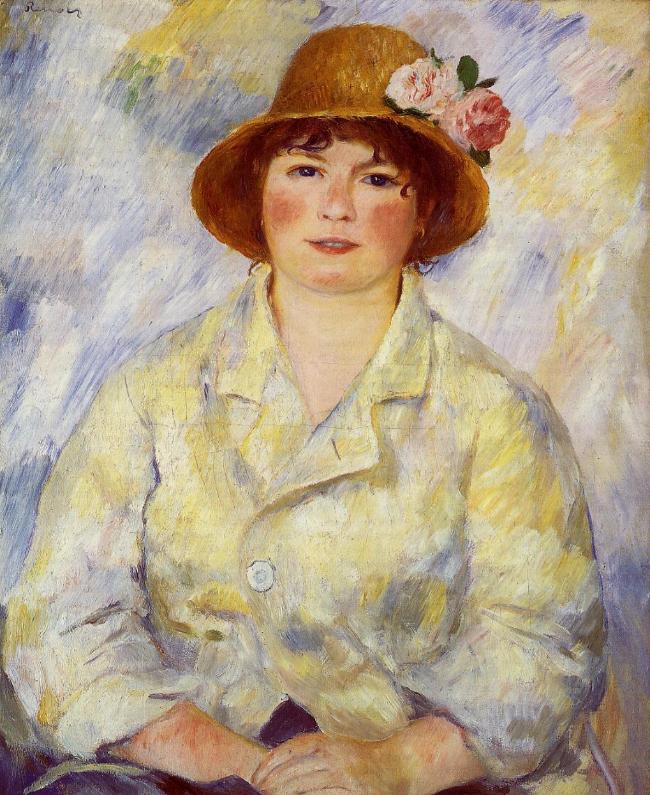
Pierre-Auguste Renoir, Portrait of Madame Renoir (c. 1885)
Aline Charigot arrived in Montmartre as a teen. A hard working and talented seamstress, Aline could have been self-sufficient, but family and social mores dictated she should find a husband. She met the painter Auguste Renoir at the cremerie on Rue St. George, opposite his studio. With his foxy looks and happy disposition, he was very appealing to the women of Montmartre, yet resistant to finding a wife.
Aline was Renoir’s ideal. He’d unwittingly been painting her likeness for years, because she fell within Renoir’s exacting parameters of what his models should look like. Their son Jean described how his father was attracted to a “cat” type of woman, with almond-shaped eyes, a kittenish tip-tilted nose and high cheekbones, all of which Aline possessed. She started modeling for him in 1880.
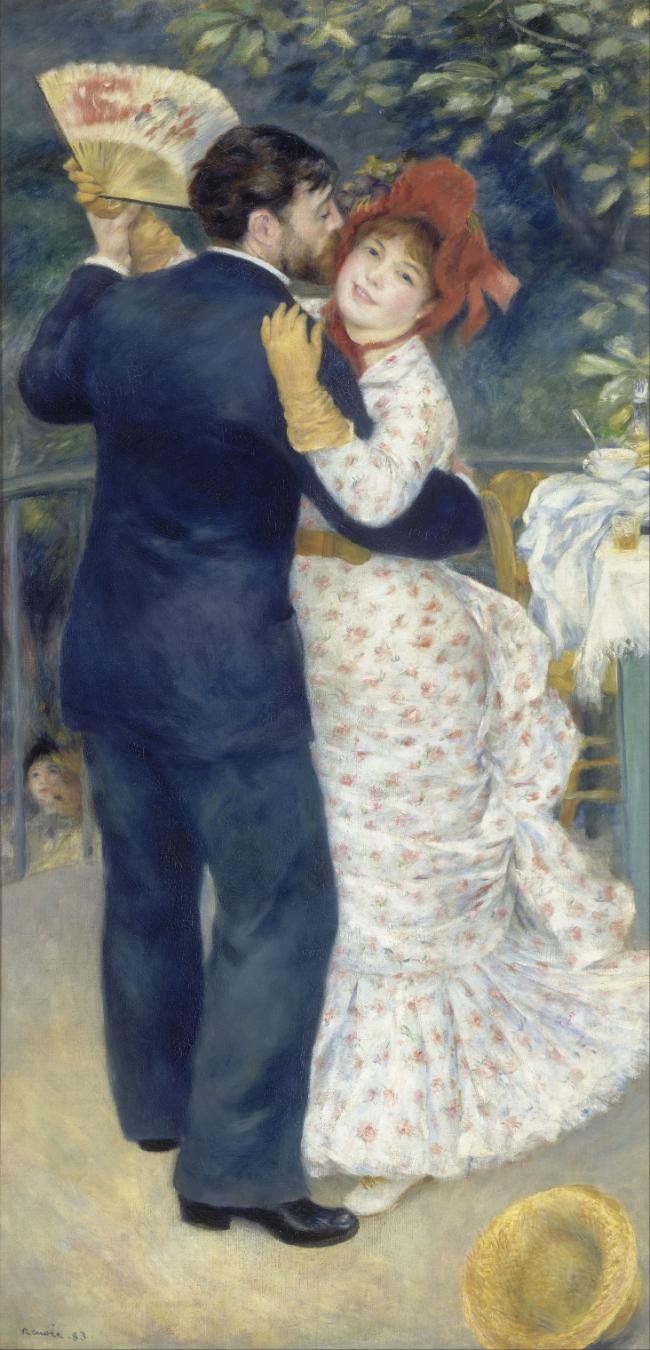
Pierre Auguste Renoir, Danse à la campagne (Country Dance), 1883
In October 1881, not long after he finished his joyous Luncheon of the Boating Party, Renoir left for a three-month trip to Italy in order to be reinvigorated by the great Italian masters. At 40, he was creatively blocked and felt he’d reached a dead end with Impressionism. Aline went with him, calling it their “honeymoon,” though they weren’t legally married for another nine years. Yet most of Renoir’s colleagues were unaware that he had romantic entanglements of any sort. Why did Renoir play his cards so close to his chest? Was the sly Renoir still playing the field? Yes. The Montmartroise still swarmed around the handsome Renoir. His relationship with Aline ran hot and cold.
Upon his return from Italy, and extending into 1883, Renoir created three paintings of dancing couples. Describing the modern sociability, each represented a different locale and their nuances. The Dance in the City showed a refined and restrained couple, the woman dressed in shimmering white taffeta. The Dance in the Country illustrated a festive rural party, with the female partner wearing a dress of printed calico. The Dance at Bougival, another riverside retreat, perhaps an hour’s walk from the Maison Fournaise, was a middle ground, which showed an everyday couple. Not overly sophisticated, but dressed a la mode, they enjoyed the frisson of the dance.
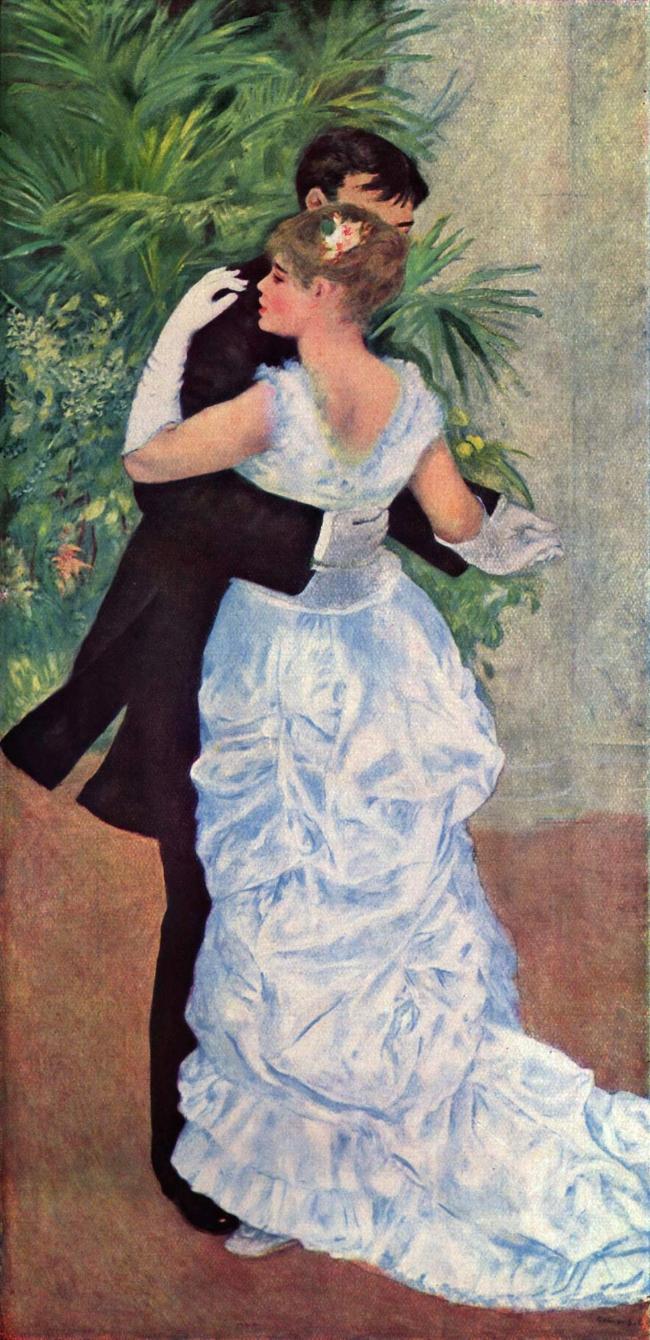
Pierre-Auguste Renoir, Dance in the City, 1883, Musée d’Orsay
They were a triptych, intended to be displayed together. Dance in the Country and Dance in the City are in the Musée d’Orsay’s permanent collection; The Dance at Bougival, the third in the series, is temporarily reunited with them in the Renoir and Love exhibition.
Paul Lhôte, a model, hidden at the back of the Boating Party, was the discreet dancing partner. The female model for each, or at least two and a half of these paintings, was the exquisite Suzanne Valadon.
An independent spirit who would go on to be an artist in her own right, Suzanne Valadon was busy as an artists’ model in the 1880s. Valadon’s creamily, delicate looks fit right in with Renoir’s roster of models and he employed her several times, most notably in his series of “Dance” paintings when she was 18. Adept at self-promotion, Valadon claimed that Renoir succumbed to her charms.
John Storm, in his biography The Valadon Drama quotes the model as saying “he (Renoir) fell in love with me,” and that “at Bougival he painted me for his famous picture.” Renoir most likely painted Valadon in his studio, but it does sound like she would like to be associated with Renoir’s favorite riverbank setting.
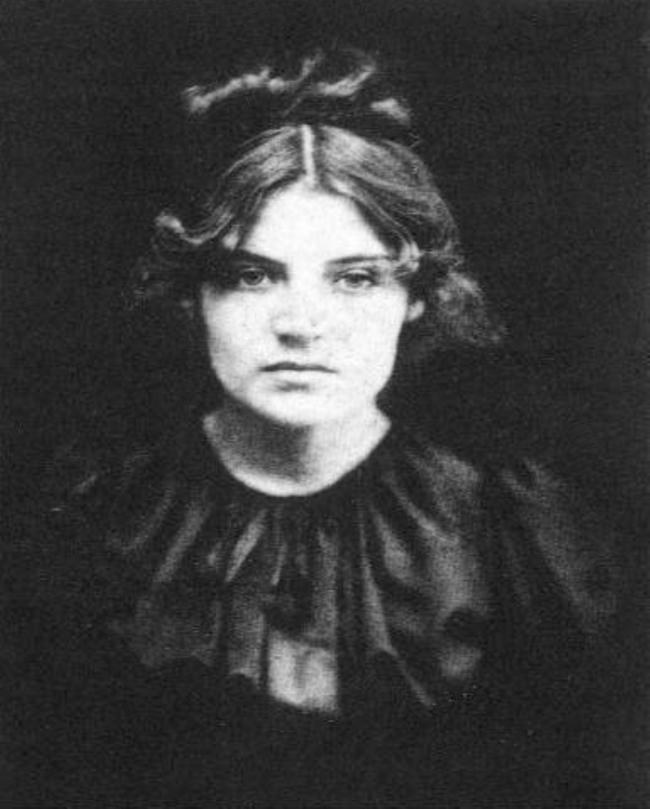
Photo of Suzanne Valadon (1865-1938), painter and model. Author unknown. Public domain.
Valadon was the intended model for all three “Dance” paintings. When Dance in the City, and Bougival were complete, Valadon posed for the third in the series, but rumors of an affair so incensed Renoir’s betrothed, Aline Charigot, that, in a pique of jealousy, she scraped Valadon’s painted face off the canvas and entreated Renoir to replace it with her own. Plump Aline appeared to mock Suzanne from Dance in the Country. Suzanne harbored a life-long dislike for Madame Renoir.
It wasn’t just a rumor, Renoir and Suzanne did have an affair. John Storm in his 1959 memoir of Valadon says that Renoir was “uncommonly handsome, and exuded amiability, fun and boundless love.” In his melodramatic prose, John Storm’s “boundless love” could be describing a man who kept many women on a string. Storm said that Renoir would bring posies to the door of Suzanne’s tenement room in rue Poteau, and that when he strolled about Montmartre with Suzanne at his elbow, she was the envy of all the girls.
Suzanne accompanied Renoir to Guernsey, allegedly to model during a five week working holiday. In September of 1883, word came that Aline was fast approaching the Channel island. Renoir beseeched Suzanne Valadon to instantly pack up and leave.
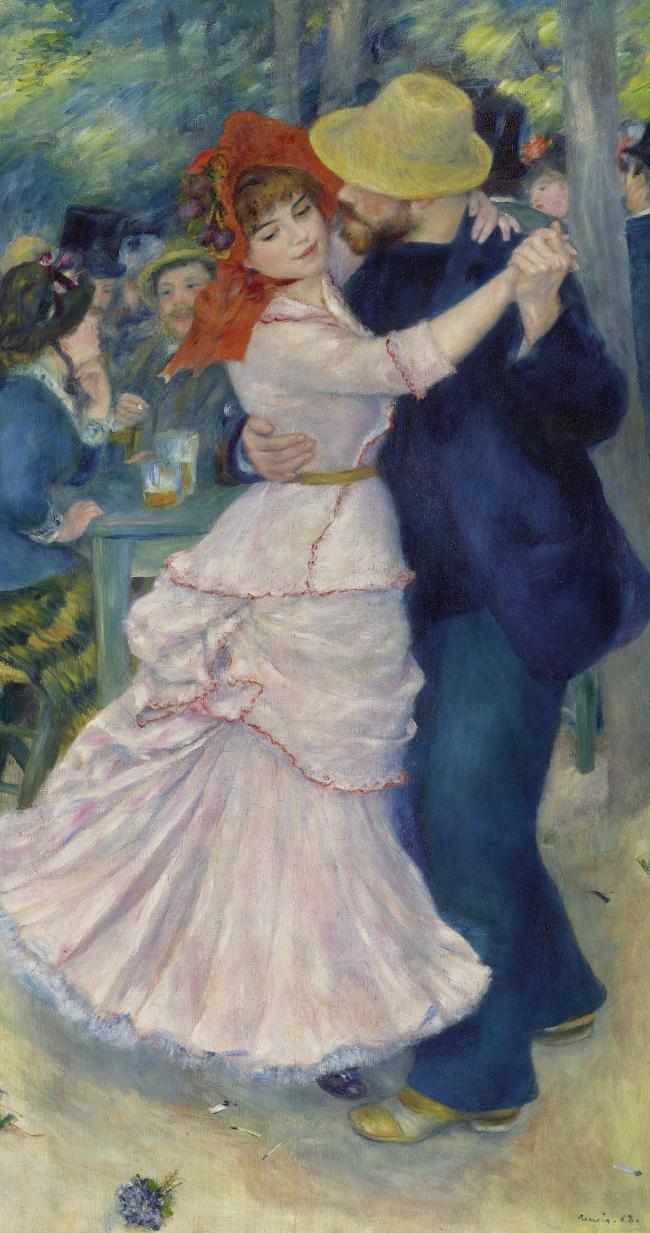
Pierre-Auguste Renoir, Dance at Bougival, 1883, Museum of Fine Arts, Boston
By that time, 18-year-old Suzanne Valadon was pregnant. The Dance at Bougival was painted in the spring of 1883, and Suzanne Valadon’s son Maurice was born December 26, 1883. Maurice’s legal father, Miguel Utrillo, put forth the idea that any number of men could be Maurice’s biological father. The math fits that Renoir could have been a contender.
However, Suzanne remained ambiguous regarding the paternity of her own son.
In 1885, Aline Charigot gave birth to the couple’s first son. In 1890, she and Renoir would legally marry. They leased a wing of the Château des Brouillards at 13 rue Giradon. Renoir was now surrounded by a convivial buzz of daily life. His family grew to include three sons and a long list of models, nannies and maids. Aline posed for her husband for over 30 years.
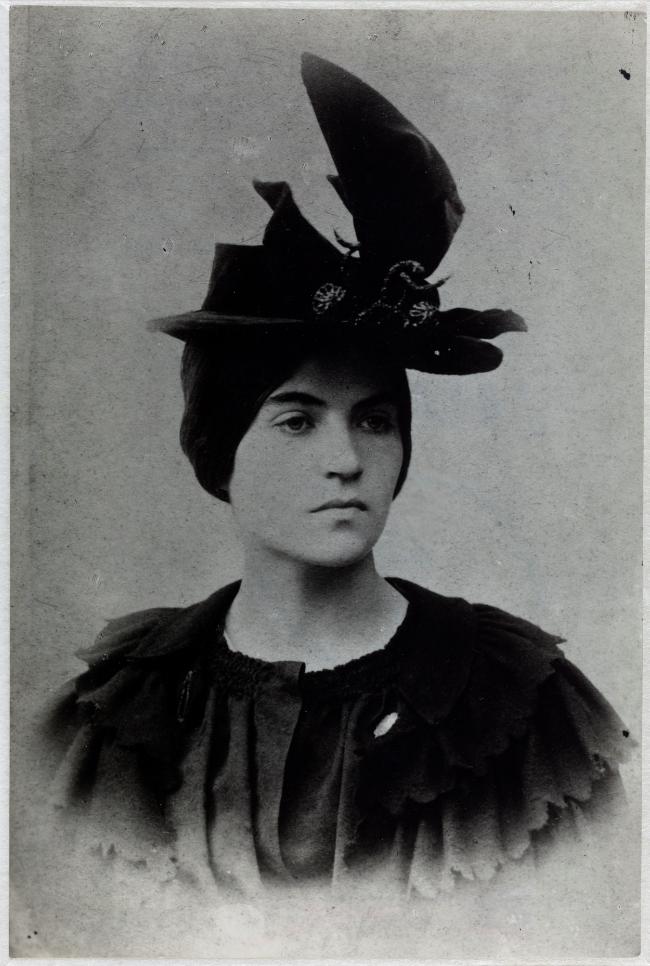
Suzanne Valadon circa 1885, author unknown
Lead photo credit : Pierre-Auguste Renoir, Luncheon of the Boating Party
More in Luncheon of the Boating Party, Musée d’Orsay, Renoir
Related Articles

REPLY