Metro Magic: Liège, A Tiled Tribute to Franco-Belgian Friendship
- SUBSCRIBE
- ALREADY SUBSCRIBED?
BECOME A BONJOUR PARIS MEMBER
Gain full access to our collection of over 5,000 articles and bring the City of Light into your life. Just 80 USD per year.
Find out why you should become a member here.
Sign in
Fill in your credentials below.
This is the 10th in a series of stories about the wonders of the Paris Metro System.
I’m a bus person. I like seeing the world go by at street level — the fleeting character studies, the fashion trends, the familiar monuments, the river, the bridges, the dog (and cat) walkers.
And, fortunately, I’m usually not in a hurry.
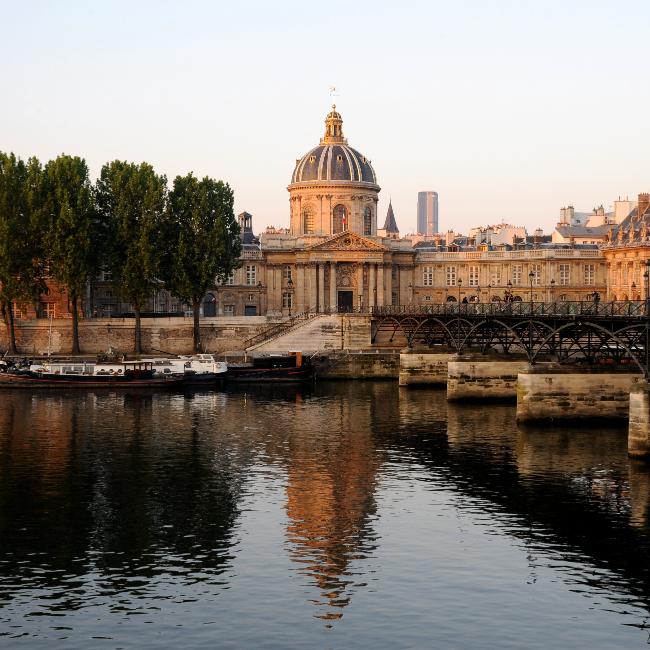
The bus perspective. © Meredith Mullins.
There are good reasons in Paris, however, to take the metro. It’s faster, given the ongoing traffic issues in central Paris. The underground tunnels offer music from RATP–auditioned musicians.
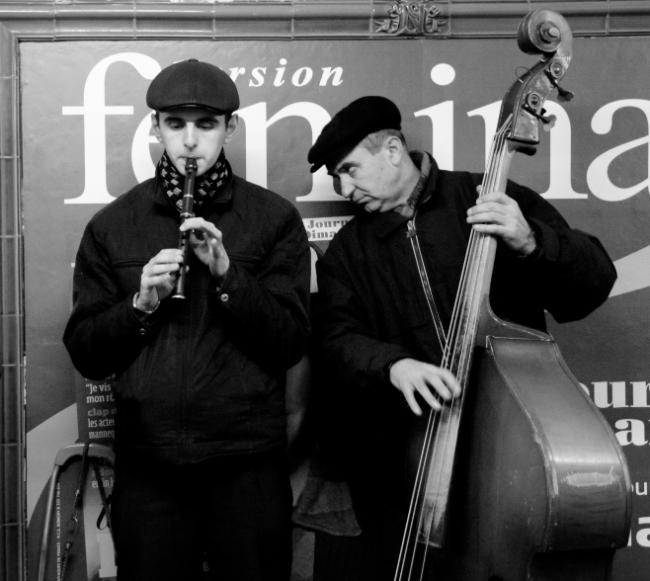
Metro musicians. © Meredith Mullins.
And large-scale ads tell you what’s going on in town, what to buy, and who to see.
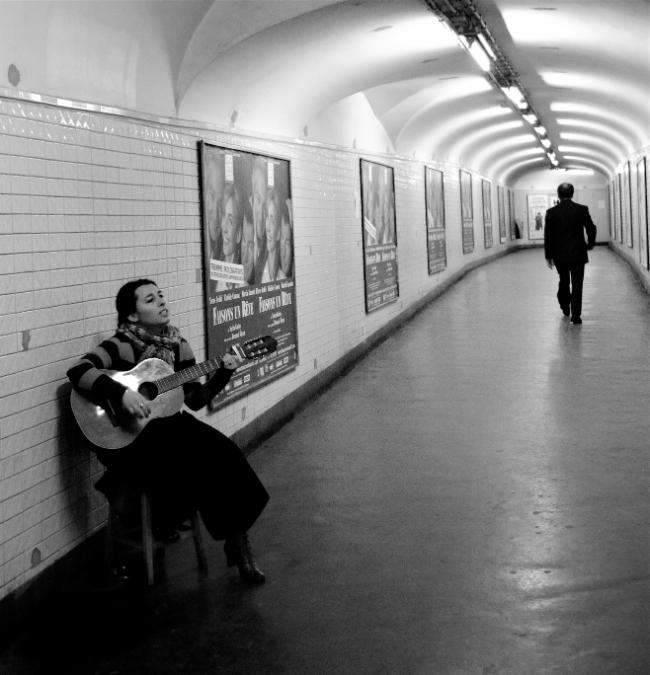
Music and marketing. What more could you ask for? © Meredith Mullins.
As an added bonus, there are hidden metro station gems that provide historic and artistic respite from the transport grind.
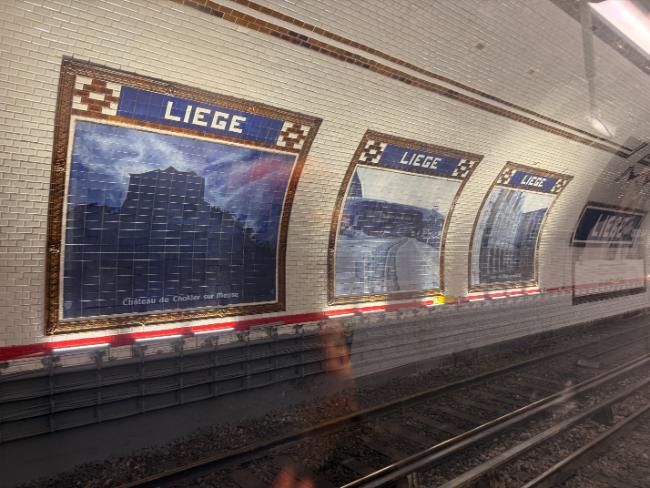
The treasures of the Liège Metro (northbound). Photo © Meredith Mullins
One of these Metro Magic treasures is Liège, on Line 13 between the 8th and 9th arrondissements, under the rue d’Amsterdam, near Gare Saint-Lazare.
The station is unique in many ways, but the key highlight is its salute to Franco-Belgian friendship through a series of ceramic frescos of Belgian land and life — some dark and haunting and some more contemporary, reminiscent of the warm palette of 1950s travel postcards.
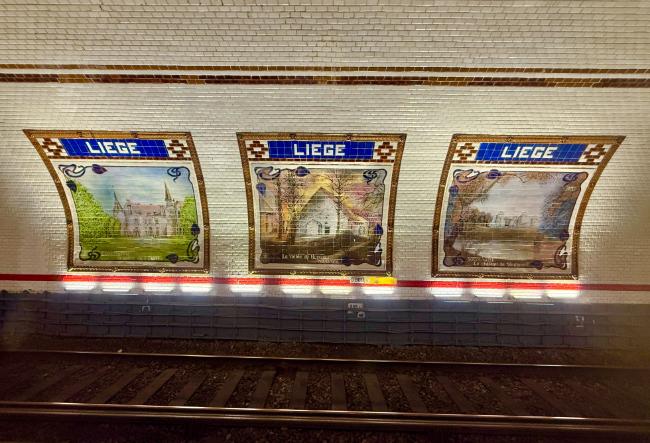
The “gallery” of the Liège Metro (southbound). Photo © Meredith Mullins.
The tile frescos show landscapes and monuments from the province of Liège in Belgium. Liège was the site of the first major battle when the Germans invaded Belgium in World War I and faced courageous resistance.
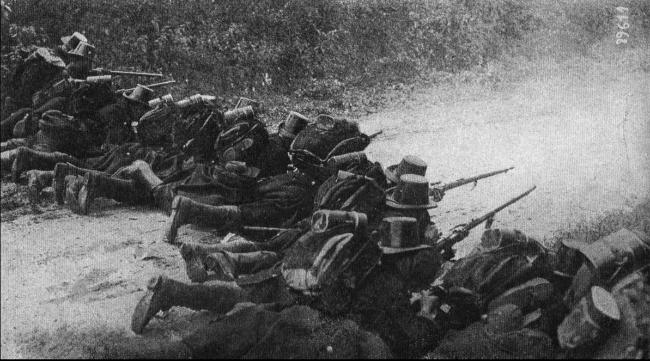
The Belgian forces in the Battle of Liège (WW I). Public Domain.
The Beginning
The Liège station opened in 1911 with the name Berlin. As World War I began, the station closed. When it reopened after the war, the station and the street nearby were renamed Liège (since Germany was, shall we say, country non grata). The new name honored the Belgians’ fierce fight against the Germans at the beginning of the war.
The station became a phantom station again at the start of World War II and remained closed until 1968, when it reopened with limited hours.
In 1982, the 18 Welkenraedt ceramic panels decorating the station’s curved walls were created by two artists from Liège to pay tribute to their province.
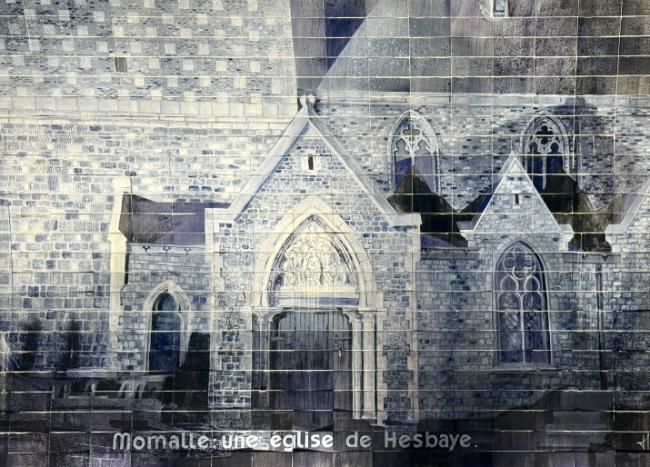
Daniel Hicter’s Hesbaye Church in Momalle (northbound platform). Photo © Meredith Mullins.
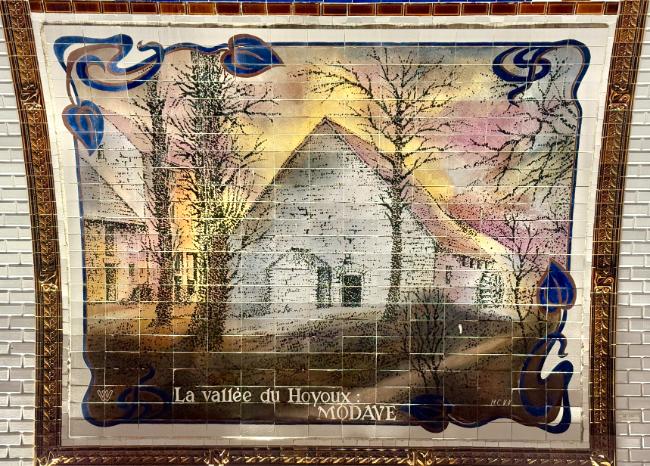
Marie-Claire Van Vuchelen’s Valley of Hoyoux in Mondave (southbound platform). Photo © Meredith Mullins.
An Exceptional Station Design
Liège is one of the few metro stations with separate platforms rather than facing platforms because of the narrow street above. The unique design of the station gave each artist a “gallery” of their own for their nine panels.
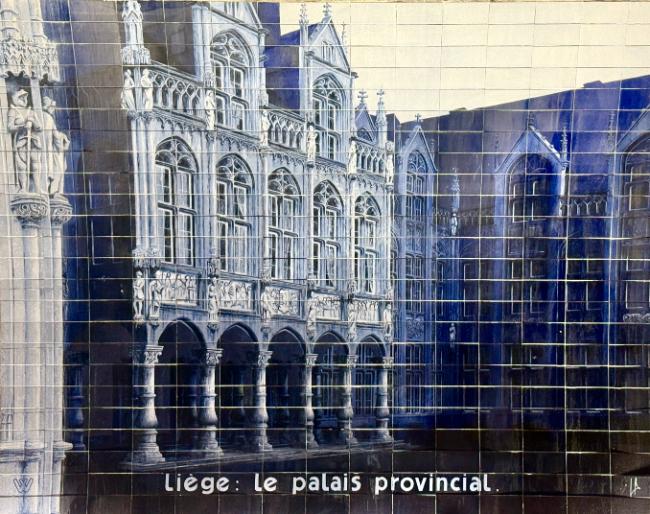
Daniel Hicter’s Palace Provincial in Liège (northbound platform). Photo © Meredith Mullins.
The Northbound Platform
The northbound platform (toward Asnières-Gennevilliers/Les Courtilles/Saint Denis) features nine frescos of well-known churches, castles, and villages of the province created by Daniel Hicter.
He chose a palette of blue and white for his tiles, reminiscent perhaps of Delft ceramics (or perhaps Portuguese azulejos tiles), presenting a timeless and somewhat somber Flemish feeling.
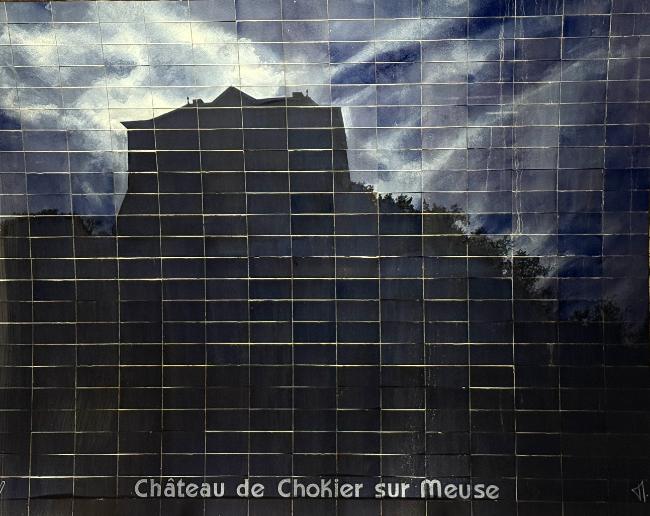
Daniel Hicter’s Chateau de Chokier, overlooking the Meuse River. Photo © Meredith Mullins.
He pays homage to the Coo twin waterfalls in the Amblève Valley — the highest natural waterfall in Belgium.
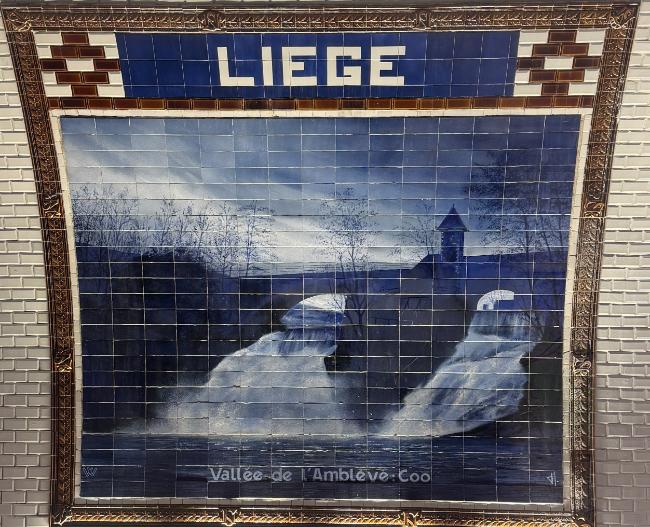
Daniel Hicter’s Coo Waterfalls in the Ambleve Valley. Photo © Meredith Mullins.
Hicter’s choice of a famous auto racetrack seems somewhat out of place, but does add a modern touch to Liège’s history.
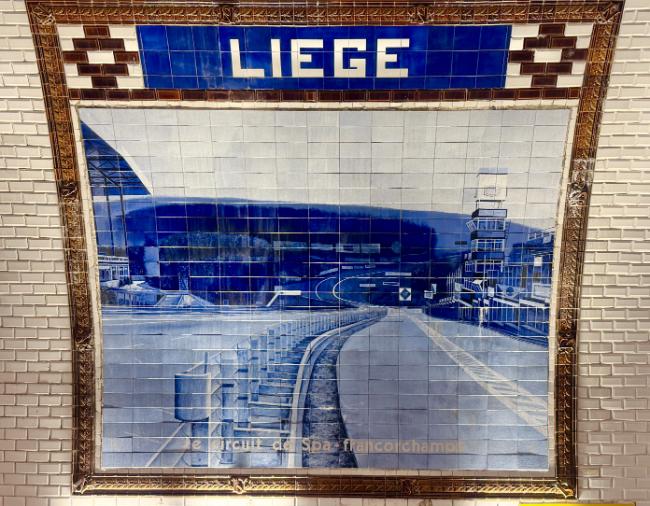
Daniel Hicter’s Spa-Francorchamps racetrack. Photo © Meredith Mullins.
The monumental lion (300 tons) rises proudly on the Le Barrage de La Gileppe (dam), an iconic Liège landmark.
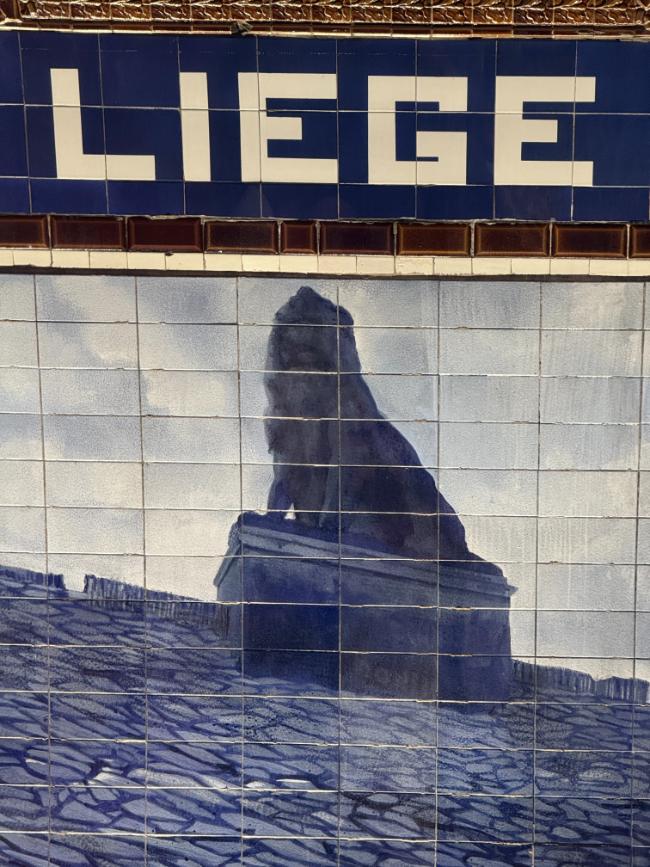
The proud lion on Daniel Hicter’s Le Barrage de La Gileppe. Photo © Meredith Mullins.
The Southbound Platform
The southbound platform (toward Châtillon-Montrouge) features nine works created by Marie-Claire Van Vuchelen (the first woman artist to be represented in the Paris metro).
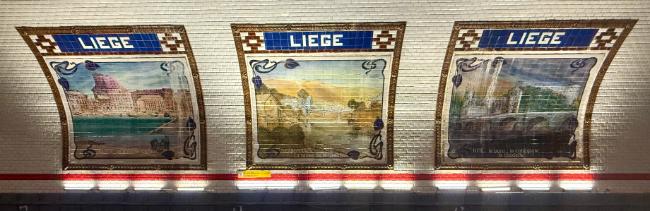
Detail from Marie-Claire Van Vuchelen’s southbound platform wall. Photo © Meredith Mullins.
These panels are in color with a warm (yellow, ochre, brown) palette, introducing an interesting contrast in artistic styles and moods between her approach and the more classical (heavier) Flemish style of Hicter.
She portrays castles, town halls, and rural village life of the province in semi-pointillist style.
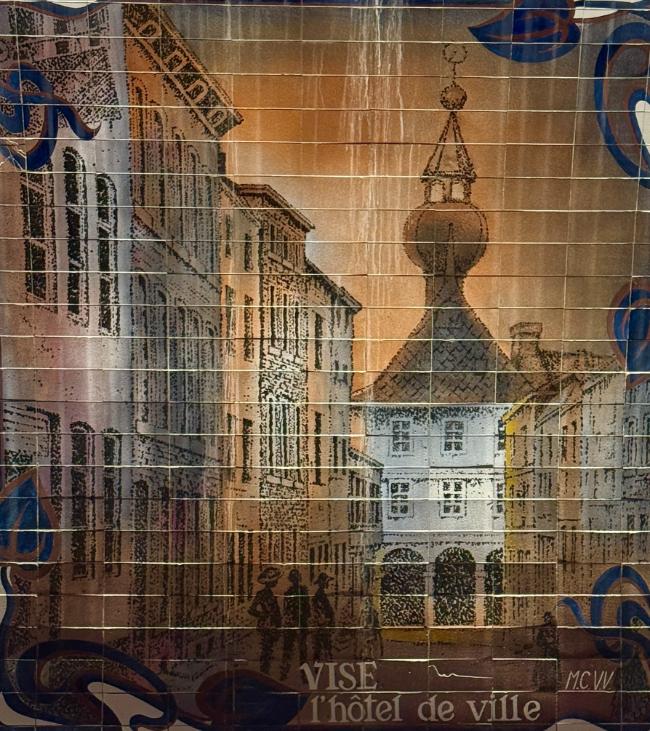
Marie-Claire Van Vuchelen’s Town Hall in the charming town of Visé on the Meuse River. Photo © Meredith Mullins.
The Chateau de Wégimont is a renaissance castle that played a somber role in WWII as a Lebensborn (Fount of Life) Nazi SS maternity hospital for the children who met Aryan standards.
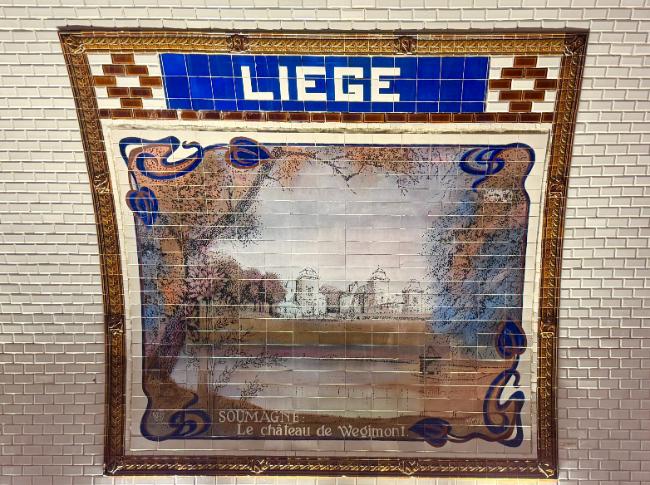
Marie-Claire Van Vuchelen’s Chateau de Wégimont in Soumagne. Photo © Meredith Mullins.
Van Vuchelen portrayed several charming rural scenes in her panels.
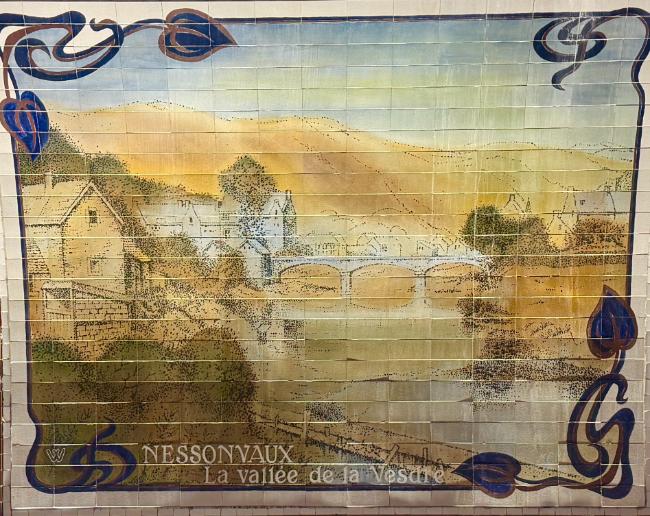
Marie-Claire Van Vuchelen’s Valley of the Vesdre river near Nessonvaux. Photo © Meredith Mullins.
The Grand Curtius is a museum of archaeology and decorative arts on the banks of the Meuse River in Liège.
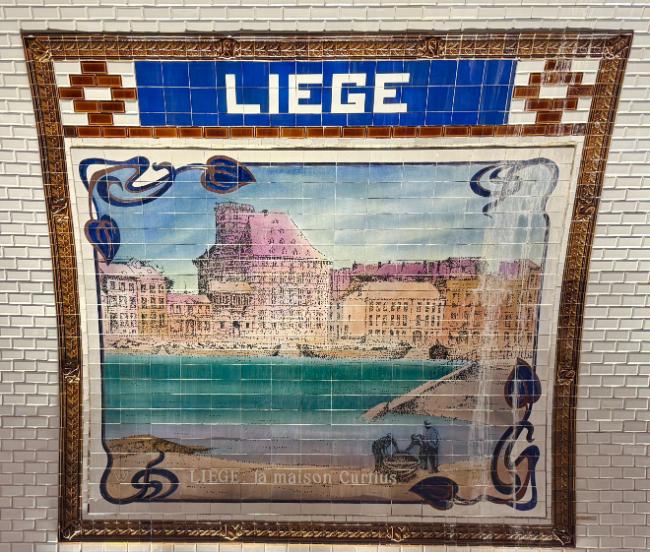
Marie-Claire Van Vuchelen’s La Maison Curtius. Photo © Meredith Mullins.
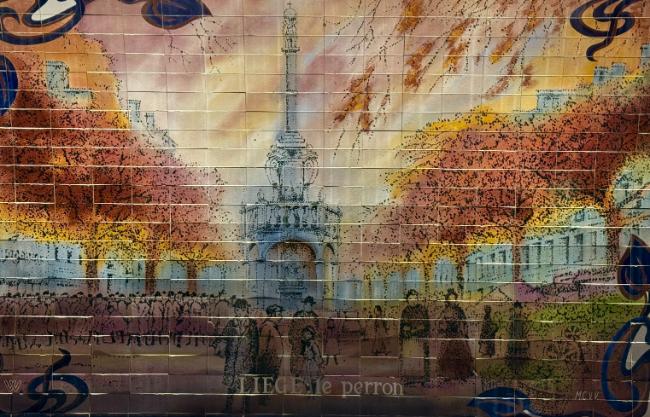
The Perron column/fountain is an important symbol of liberty in Liège.
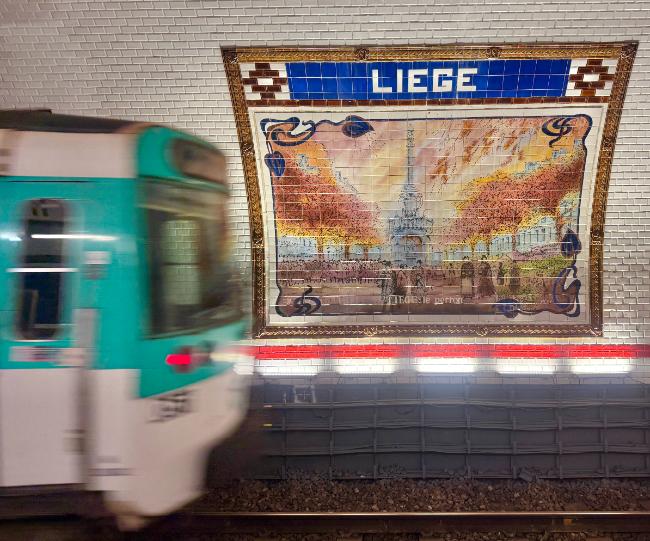
Marie-Claire Van Vuchelen’s Perron fountain monument in Liège. Photo © Meredith Mullins.
The Station Agent
Other unique features of the Liège station are the old-fashioned agent kiosks on both the northbound and southbound platforms.
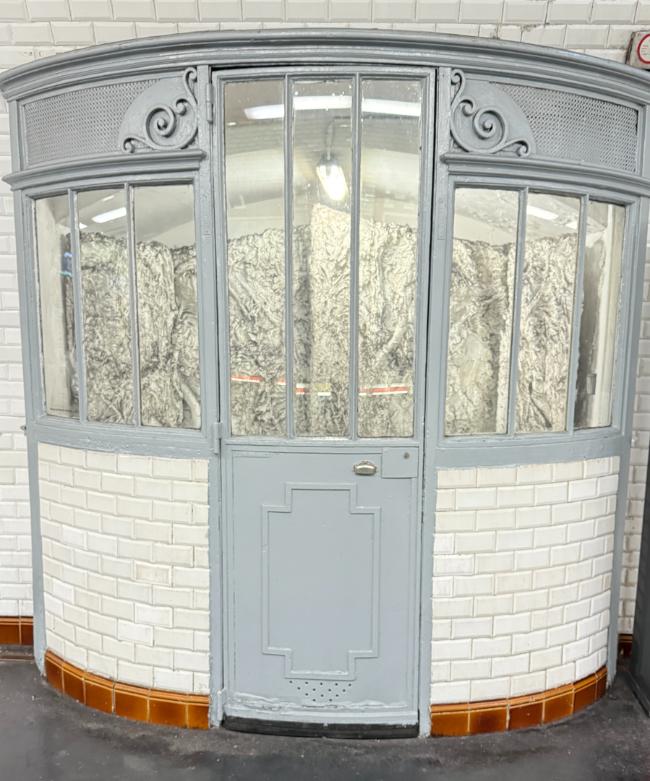
The station agent’s kiosk. © Meredith Mullins.
The agent station on the southbound platform tells the story of the agent who made a study of how many different ways the word Liège could be pronounced. As his project became urban legend, frequent travelers would intentionally ask him what station they were in to hear the “pronunciation of the day.”
As a tribute to this quirky agent, his hidden doodles and pronunciations were collected and entered into the repertoire of the l’Ensemble de musique Vocale Contemporaine de la RATP.
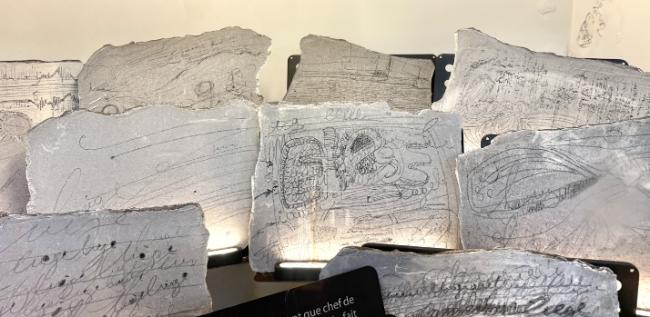
The “music” of the Liège metro station. © Meredith Mullins.
Are You Coming or Going?
Since the southbound and northbound metro platforms at Liège never meet, to see both of the Liège artists’ work, you must spend some time in the station wandering between the two “galleries.” And, interestingly, in this uniquely designed station, you can see the southbound train zoom by (without stopping) from the northbound platform and vice versa. There’s room for a track but not a platform.
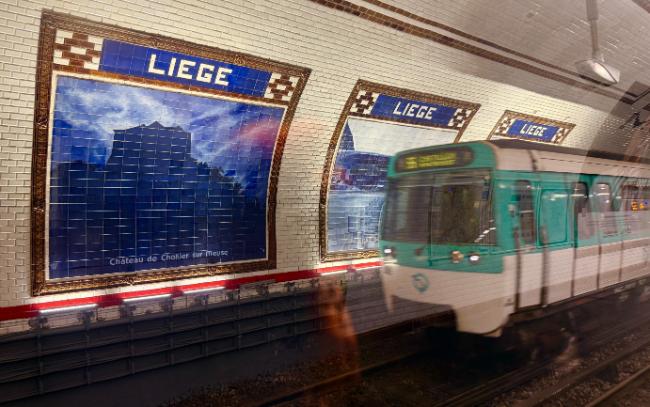
Is this a “ghost” train or just Line 13 speeding south? © Meredith Mullins.
Sadly, the modernization of the metro lines makes viewing these interesting tileworks difficult, especially with the automatic doors and high glass composite barriers. A shame … because the frescos transport you, for a moment, to Belgium … and are worth the journey.
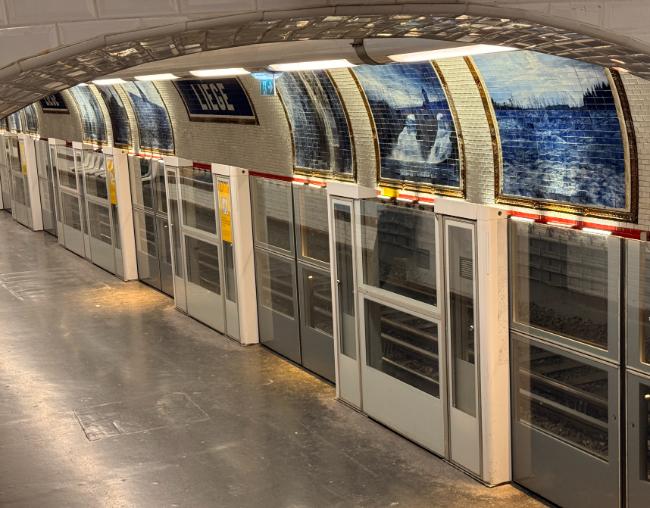
The challenges of modernization. © Meredith Mullins.
Lead photo credit : Liège Metro Station Fresco by Marie-Claire Van Vuchelen. Photo © Meredith Mullins.
More in Metro magic
Related Articles