
Buying an Apartment in Paris: Part I

Searching for and finding the Paris apartment of your dreams can be an incomparable adventure. But there are challenges!
Perhaps you’ve already been perusing websites and you have your favorite quartiers. Where to begin your search in earnest? What might you need to know to maximize your chances for a successful offer, while avoiding future pitfalls?
Here are 5 insider tips to help you move forward. This is the first article in a two-part series. To read the second article, click here.
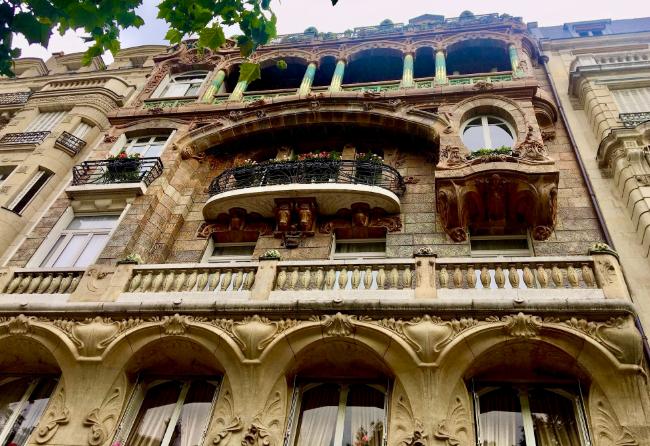
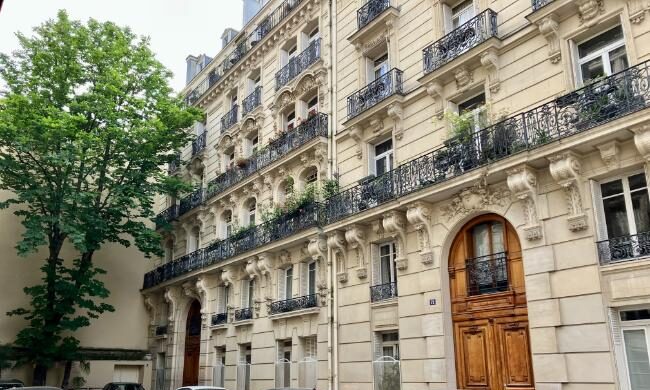
Example of a Parisian building. Photo: Ellen Aragon
- FOCUS ON FRENCH REAL ESTATE VOCABULARY
On French websites like Se Loger, Le Bon Coin and Bien’ici, you will encounter terms that may initially be unfamiliar, yet are essential to an informed purchase. Here are some of the most important:
“Climatisation” (Air conditioning) – A rare commodity. If it is not mentioned in the ad, then it is not provided.
“Ascenseur” (Elevator) – If not mentioned, you’ll be taking the stairs.
“Rez-de-chaussée” or “RDC” (Ground floor) – The RDC is floor 0, not the 1st floor. So, when an apartment is said to be on the 3rd floor, remember that it will be the 4th floor by American reckoning.
“Pièces” (Rooms) – Apartments are often described as having “X” number of “pièces.” The “pièces” include rooms such as the salon, maybe a dining room or an office, and the number of bedrooms. The “pièces” do not include the kitchen, bathroom, hallway, or toilets. For example, an apartment of “3 pièces” is therefore likely to have a salon and two bedrooms, or sometimes a salon, one bedroom and a dining room that could arguably be closed off to create a second bedroom.
“Loi Carrez” (Carrez law) – By this law in France, each real estate ad for a condominium is required to indicate the livable square meters of the apartment. For this purpose, the legal floor space in an apartment includes only the number of square meters where there is at least 1.80 meters of height from the floor to the ceiling. Consequently, floor space in a room with slanted ceilings can only be partially included, and mezzanines where a person may not be able to stand upright cannot be included at all. Stairwells are not included, and neither are balconies or terraces unless they are enclosed.
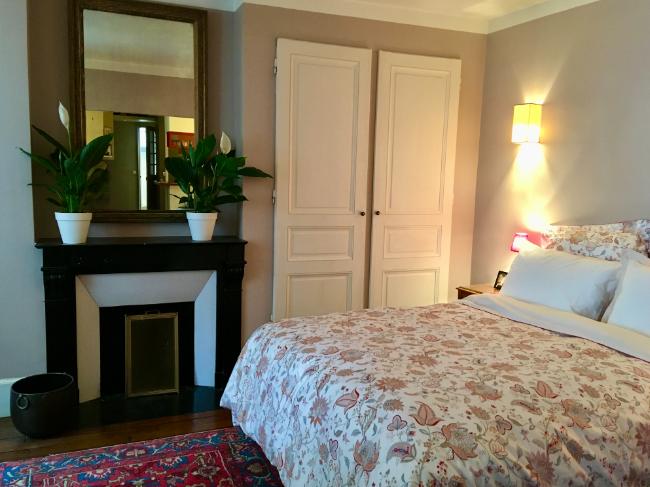
A sample Parisian bedroom. Photo: Ellen Aragon
“Mètres carrés” (Square meters) – If you’re accustomed to thinking in square feet rather than square meters, one square meter equals approximately 10.76 square feet. When reading property descriptions, you can just multiply in your head by 10 or 11 to get a fairly good idea of square footage.
“DPE” or “Diagnostic de performance énérgetique” (Diagnostic of energy performance) – An evaluation of each property required to be done by specified professionals who rate its energy performance in terms of efficiency of energy use, as well as the emissions of greenhouse gases. “DPE” ratings run from A to G, with A being most desirable, representing a lower cost and waste of energy and lesser emissions of greenhouse gases. Properties with ratings of F or G may require renovation or insulation to meet standards, particularly if you wish to rent out the property at all.
“Cuisine américaine” (‘American’ kitchen) – Refers to a kitchen more or less open to the living area and usually equipped with some cabinets and basic appliances (a “cuisine aménagée”). Despite the “American” moniker, there’s no guarantee of a large refrigerator or granite countertops!
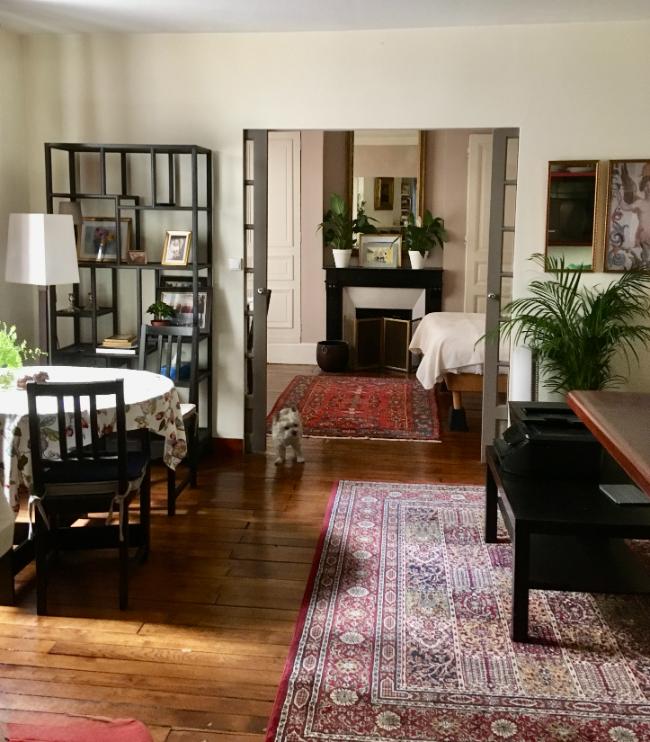
A sample Parisian living space. Photo: Ellen Aragon
“Prévoir travaux” (Plan for works) – Proceed with caution! A charming apartment that requires “travaux” (improvements or construction works) might seem like a bargain, but may wind up needing tens of thousands of euros in electrical, plumbing and insulation work to render it safe and liveable. You may want to get estimates (“devis”) for necessary work before you make an offer.
“Dans son jus” (literally “In its juice”) – This is a tipoff that the place may not have been updated since Valéry Giscard d’Estaing was president of France. Yikes! Expect unknown costs for a complete renovation.
“Sanibroyeur” (Macerating toilet) – A “sanibroyeur” is a toilet with an electrical component and blades that are supposed to pulverize the solids so that all can be eliminated through a smaller pipe that is not really designed to be a toilet waste pipe. Stomach turning stories of noise, smell, and disasters caused by “sanibroyeurs” are plentiful, so you most likely want to avoid them. They are forbidden in new construction.
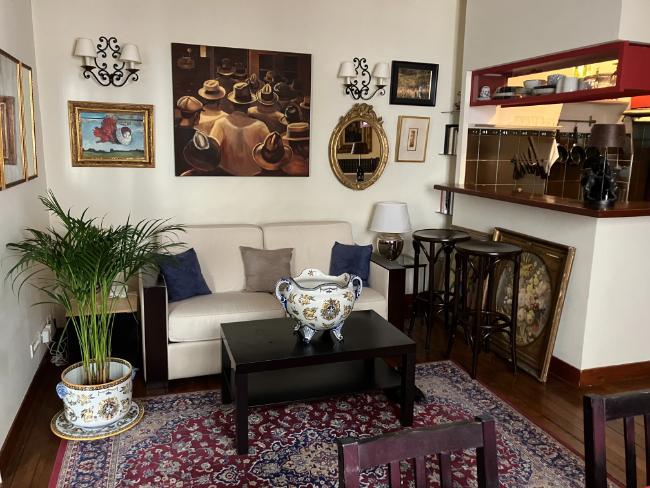
A sample Parisian apartment. Photo: Ellen Aragon
- KNOW YOUR REAL BUDGET AND DETAILS OF THE PURCHASE
In addition to the purchase price, which will include commissions to the agent or agents, buyers must calculate an additional 7.5 to 8 % of the purchase price in what are colloquially referred to as “notaire’s fees.” This is something of a misnomer, as the notaires themselves receive only about 1%. The rest of the fees are pro-rated property taxes and transfer taxes and fees imposed by the government.
Buyers who are “cash” buyers, able to complete their purchase without the contingency of selling their current home or obtaining a mortgage, are at a significant advantage, both in price negotiation and in being chosen over a contingency buyer if both offer the same amount.
While it is possible for international buyers to obtain a mortgage through a French bank, this is usually only possible for a primary residence. French banks are fairly conservative and will require a person to show that they have regular monthly income over at least three times their indebtedness, including the amount of the new mortgage.
Persons over retirement age may not qualify for long-term mortgages, as each mortgage is commonly supported by a life insurance policy that guarantees payoff of the mortgage in the event of the death of the mortgagor. The cost of such life insurance becomes impractical after a certain age. Most banks will expect a mortgage to be fully paid off by the 75th birthday of a mortgagor.
It is always advisable to use a reputable currency exchange company to maximize the value of your bank transfers. You will benefit from a more favorable exchange rate than the bank that holds your checking account will probably give you. If you want to be sure that your 500,000 euro apartment won’t cost you more U.S. dollars at closing than the day you make your offer, a forward contract can be easily arranged.
Important! As in all matters financial, there are exceptions to these general rules, and a good mortgage counsellor can sometimes find tailored solutions for persons of substantial means and collateral.
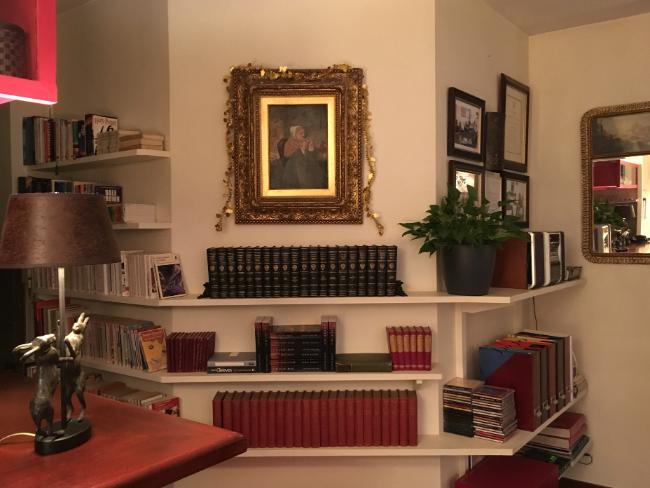
Parisian interiors. Photo: Ellen Aragon
- KNOW YOURSELF AND YOUR FAMILY’S NEEDS
Paris is a delight, and each arrondissement has its special attributes. It is best to keep an open mind about where you might want to live, and to explore your options. Remember that the place that caught up your heart when you were a student traveler may look different to you today, gentrified or over-touristed. How many tour buses, ice cream and macaron shops, and red berets can you tolerate?
Alternatively, while you may love the idea of a more authentic or quiet corner of Paris, if you have children, you may want to focus your search on areas closer to bilingual and international schools. If you have a dog, you may want to find a place close to some green spaces in the parks, the Bois de Boulogne, Bois de Vincennes, or along the Seine. If you love the feel of revolutionary history beneath your feet, you may never want to leave the central quartiers along the Seine, or be far from the statue of Danton.
Real estate surveys emphasize the differences per square meter from the more expensive arrondissements to those that are more affordable, but the truth is that the difference in overall price is negligible unless you are talking about a real trophy property with a great view. Most decent apartments in Paris’s 20 arrondissements will be priced at least at 9,000 to 12,000 euros per square meter, with a premium in central Paris. The excellent metro, RER, bus and tram systems make it possible to travel everywhere in the city and beyond in just minutes.
Paris today is one of the world’s best examples of the “15-minute City” proposed by Carlos Moreno – a city where all of one’s basic needs – such as markets, theaters, doctors, flower shops, boulangeries, sport, and art – can be met by walking or biking within 15 minutes from home. Not to mention the constant surprises of man-made and natural beauty one finds around every corner.
Example of a Parisian building. Photo: Ellen Aragon
- THE PLUSSES AND MINUSES OF BUYING AN APARTMENT IN PARIS
A central location in Paris means you can easily visit some of the world’s best museums, restaurants, and historic sites on foot. On the other hand, during peak tourist seasons, your location may feel as if your Parisian paradise has been invaded by thousands of visitors.
Almost every lovely Haussmannian building in Paris will eventually have plumbing leaks – and an elevator failure – if it has an elevator! Something to consider if you like the higher floors. Be aware, top floor apartments without air conditioning can be almost unbearable in the summer. A “Plan B” may mean moving to a hotel, or staying in Brittany until September.
Buildings that have survived since the Middle Ages have walls so thick that you may not be able to make a cell phone call without wifi. Of course, they may be cooler than others inside during the summer, and you can lie in bed at night looking up at beams that are older than the United States!
A ground floor apartment can be a good option for those with mobility issues or those who don’t want to have to have a Plan B for when the elevator quits. A spacious RDC can actually feel more like a house, and may include access to a small terrace or garden. However, the RDC may require special window treatments to keep passers-by from peeking, burglars from climbing in, and extra space heaters to keep out the cold in winter.
Paris property taxes and insurance rates are quite reasonable compared to those in other major cities of the world. But if you are planning to rent out your property – short term or long term – you will want to know in advance how to comply with the city’s rules about rentals, and you will need to pay French tax on rental income.
Depending on the value of the equity you hold in property, you may become subject to the real estate wealth tax at some point, and all of your property may be subject to French succession laws if you are resident in France. There are ways to minimize or avoid many of these costs and administrative headaches. Professional advice from someone who knows both French law and the laws of your country can help avoid uncomfortable or costly surprises.
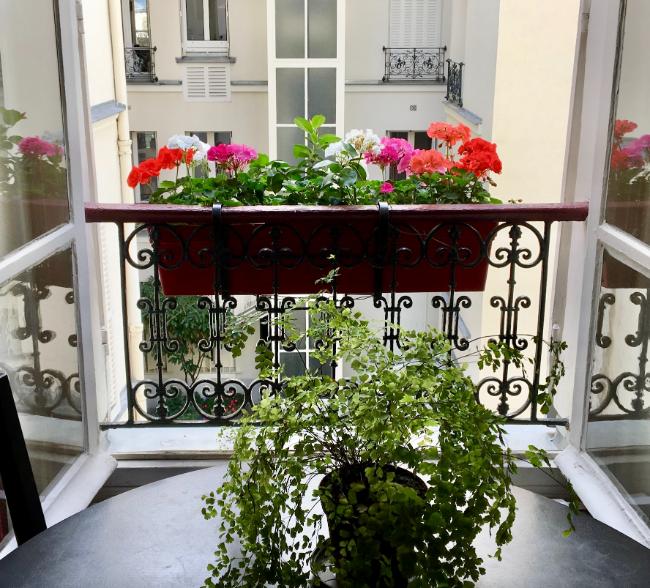
Parisian balcony.
- UNDERSTAND HOW REAL ESTATE AGENTS IN FRANCE SOMETIMES WORK TOGETHER AND SOMETIMES DON’T
Most Parisian real estate agents represent only the owners selling their apartments, and not prospective buyers. They count on the buyers coming to them once they have the properties in their windows and on their websites. Many prefer not to share their commissions with other agents, but are motivated to do so when presented with a solid buyer by another agent, particularly if the property is expensive, or has already been on the market for more than 60 days.
Sellers’ agents strive to present the “bien” (the property) in its best light by taking professional-level photos. They do market studies to help the owners price their apartments properly (often in the face of an owner’s insistence on a higher price!). They fashion an attractive description of the property, and pay for their ads (“annonces”) to be disseminated on key French websites, and sometimes internationally. They may pay for the staging of an empty apartment, or use AI to help buyers envisage new decor, and advise clients on removing clutter or overly personal objects and photos.
In addition, sellers’ agents need to make sure that all legal requirements for the advertisements are being met, such as listing the accurate living space of the apartment (Loi Carrez) and its energy rating (DPE). They should ask their clients if there are any defects or problems known to them, and they do have a duty to be fair to prospective buyers – to disclose for example, a recurrent leak or pending litigation.
Note: Opinions and observations of the author are hers, and are not intended as legal or tax advice.
Read Part II about buying property in Paris here.
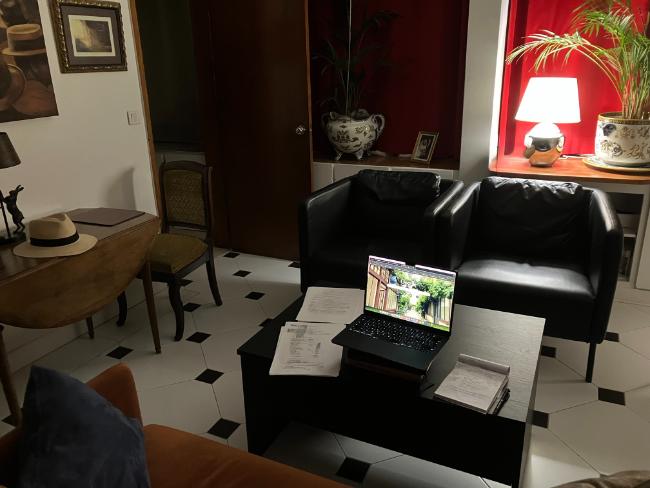
Sample Parisian apartment. Photo: Ellen Aragon
Lead photo credit : A sample Parisian building. Photo: Ellen Aragon
Related Articles



By Ellen Aragon
REPLY
REPLY