
Buying an Apartment in Paris: Part II


- SUBSCRIBE
- ALREADY SUBSCRIBED?
BECOME A BONJOUR PARIS MEMBER
Gain full access to our collection of over 5,000 articles and bring the City of Light into your life. Just 80 USD per year.
Find out why you should become a member here.
Sign in
Fill in your credentials below.
Searching for and finding the Paris apartment of your dreams can be an incomparable adventure. But there are challenges!
Perhaps you’ve already been perusing websites and you have your favorite quartiers. Where to begin your search in earnest? What might you need to know to maximize your chances for a successful offer, while avoiding future pitfalls?
Here are 5 insider tips to help you move forward. This is the second article in a two-part series. To read the first article, click here.

A living room in a Paris apartment. Photo: reisetopia/ Unsplash
THERE IS NO MULTIPLE LISTING SERVICE (MLS) IN FRANCE – A CHALLENGE FOR BUYERS
Unlike the U.S., there is no multiple listing service of current properties for sale, and French realtors do not make properties readily available for viewings by other agents with the use of lockboxes. Buyers may have to revisit websites and shop windows over weeks or months, repeatedly checking the offerings of each separate agency in the arrondissements where they would like to buy. When a buyer sees an apartment that interests them, they won’t know the exact address until they contact the agent – or have their own buyer’s agent contact the listing agent to arrange a visit.
Owners can list with several agencies simultaneously if they wish (even at different prices), so agents won’t normally indicate an exact address because they don’t want other agents or a prospective buyer to go there and deal directly with the owner.
Ideally for a listing agent, the buyer comes to them directly, in which case the listing agent can handle the whole transaction (along with the notaire) and retain their entire commission. In the United States, listing agents commonly expect to share a commission 50/50 with the agent who brings them a buyer, but this is not an automatic expectation in France. More often it is a matter of negotiation, along with the overall price to be paid for the property.
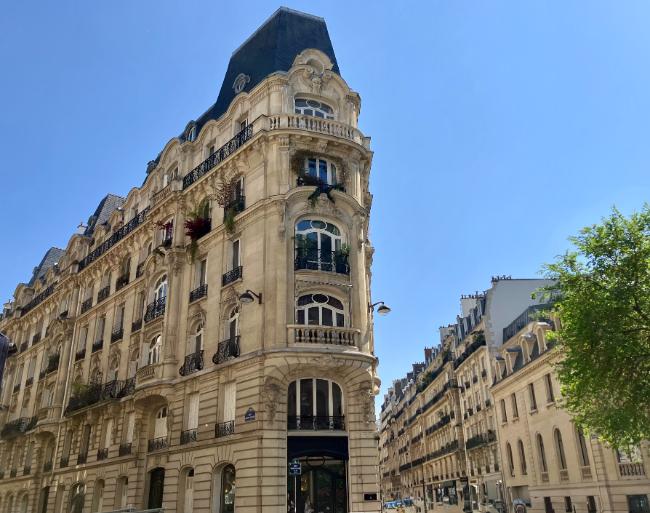
Classic Paris residential building. Photo credit: Ellen Aragon
FORTUNATELY, SOME AGENCIES REPRESENT BOTH SELLERS AND BUYERS
Some agencies (like mine, Leggett International) represent sellers all the time, of course, but also have agents like me who are happy to represent you as a buyer. All of our agents are bilingual in French and English, and some speak multiple languages.
Agents who represent buyers want to be sure their clients get the best possible information, along with the best price, on a property of their choice. The buyer’s agent may spend hours scouring listings with dozens of agencies, querying agents and local sources for off-market properties, cajoling owners who want to sell directly, and checking aggregate sites available only to real estate professionals to find you your dream apartment.

Paris apartment interior. Photo: Wilcle Nunes / Pexels
You may be asked to sign a “mandat de recherche” (search mandate) and/or a “bon de visite” (visitor’s slip) prior to viewings to indicate to other agents that your buyer’s agent is representing you, and will be entitled to an individual commission or a share in the commission if you buy a property that they have directed you to. The mandat de recherche can be limited to a singular property to be viewed, or can encompass a broader mandate over several months’ time designed to help you find you a property in Paris that meets your criteria for price, location and size.
The buyer’s agent also has a duty to the state to know their client. We must do our due diligence to obtain proper documentation of the client’s identity and their source of funds. This is easy to obtain in most cases, as clients can show us if they have just sold a home elsewhere, have a mortgage approval, or have bank funds saved up over time.
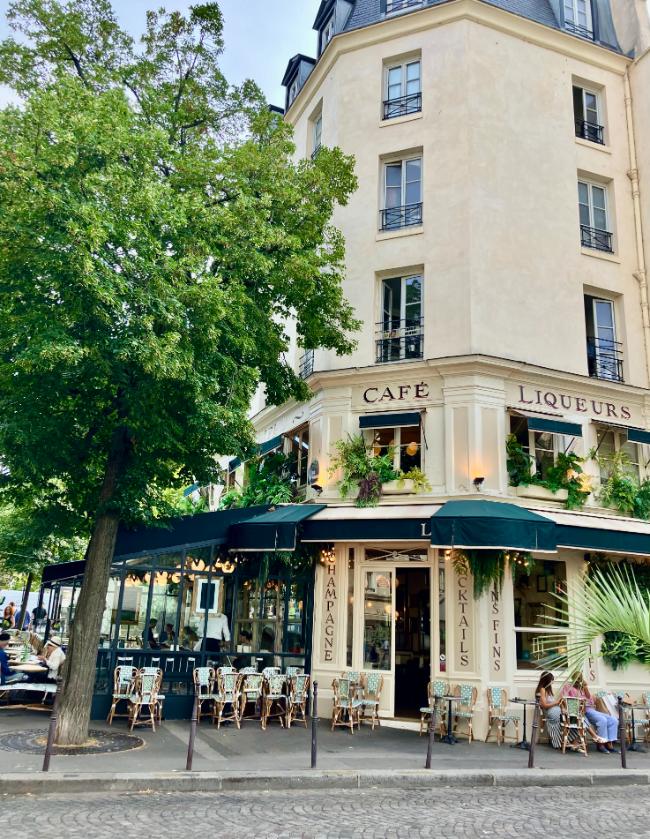
Living in Paris. Photo: Ellen Aragon
BE READY TO MOVE FAST!
An interesting feature of the French property market that is not well known outside of France is this: with some rare exceptions, if you offer the full asking price for a property (and are otherwise qualified), your offer is likely to be immediately accepted.
In the U.S. and some other countries, the asking price is more of an opening gambit, giving an idea of the least that a seller will accept. A low asking price will often lead to a bidding war, with one buyer after another topping the last person’s offer until the maximum price is achieved.

Paris apartment. Photo: Eugenia Remark / Pexels
In contrast, while buyers are free to offer less than the asking price in France, particularly if they feel the property is over-valued or has been on the market awhile, it is rare to offer more than the asking price. If two or more offers come in on the same day at the full asking price, the seller can determine which is the stronger offer, but they will feel bound to accept the price they have stipulated.
A property that has been properly priced for the current market will sell quickly in Paris, usually under 60 days, but sometimes in less than a week. If you see something you love, and the price is acceptable to you, act right away. A cash offer without contingencies is most desirable.
If the owner formally accepts your offer, they are bound to sell it to you at that price, even if they receive a higher offer later.
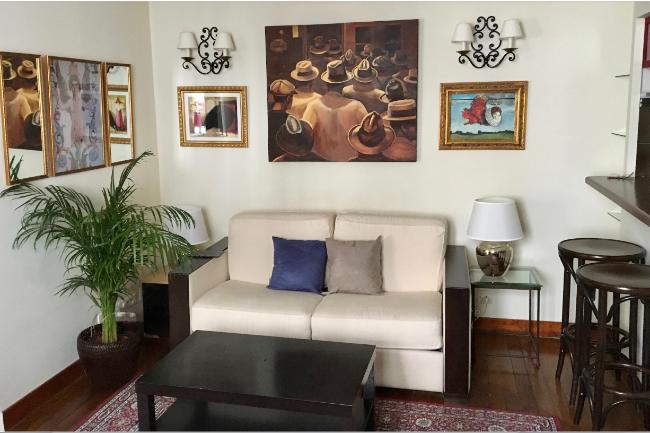
Inside a Paris apartment. Photo: Ellen Aragon
AS A BUYER, YOU BENEFIT FROM A “COOLING-OFF” PERIOD
Though theoretically both seller and buyer are committed to the sale after the signing of a “letter of intent” which lays out the accepted price and conditions under which the buyer will buy, the buyer also benefits from a 10-day “cooling off” period after the signing of the “compromis de vente,” a document with all specifics prepared by the notaire. It can be very important therefore to have the property inspected for defects before the end of that time, as the DPE and diagnostics required by law will alert the buyer to certain problems like asbestos or lead, but not to others. The seller does not benefit from any “cooling off” period once the compromis de vente is signed.
Typically the buyer must submit a deposit of 10% of the purchase price that will be forfeited if they back out after the 10 days. If the buyer is very willing to buy, but needs a mortgage for instance, or needs to complete the sale of their current residence, those conditions can be laid out in a “suspensive clause” in the compromis de vente. In that case, if the mortgage is not possible, or the home sale falls through without fault of the buyer, the buyer will not be penalized.

Paris apartment. Photo: Vincent Rivaud / Pexels
ONE NOTAIRE OR TWO?
The notaire is an attorney, additionally appointed as a government official to insure fairness in property transactions and the interests of the state. Each party can choose their own notaire, which may be worthwhile, particularly if you would like your notaire to advise you in advance, and to explain the whole transaction and documents to you in English.
In practice, it is an excellent idea to consult with a notaire in advance, and depending on your situation, to consult with a cross-border tax expert as well, even before you make an offer on real estate in France. This is because the manner in which you will take title, the cost of the property, your residence status, and many other considerations can either make life much easier or much more difficult for you and your potential heirs.
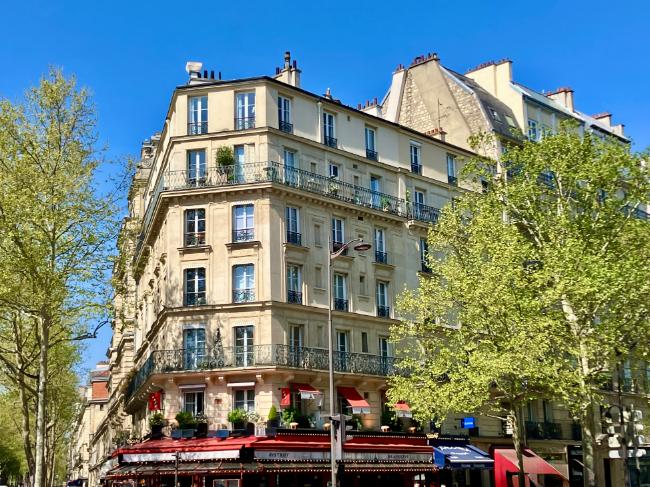
Paris residential building. Photo: Ellen Aragon
After the signing of the compromis de vente, the notaire will research the title, contact the “syndic” (building management/homeowners’ association) for minutes and rules, discover any sums owed to the building, and advise of any complications or delinquencies. The notaire also accepts the buyer’s deposit, and later, the final sums due for payment from the buyer.
The notaire ensures the transmission of funds to the seller and payment of taxes, fees and commissions upon the final signing, which may occur a few weeks or a few months later, depending on the circumstances. Your agent will accompany you to look over the property on the day of the sale to be sure that everything is in order before this final signing. The “acte de vente” completes the sale and results in the handing over of the keys and proof of title to the buyer.
Congratulations! You haven’t just bought an apartment you love, you’ve bought a forever piece of Paris. Now it’s time to unpack!
(Opinions and observations of the author are hers, and are not intended as legal or tax advice)
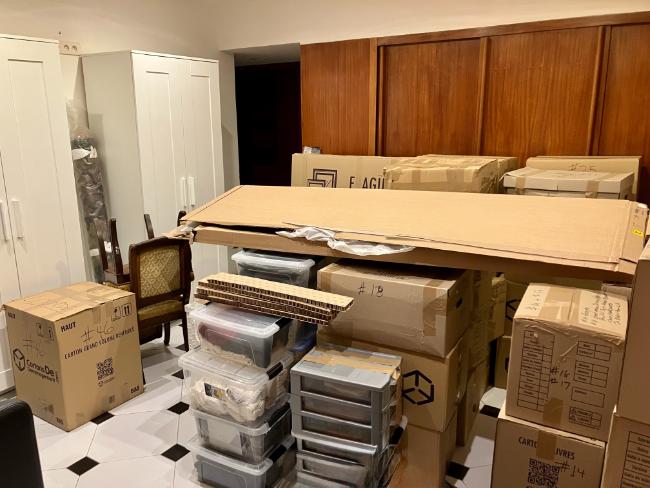
Packing in Paris. Photo: Ellen Aragon
Lead photo credit : Apartment building in Paris
Related Articles



By Ellen Aragon
REPLY
REPLY