
Celebrate Chandeleur: Eat Crêpes in Paris

- SUBSCRIBE
- ALREADY SUBSCRIBED?
BECOME A BONJOUR PARIS MEMBER
Gain full access to our collection of over 5,000 articles and bring the City of Light into your life. Just 80 USD per year.
Find out why you should become a member here.
Sign in
Fill in your credentials below.
Brits celebrate “Pancake Day” on Mardi Gras, but in France, we eat our crêpes on a wholly different feast day. In Christian tradition, February 2nd is Candlemas, the day marking the presentation of Jesus at the temple. And in secular France, this religious holiday is synonymous with one thing: crêpes.
The History of Chandeleur
Traditions linking Candlemas (Chandeleur, in French) to crêpe-making ostensibly date back to the 5th century, when Pope Gelasius I had pancakes distributed to pilgrims arriving in Rome. Like many other ostensibly religious symbols from Christmas trees to Easter eggs, this gesture had roots in pagan traditions: The round shape and golden color of the pancakes is a reference to the impending return of spring. (It’s no coincidence that this holiday is celebrated when most Americans are waiting for a groundhog to let them know whether it’s time to unbundle.)
However it got its start, Chandeleur crêpe-making is ubiquitous in contemporary France, where the tradition has lost any religious links – Christian, pagan, or otherwise. Nationwide, each February, French families stir together a simple crêpe batter, and, according to Eric Birlouez, a culinary sociologist, they carry out a time-tested good luck ritual. As they flip each crêpe in the air with their right hand, they hold a gold coin in the left. If the pancake lands properly in the pan, the coin is said to guarantee prosperity in the year to come. Some families also place the first crêpe in (or atop) an armoire, which ostensibly guarantees an abundant upcoming harvest.

The presentation of the Lord in the temple by Fra Bartolomeo, 1516. Public domain
How to Enjoy Your Crêpes
Making crêpes at home isn’t difficult when you have your own crêpe pan, which you’ll find in pretty much any kitchenware store in France. (We love time-tested E. Dehillerin, Julia Child’s favorite near the former market district of Les Halles, as well as nearby Mora, which is a bit less charming but far easier to navigate.) If you want the crème de la crème of crepe pans, there’s perhaps none more extra than the one from Le Creuset, which even comes with its own wooden tools for spreading the batter and loosening the crêpe.
Typically, in France, a wheat flour crêpe is enjoyed with a sweet filling, while a buckwheat flour galette is a savory lunch or dinnertime treat. But since the base recipe for a traditional crêpe contains no sugar, there’s no need to make both batters to host a make-your-own crêpe feast on February 2.
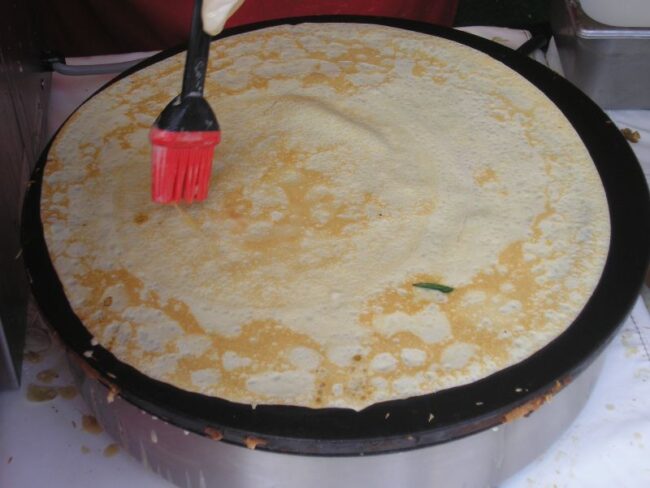
Cooking a crêpe. Photo: Nikchick / Flickr/ Wikimedia Commons
After your guests have flipped their crêpes in the air (and any misses have been sacrificed to the household dogs), set out the fillings. Cheese is a no-brainer: Freshly grated Comté is always a crowd-pleaser, as is spreadable, garlicky Boursin or even chunks of heady Camembert. Add charcuterie, like sliced jambon de Paris, or some smoked salmon if you’re feeling fancy. Finish things off with a bowl of sautéed spinach and one of sautéed mushrooms, and invite your guests to fill their crêpes as they wish. The finished crêpes can either be reheated briefly in the oven or doused in hot homemade mornay sauce, a French invention any fan of mac and cheese will know well. A dollop of Edmond Fallot mustard – the only Dijon mustard made with 100% Burgundy-grown seeds – is the perfect accompaniment to cut all that richness. (And with flavors ranging from tarragon to gingerbread, it’s one of our favorite foodie souvenirs to bring back from Paris.)
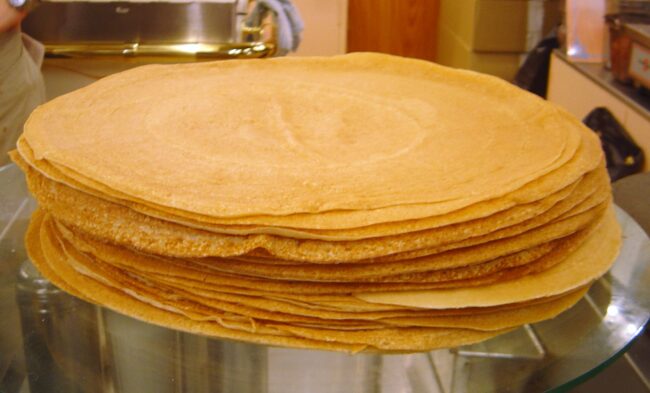
Stack of crepes. Photo: David Monniaux / Wikimedia commons
For dessert, perhaps the most classic filling is a simple shower of sugar, with or without a squeeze of lemon. But sweet fillings are also a fantastic way to evoke France’s varied terroir.
Start with butter from Brittany, the home of buckwheat galettes and the most delicious beurre demi-sel you’re likely to find. Swap out the sugar for local honey, which will have the added benefit of boosting your immunity in these winter months. Acacia flower honey is relatively mild as compared to winter mountain honeys like buckwheat or chestnut, which have a rich, almost molassesy bitterness.
Speaking of chestnuts, chestnut cream is a French stalwart synonymous with Christmas and winter in general. Clément Faugier was a pioneer of the product during World War II, when the Ardéchois rebranded his chestnut paste as a “fortifier” that could be prescribed to nutrient-deprived denizens of Occupied France. These days, Faugier still sells its signature vanilla-scented chestnut cream in cans, jars, and even easy-to-use toothpaste-like tubes.
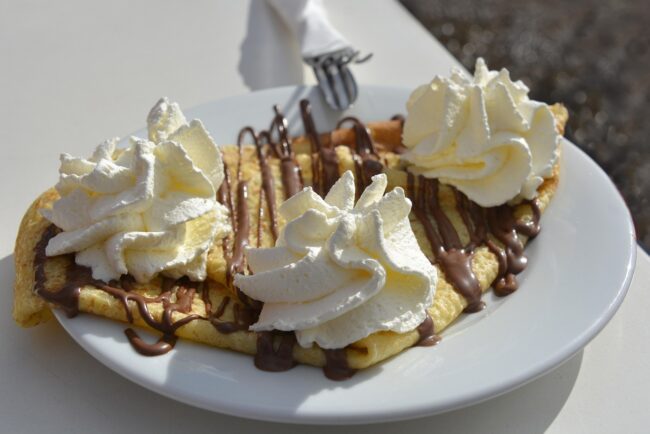
Dessert crêpe. Photo credit: pixelia/ Pixabay
Jam is another beloved crêpe filling among the French, and with so many artisan jam shops in Paris, you’ve got a bevy of choice. We love the “atypical” jams from Montmartre-based Benedetto, which offer not-too-sweet-and-savory flavors like pear and Brazilian coffee or plum with green Sichuan peppercorn. For something a bit less audacious, La Chambre aux Confitures is known for its luxurious options from simple organic apricot or Provençal fig to “presidential” blueberry with lime and basil. You can order the jams online or shop on-site at the rue de Buci shop.
Nutella is, of course, a perennial crowd-pleaser, but if you want a hazelnut spread that’s a bit healthier and more sustainable, try Nocciolata. While not a French brand, this Italian gianduja is indeed a more conscious option, made with organic ingredients and devoid of palm oils. And with four delicious recipes, from classic hazelnut and milk chocolate versions featuring dark or white chocolate, it’s no wonder it’s the second-best-selling hazelnut spread in France.
If you prefer something a bit brighter, lemon curd made with Menton lemons from the French Côte d’Azur is sure to add sunshine to your crêpes. And there’s perhaps no sweet filling more traditional than Brittany’s own salted butter caramel. La Chambre aux Confitures makes a great, classic version, while Breton chocolatier Henri Le Roux combines all of the sweetness of caramel with the richness of praline for an indecently delicious play.
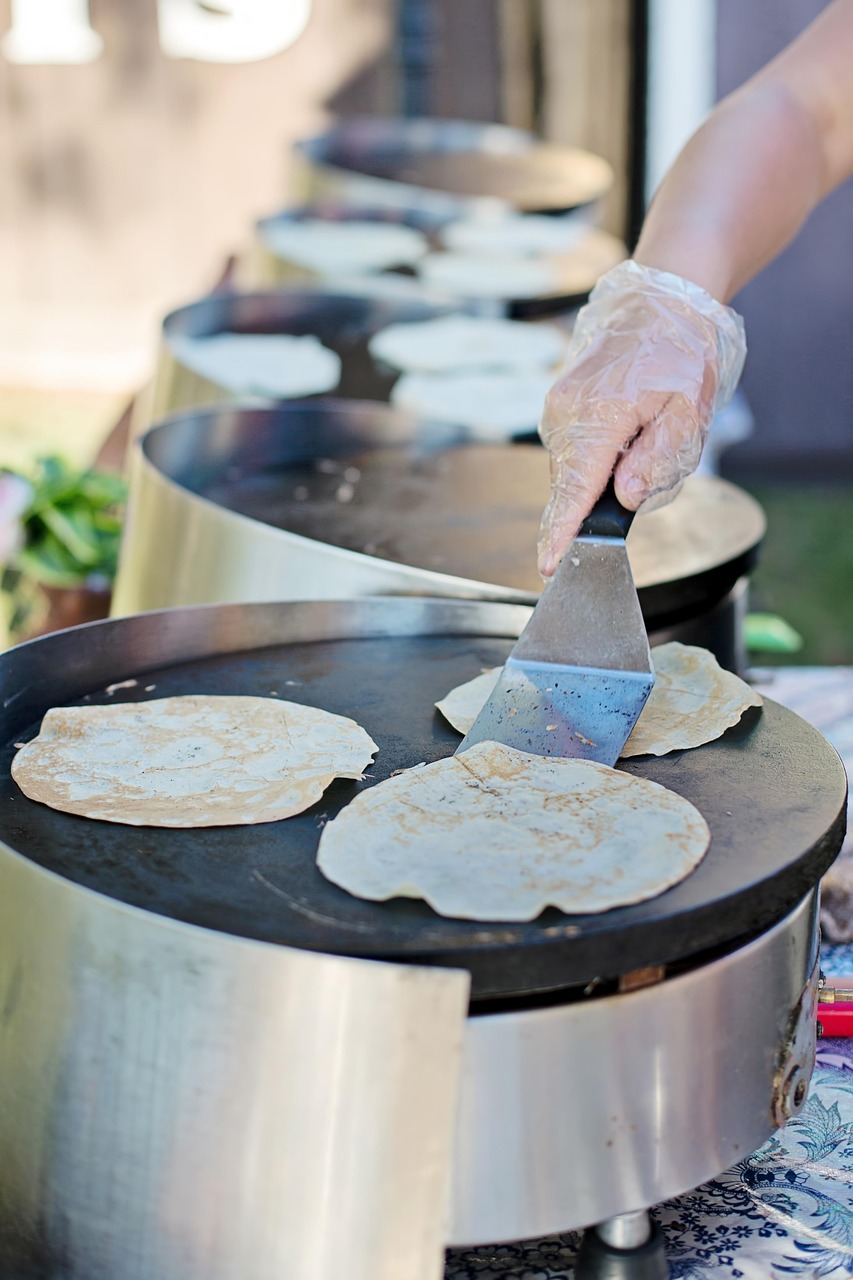
Making crêpes. Photo credit: JillWellington/ Pixabay
How to Enjoy Chandeleur in Paris
If you’re not up to stirring up your own crêpe batter, there are other ways you can enjoy crêpes on Chandeleur in Paris. The area around Montparnasse train station has historically been dotted with a multitude of crêperies thanks to a 19th-century wave of Bretons arriving in the capital following the inauguration of the first Paris-Brest train line in 1865. You’ll find more than a dozen Breton restaurants along the rue du Montparnasse alone, where it seems every storefront wafts the scent of sizzling salted butter. It’s hard to find fault among them, but Le Petit Josselin is a true gem, with authentic Breton-style crêpes served in a charming dining room lined with authentic Breton details including intricate wood carvings.
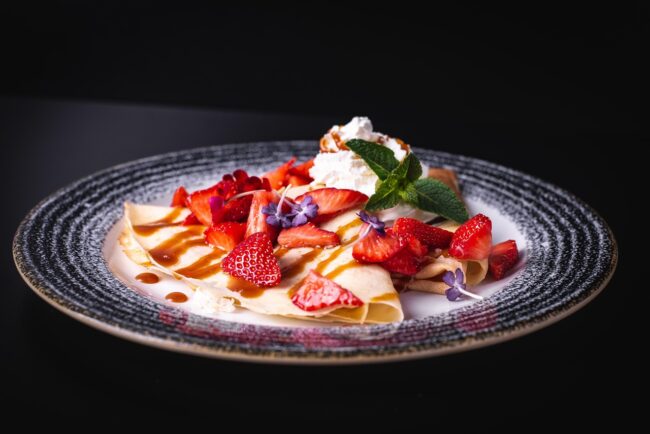
Dessert crêpe. Photo credit: Shy_Photographer/ Pixabay
If the 14th arrondissement is a bit far to trek for a crêpe, know that Breizh Café has over a dozen outposts in Paris and the near suburbs, and this mini-chain is still as quality-driven as when Brittany native Bertrand Larcher launched it in 2002. With a keen attention to sustainability and the flavors of Breton terroir, the crêperies offer a menu of galettes filled with anything from artisanal Breton ham, a fried organic egg, and Bordier butter to smoked Guéméné andouille, a tripe sausage that pairs marvelously with caramelized onions and mustard cream.
And the sweet choices are just as delightful, whether you go for wow-worthy Suzette flambéed with Grand Marnier or simple butter and brown sugar. Don’t look for a wine list, here; instead, the crêpes are paired, as is tradition, with a bowlful of Breton sparkling cider.
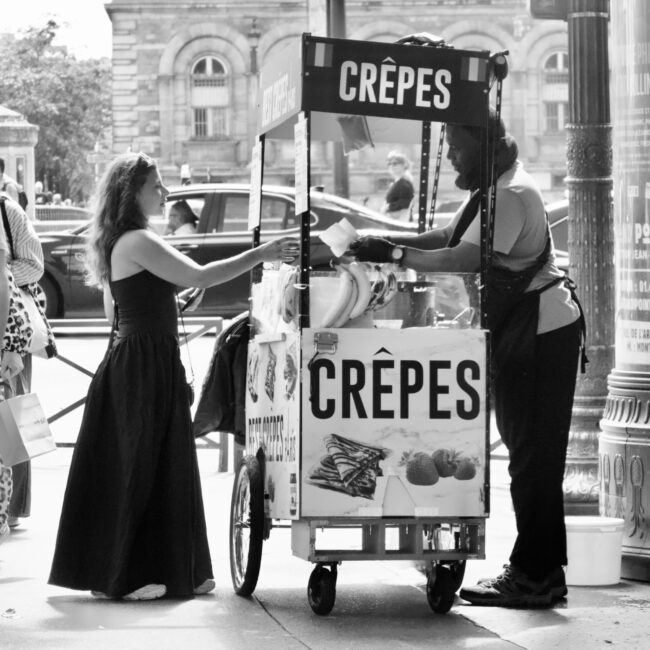
votre crepe madame. Photo: Bill O’Such
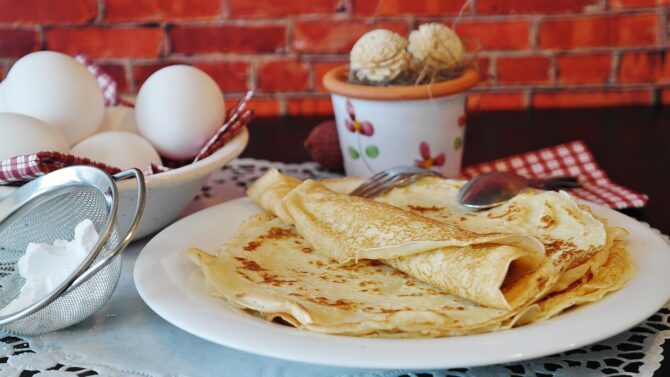
Lead photo credit : Crêpes. Photo: RitaE / Pixabay
More in Breizh Café, Chandeleur, crepes
Related Articles


By Emily Monaco