
The Essential Guide to the 18th Arrondissement

- SUBSCRIBE
- ALREADY SUBSCRIBED?
BECOME A BONJOUR PARIS MEMBER
Gain full access to our collection of over 5,000 articles and bring the City of Light into your life. Just 80 USD per year.
Find out why you should become a member here.
Sign in
Fill in your credentials below.
Best known for the Montmartre neighborhood, the 18th arrondissement offers a plethora of sights and activities for tourists and locals alike. While certain areas, such as Sacré-Cœur and the Moulin Rouge, are often overrun with visitors, quiet oases can be found in the midst of the hustle and bustle. In addition, traveling a bit outside of the Montmartre area leads to a mix of cultures and cuisines.
The 18th arrondissement is quite walkable, though it can be steep at times, especially if you’re climbing around the Butte Montmartre where Sacré-Cœur stands. As such, the top sights listed below are put in a certain order, laying out a suggested path for those interested in walking around the neighborhood.
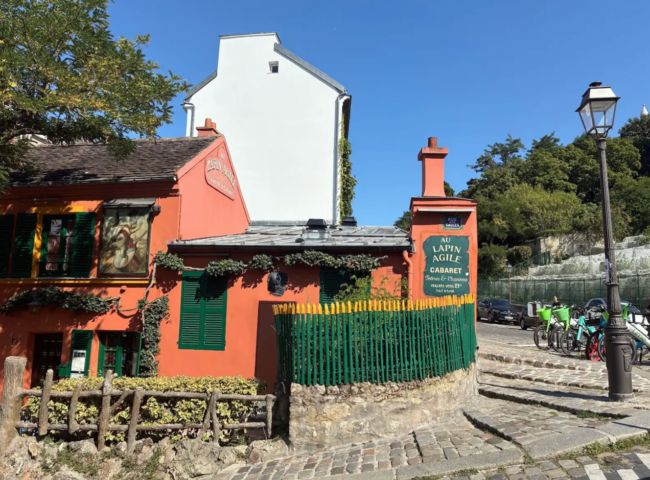
Lapin Agile. Photo: Jill Amari
TOP SIGHTS
The famous cabaret Au Lapin Agile opened in 1860, around the time that Montmartre was annexed to Paris. Favored by the artists and creatives of Montmartre in the late 19th and early 20th centuries, Au Lapin Agile remains a treasured spot today. While it’s closed during the day, you can still see the exterior of this cabaret, which is surprisingly not frequented by tourists (perhaps overshadowed by the various other attractions nearby). At night, the cabaret welcomes you to its revue of traditional, timeless French songs — with audience participation encouraged.
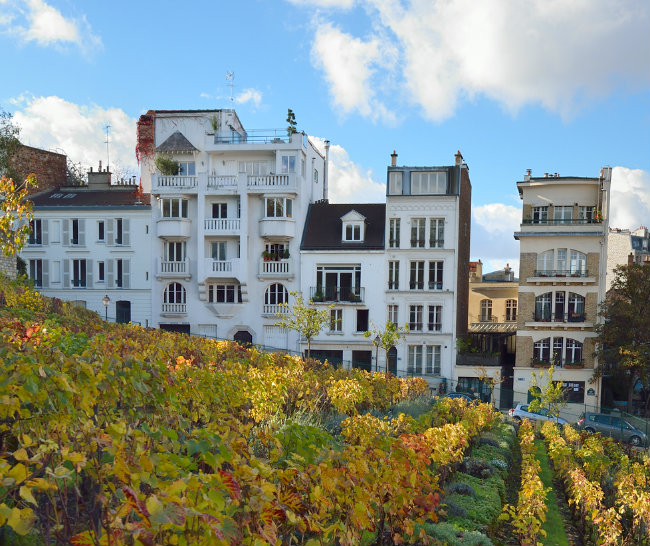
Montmartre Vineyards by Jean-Jacques Boujot/ Flickr
Clos Montmartre
The Clos Montmartre is the oldest vineyard in Paris and is still active today. First planted in the 12th century by the Abbey of Montmartre, the vineyard (and others which had been developed in the area) was closed once Montmartre became part of Paris in 1860. The Clos Montmartre was replanted and brought back to life in 1933, and while it’s closed to the public today, it can be seen through the vineyard gates. In addition, the Musée de Montmartre offers joint museum + private tour tickets for those who would like to explore the Clos Montmartre, and the museum also sells wine from the vineyard in their gift shop.
While originally just a plain house, La Maison Rose was painted pink and opened as a restaurant in 1908, and has since been witness to celebrities, wars, and social change. After undergoing significant changes, La Maison Rose reopened in December 2017, with an eco-friendly, seasonal menu. As such, La Maison Rose is suitable for vegetarian, vegan, and gluten-free diners. The restaurant has an interesting history starting from 1905, which can be read on their website.
La Maison Rose. Photo: Jill Amari
Tucked along a quiet street, it’s easy to miss the Musée de Montmartre, which includes gardens, a café, and an art museum with both temporary and permanent collections. Part of the museum is Suzanne Valadon’s studio/apartment, where she lived with Maurice Utrillo and André Utter. While much of the original studio wasn’t preserved, it has been recreated as faithfully as possible to provide an inside look into how Valadon and other artists lived during the early 20th century. The Renoir gardens, named for the painter who lived there between 1875 and 1877, provide a peaceful escape and stunning views. There’s also the Café Renoir, where you can grab a snack and drink to enjoy in the gardens. You can visit the café and gardens without visiting the museum, for a reduced price.
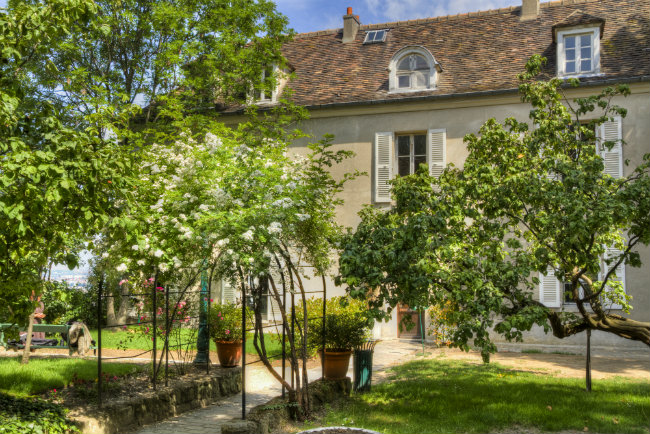
courtesy of Musée de Montmartre
Place du Tertre
Place du Tertre is known as an artists’ square and a place to eat, shop, and people watch. But the square’s origins go back to 1790, when the Commune of Montmartre established its town hall in Place du Tertre. Nowadays, this square is a popular tourist attraction as it’s near Sacré-Cœur and has many boutiques, restaurants, and souvenir shops. Artists still diligently share spaces where they paint the surroundings and people, and the restaurants in the square, like La Mère Catherine and Au Clairon des Chasseurs, generally provide quality French meals and snacks for reasonable prices.
At the edge of Place du Tertre and hidden next to the majestic Sacré-Cœur, a smaller, less-visited church stands. Saint-Pierre de Montmartre is one of the oldest churches in Paris, having been built in 1147. Despite falling into disrepair during the French Revolution, Saint-Pierre has been relatively well-maintained during its nearly millennium-long existence and provides a quieter, less busy atmosphere compared to Sacré-Cœur.
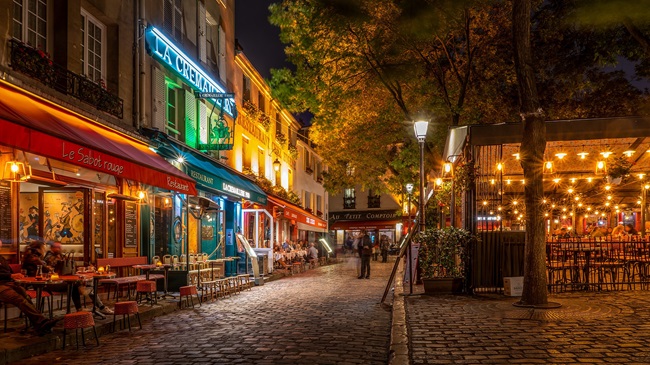
Place du Tertre, Paris. Credit: Pierre Blaché
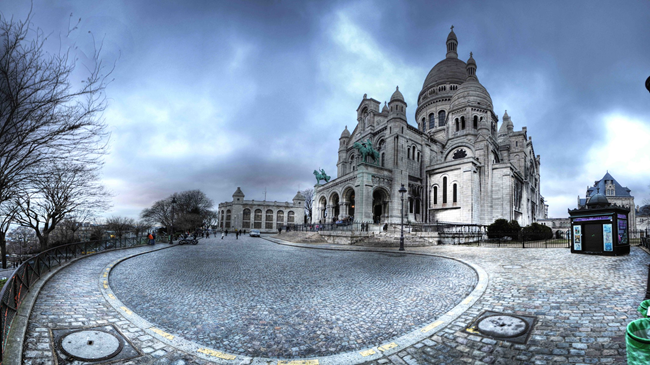
This guide wouldn’t be complete without the iconic landmark, Sacré-Cœur Basilica. An emblem of Montmartre since its opening in 1914, Sacré-Cœur’s mission is perpetual adoration, a mission that has continued since August 1, 1885. This means at least one person must be in prayer at all times. In order to continue this mission, worshippers who are accommodated in the basilica’s guesthouse take over in shifts. Anyone can enter for free during opening hours (except to climb the dome), and visitors are expected to remain respectfully quiet and follow the guidelines posted around the church.
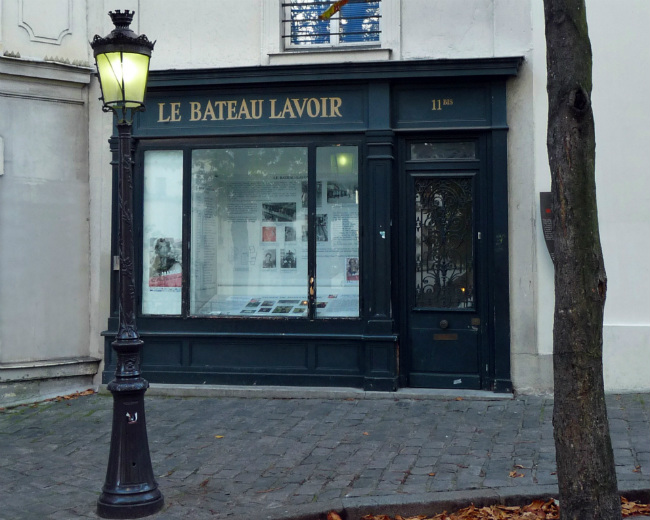
Le Bateau Lavoir. Photo: jxandreani/ Flickr
The Bateau-Lavoir has been an artists’ neighborhood workshop since 1892 and was made famous by Picasso, who began living there in 1904. A flood of artists followed, but after World War I, the Bateau-Lavoir lost many of its residents. A large part was destroyed in a fire in 1970, and it was rebuilt in 1978. Today, 25 artist ateliers can be found at the modern Bateau-Lavoir.
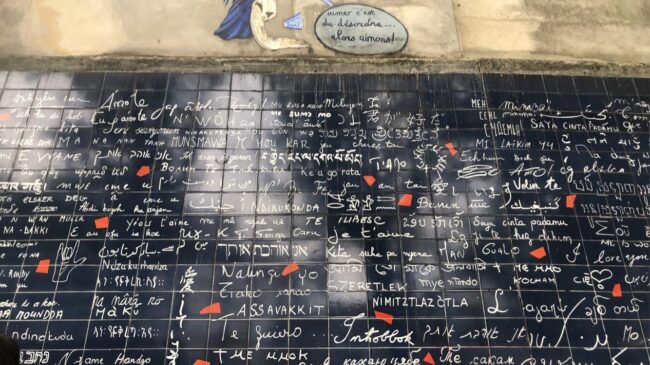
I Love You wall. Photo: Jill Amari
A bit down the Butte Montmartre near the Métro station Abbesses, the I Love You Wall dominates in a nearby park. Here, you can find “I love you” written in over 250 languages, so it’s no surprise that the wall is considered one of the most romantic spots in Paris. The goal of the wall is to send a message of love, peace, and unity.
Across from the park which holds the I Love You Wall, the church Saint-Jean de Montmartre provides a quiet spot away from tourists. Though it’s not very well known, visitors are always welcome to explore the church and its crypt during opening hours. In addition, the church occasionally hosts a secondhand market, where you can find quality secondhand goods.
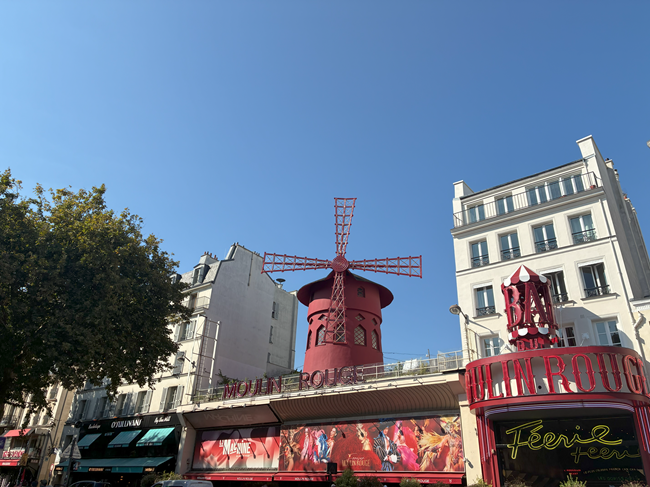
Moulin Rouge. Photo: Jill Amari
Below the Butte Montmartre stands the iconic Moulin Rouge, founded in 1889. Indulge in the famous cabaret’s dinner and show, or simply admire the view from across the street. The four-part Féerie show features various storylines including pirates and the circus, different dance styles, and jaw-dropping costumes and sets. And, of course, if you want to watch an authentic cancan, the Moulin Rouge is the place to go.
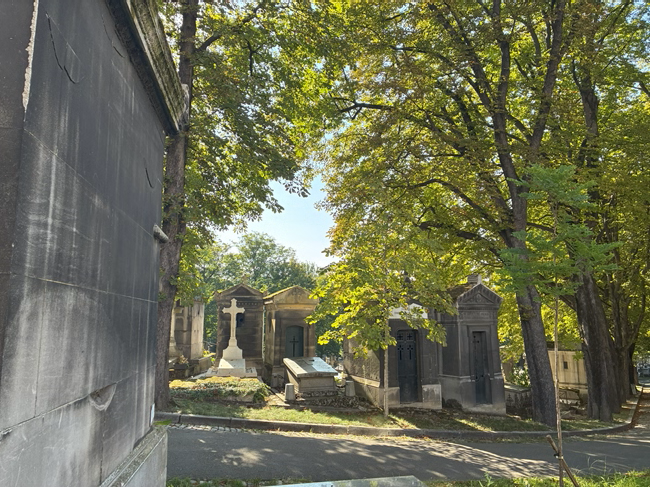
The northern cemetery, better known as Montmartre Cemetery, was opened in 1825 and is located just down the street from the Moulin Rouge. Explore the alleyways underneath the shadow of nearly 800 trees, and visit the tombs of legends like singer Dalida, artist Edgar Degas, and writer Émile Zola, whose remains were moved to the Panthéon in 1912. While not as large as Père-Lachaise, the Montmartre Cemetery is still big enough to get lost in, so it’s a good idea to pick up a map at the entrance or take a photo of it. Also, keep an eye out for the many cats who live in the cemetery, who are generally friendly and are taken care of by a volunteer organization.
SHOPPING
Place du Tertre is a great place to stop and shop while exploring the Butte Montmartre. While it’s mostly overcrowded by souvenir shops, there are a few more artisanal boutiques, such as La Savonnerie de Montmartre (46 Rue du Chevalier de la Barre), where you can find bar soaps, lotions, perfumes, and solid shampoos of all kinds.
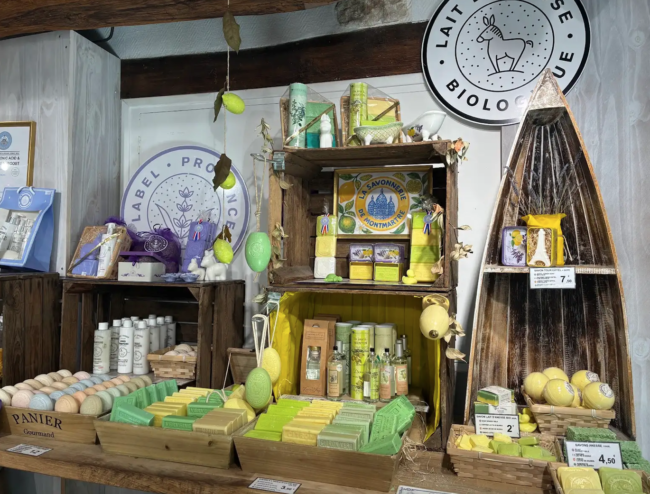
La Savonnerie de Montmartre. Photo: Jill Amari
Just below Sacré-Cœur, the Marché Saint-Pierre (2 Rue Charles Nodier) is the world’s largest fabric market, where various fabrics, supplies, and accessories for artists, designers, and tailors await. While the largest selection is undoubtedly available at the five-story Marché, there are many independent shops in the neighborhood as well. The Halle Saint-Pierre (2 rue Ronsard) in front of the Marché offers workshops and exhibitions for those interested in mending, creating, or learning about lesser-known types of art.
Away from Montmartre but still in the 18th, locals frequent the Little Africa Village Concept Store (6bis Rue des Gardes), where you can find authentic goods from various African cultures. It’s a true community which welcomes all, just like a tight-knit village.
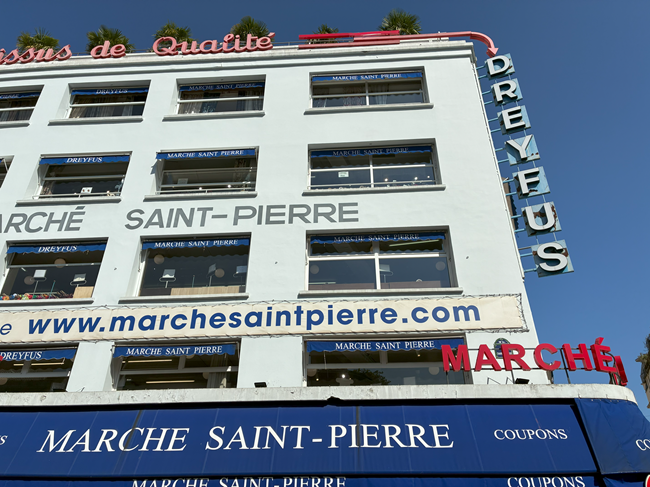
Marché Saint-Pierre. Photo: Jill Amari
RESTAURANTS
To avoid the crowds at the restaurants in Place du Tertre, but to remain close to Sacré-Cœur, check out L’Afghani, a quality Middle Eastern restaurant near the stairs leading up to the basilica. As a bonus, L’Afghani is vegetarian- and vegan-friendly.
Address: 16 rue Paul Albert
It can be difficult to find authentic Mexican food in Paris, but the Acà restaurant chain has some of the best Mexican food in town. Their 18th arrondissement address is located in the Pigalle neighborhood, at the foot of Butte Montmartre and near the Moulin Rouge.
Address: 48 Boulevard de Clichy
For an affordable meal away from the touristy area of Montmartre, try the African-inspired restaurant Mama Kossa. Indulge in exotic meals like peanut butter hummus or creative rice bowls while in the famous Goutte d’Or neighborhood.
Address: 8 Rue Myrha
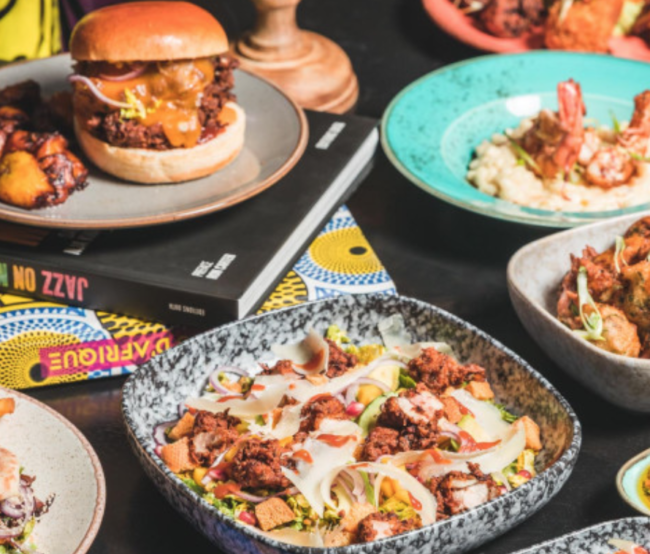
courtesy of Mama Kossa
Serving Georgian specialties, Colchide offers a wide selection of traditional wines and meals you’ll be hard-pressed to find elsewhere in Paris. With two addresses in the 18th, Colchide is the perfect spot for dinner whether you’re on the outskirts of the arrondissement or in the heart of Montmartre.
Addresses: 97 Rue des Poissonniers and 79 rue des Martyrs
As a sustainable restaurant, urban farm, and repair workshop, La REcyclerie has it all. Enjoy a vegetarian brunch and then head out back to visit the farm animals, gardens, and walking path along the Petite Ceinture train tracks. Built in an old train station, La REcyclerie remains a staple of the 18th arrondissement and is a model for eco-friendly living.
Address: 83 Boulevard Ornano
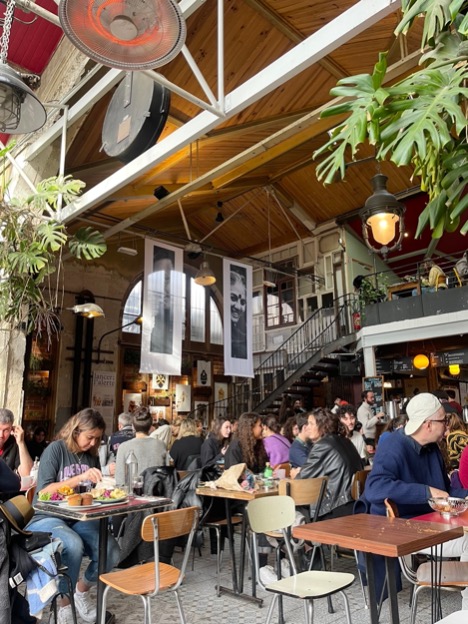
La Recyclerie. Photo credit: Poppy Pearce
UNIQUE BARS
Did you know that there’s a bar on top of the Moulin Rouge? That’s right — you can sip a drink while on the rooftop of the renowned cabaret. Hidden behind the wings of the Moulin Rouge, explore this exclusive bar that is truly unlike any other in Paris. You may even get a chance to stand underneath the legendary windmill!
Address: 4bis Cité Véron
Fancy a game of foosball, pinball, or pétanque? Les Mah-Boules is the bar for you. They’ve got a dedicated indoor pétanque space, as well as arcade games, darts, and more. It’s the perfect spot for friends, couples, and coworkers to share a drink and a fun night filled with friendly competition.
Address: 14, Rue de Jessaint
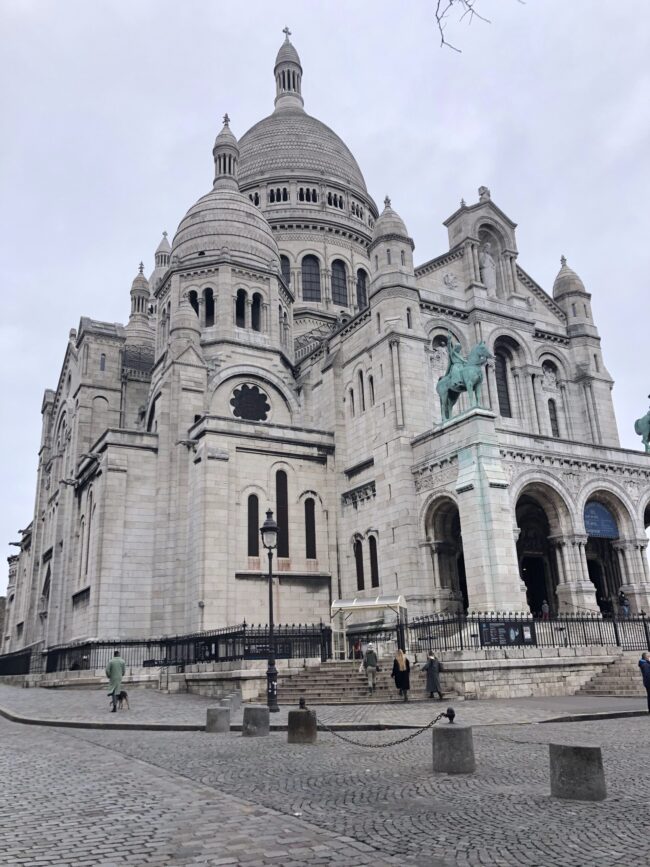
Sacré-Cœur. Photo: Jill Amari
Lead photo credit : Montmartre, Paris, Photo Credit: Nezar Kadhem/ Flickr
Related Articles


By Jill Amari