A Perfect Day in Montmartre
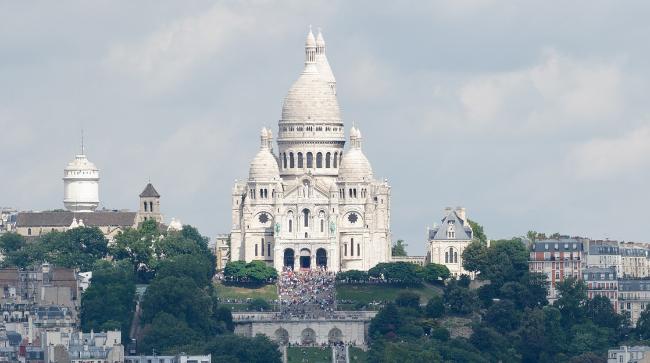
No visit to Paris is complete without a stop in Montmartre, the area famous for its artists, cabarets, and the Sacré-Cœur Basilica floating above the city. Montmartre includes the highest point in Paris, and this winter Parisians delighted in tobogganing down its slopes after a rare snowstorm.
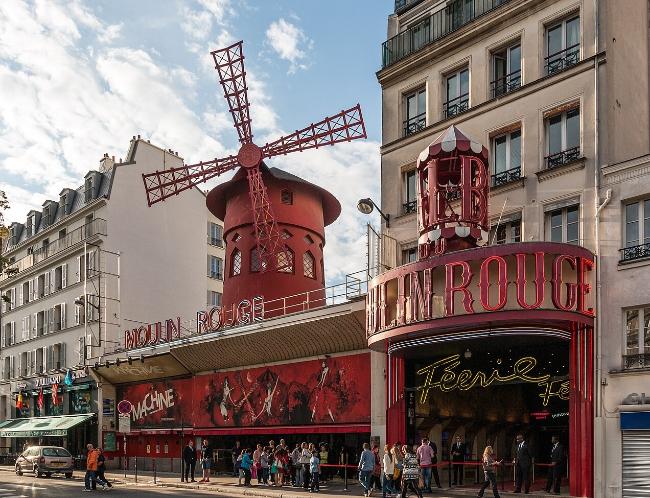
Moulin Rouge at the foot of Montmartre. Photo: Dietmar Rabich / Wikimedia commons
A Famous Cabaret
Start your visit at the Moulin–Rouge, easily reached from the Metro’s Blanche station. The Moulin–Rouge is both a cabaret — the cancan was invented here — and an homage to Montmartre’s past, when for centuries windmills dotted its crest.
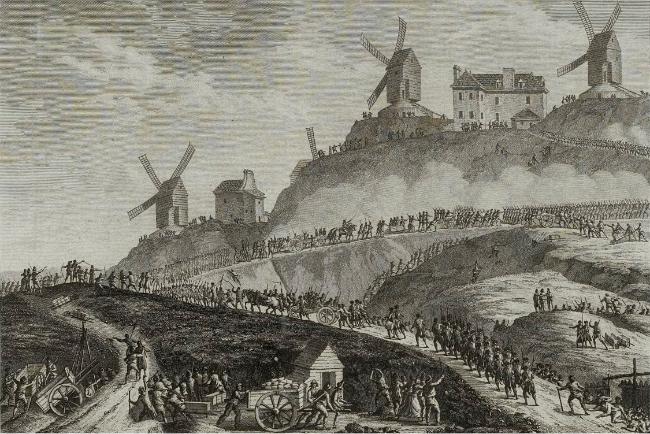
Canons de Paris portés à Montmartre, (juillet 1789), Jean-Louis Prieur, Musée de la Révolution française
From the Moulin–Rouge, follow the cobblestoned streets up to the Place du Tertre, the center of Montmartre. It’s only 900 meters away, but you also have to climb 70 meters, so take your time and enjoy the shops along the way.
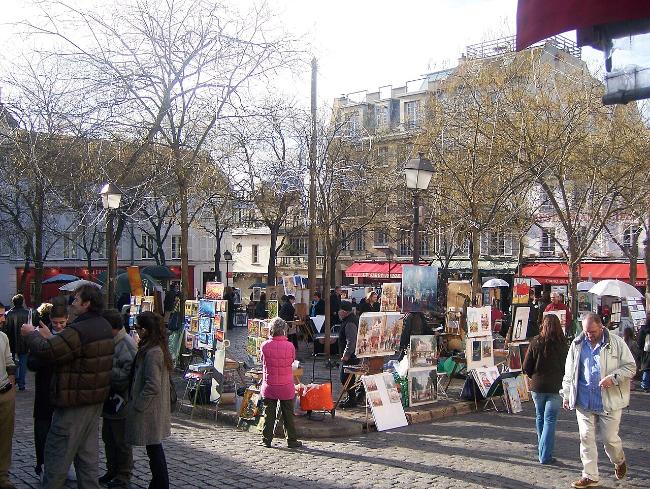
Place du Tertre, Montmartre. Photo credit: Cyberjunkie / Wikimedia commons
The Heart of Montmartre
Lined with colorful cafés, the Place du Tertre is where Montmartre’s past as an artist’s haven comes alive, recalling painters like Monet, Van Gogh, Picasso, and Modigliani who once honed their craft in ateliers nearby. Today, artists display their paintings around the square, ready for sale, and some bring their easels to make a sketch or painting of you, while onlookers look on and kibbitz.
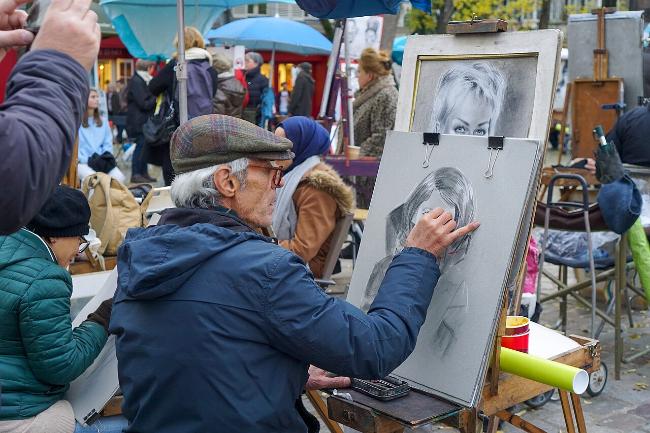
Artist at Place du Tertre. Photo credit: Jami430 / Wikimedia commons
The Place du Tertre is a great place for people watching, so stop in a café and watch the world go by. The area around the Place is a pedestrian zone, as is much of Montmartre on the weekend, so you won’t have to worry about cars spoiling your view.
To the Top!
When you are ready for a bigger climb than the one that brought you here, head up to the brilliant white Sacré-Cœur Basilica, from which you will have wonderful views of Paris. This means going up 222 steps, so is not for the faint of heart. For them there is a helpful funicular that goes to the top without you having to break a sweat.
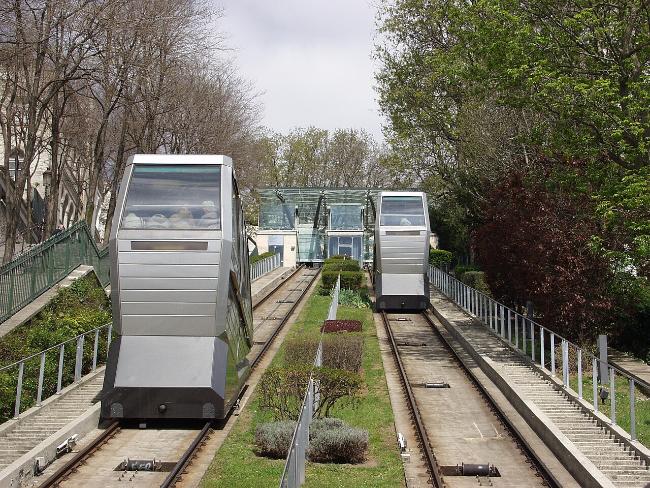
Montmartre funicular. Photo credit: Robert Breuer / Wikimedia commons
It took 40 years to build Sacré-Cœur, because the ground under it was so unstable. For centuries, gypsum was mined here, often using explosives, so the area was riddled with tunnels and caverns. A special foundation, going down over 100 feet into the ground, had to be constructed before the basilica could be built.
A Bit of Culture
The next stop is the Musée de Montmartre, where artists like Renoir once had their studios. Until September 13 of this year, the museum hosts a special exhibition of the work of Adya and Otto van Rees, a husband-and-wife team of avant-garde painters who worked in the late 19th and early 20th centuries. They surfed art’s leading edge for decades, moving from portraiture to cubism to abstract art and more. While Adya was Otto’s equal as an artist, his work tended to eclipse hers, so it is nice that this exhibition brings her work to light.
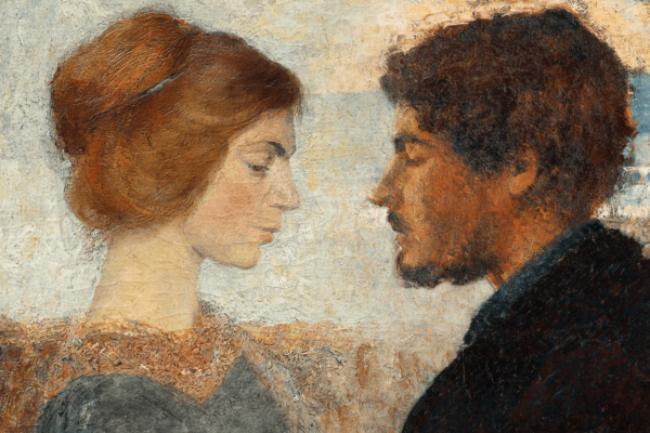
Adya and Otto van Rees Exhibition at the Musée de Montmartre
The museum’s permanent collection is excellent as well, exploring Montmartre’s past with its gypsum mines, its windmills, and especially its bohemian cabarets like Le Chat Noir and Au Lapin Agile. Behind the museum is a lovely garden with a small café, an ideal place to take a break. And just beyond it you can look down on the neighboring Clos Montmartre, the oldest vineyard in Paris.
On your way out of the museum, take a moment to walk to the nearby Rue de l’Abreuvoir, maybe the prettiest street in Montmartre, anchored by the striking pink Maison Rose.
Time for Lunch
You will now have worked up an appetite, so stroll down the hill for a leisurely lunch at Ose Restaurant, a hidden gem just off a busy street. Noted in the Michelin Guide for having excellent food at a reasonable price, Ose’s helpful staff is also skilled at making sure that those with food intolerances can eat safely.

courtesy of Ose
For your afternoon coffee, continue a short way further down the hill to the Café des 2 Moulins, made famous by the movie Le Fabuleux Destin d’Amélie Poulain. Audrey Tautou’s character Amélie worked here as a waitress, and many of the movie’s scenes were filmed at the café.
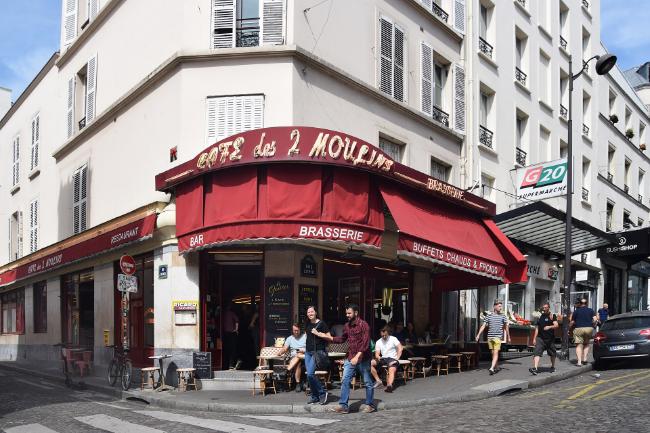
Café des 2 Moulins. Photo credit: Mig Gilbert/ Wikipedia commons
By now you are well fed and maybe a bit tired, so it’s time to head back to your hotel to rest, freshen up, and get ready for the evening’s activities. Good news, just steps away is the Moulin–Rouge and the Blanche Metro station. Off you go!
Lead photo credit : Wikipedia, Creative Commons license attribution Christophe Meneboeuf
Related Articles