The Smart Side of Paris: I Lost My Head on the Rue Saint Honoré
Philosophy professor John Eigenauer shares fascinating and unknown histories of Paris in “The Smart Side of Paris” series
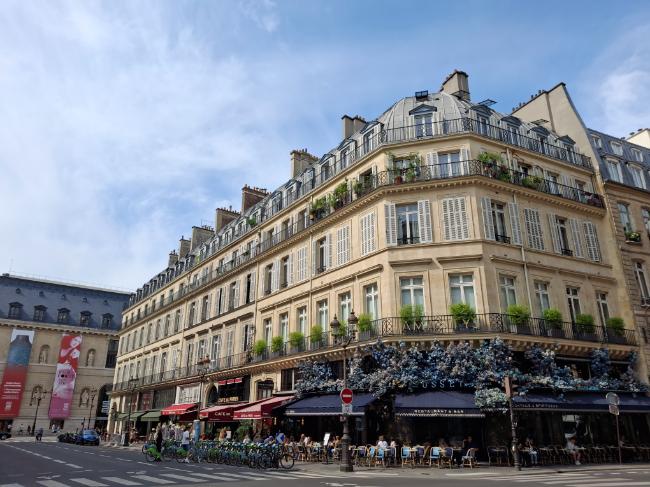
I walked along the Rue Saint Honoré, a block north of the Louvre, humming Pink Martini’s delightful, sonorous, and romantic “Oú est ma tête?” (“Where is my head?”) which begins with “J’ai perdu ma tête dans la rue Saint Honoré” (“I lost my head on the Rue Saint Honoré”). I had arrived early for lunch, so I took advantage of the time to take photographs of the lovely neighborhood for friends back home. The bistros are polished, the Haussmann style buildings look new, and the sun was shining brightly.
As I looked for another angle for a photograph, I noticed a historical marker at 270 rue Saint Honoré honoring Olympe de Gouges (1748-1793), who once lived there. A happy surprise.
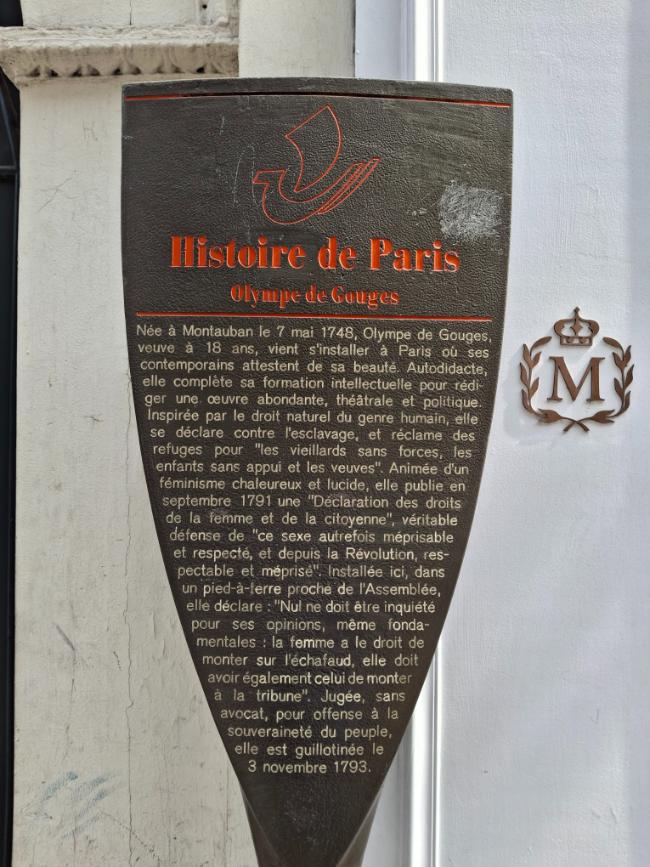
Olympe de Gouges historical marker. Photo: John Eigenauer
Olympe de Gouges was born poor and far from Paris, two of several disadvantages in her life. And yet, she ended up on historical marker in a tony area of Paris. Exactly who was she? And how did she earn this historical marker?
The subtle and insightful Grimm (Friedrich Melchior, baron von Grimm), whose missives were read by rulers, royalty, and the rich throughout Europe, commented that de Gouges’ only advantage in life was “her pretty face.” Her beauty, when combined with her humble beginnings in life and the rather ostentatious lifestyle that she led once she arrived in Paris, led many to think that she was a courtesan —that is, a prostitute. She was not. But she did find marriage detestable, enjoyed the freedom to choose her lovers, enchanted many, and earned the rewards of those enchantments. The one man she probably loved, and who certainly loved her, Jacques Biétrix de Rozières, was a wealthy financier who gifted her enough money to live the freedom she dreamed of.
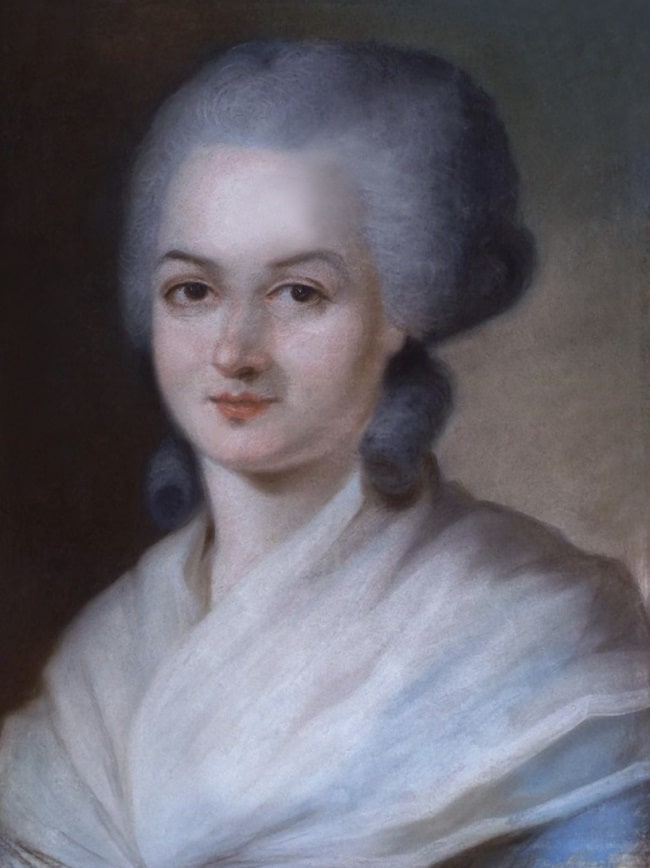
Alexander Kucharsky, Portrait of Olympes de Gouges (1748–1793).
Perhaps she knew that Grimm was right: that she did lack intellectual refinement. And so, she set out to make up for her lack of education by imbibing ideas expressed in Paris’s salons. There she heard Rousseau discussed, Voltaire read aloud, and Diderot debated. Contemporary comments suggest that some found the idea of a courtesan pursuing philosophical knowledge incongruous and troubling. From what we know of her, the waves of gossip and assumptions failed to disturb her.
Above all Olympe de Gouges knew who she was: she was a woman of principle. Carried forth in life by an inexhaustible supply of indignation at injustice, she wrote some of the most powerful and radical tracts of the Revolutionary period. In 1782, as social unrest simmered, she wrote her first play, Zamore and Mirza, which would later be retitled “The Slavery of Blacks” in which she decried the evils and inhumanity of slavery. The play, the first to feature the first-person perspective of the slave, was greeted with vehement protests by anti-abolitionists whose prejudices were no doubt inflamed by their greed; it saw only three performances.
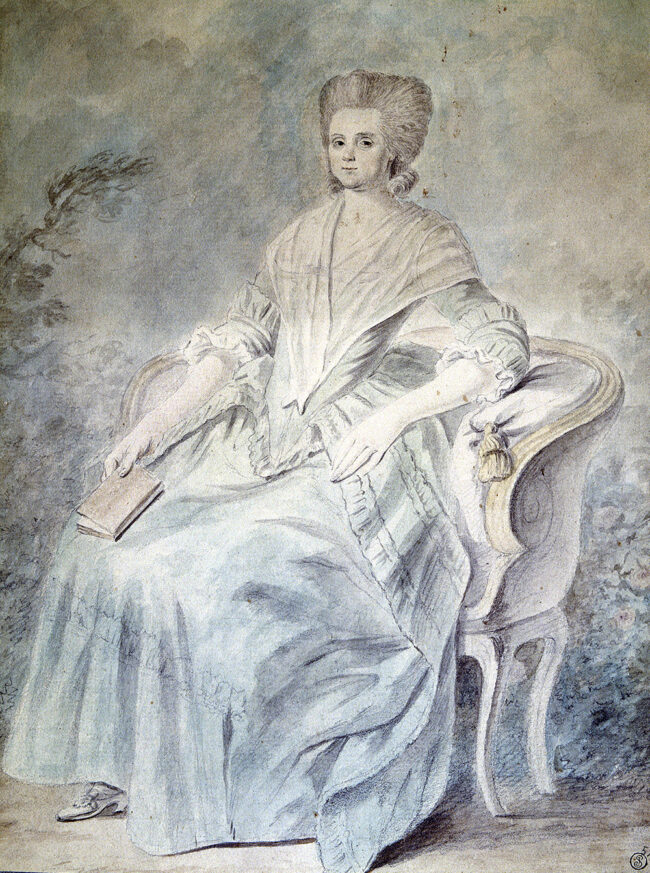
Anonymous, Olympe de Gouges, 18th century. Musée du Louvre.
Years later, she explained her first foray into illuminating the injustices that so infuriated her: “The species of Negro men has always interested me because of their deplorable fate. My knowledge had barely begun to develop, and at an age when children do not think, when the sight of a Negro woman I saw for the first time led me to reflect and ask questions about her color. Those I was able to question at the time did not satisfy my curiosity or my reasoning. They treated these people as brutes, beings whom Heaven had cursed; but, as I grew older, I saw clearly that it was force and prejudice which had condemned them to this horrible slavery, that Nature had no part in it, and that the unjust and powerful interest of the Whites had done everything.”
This was but the first of her attempts to publicize the injustices of the Ancien Régime. Some estimate that she wrote 40 plays, perhaps a dozen survive. Her play The Generous Man explored women’s political powerlessness of women; The Philosopher Chastised delved into the deeply divisive topic of women’s sexual desire. Across a number of plays, she addresses the reasonableness of divorce, the rights of mothers, the rights of illegitimate children, unlawful arrest (lettres de cachet), debtors prisons, women being forced into convents, lack of support for the unemployed, poor public sanitation, indifference towards orphans and the elderly, and other injustices. All topics ripe for revolutionary action.
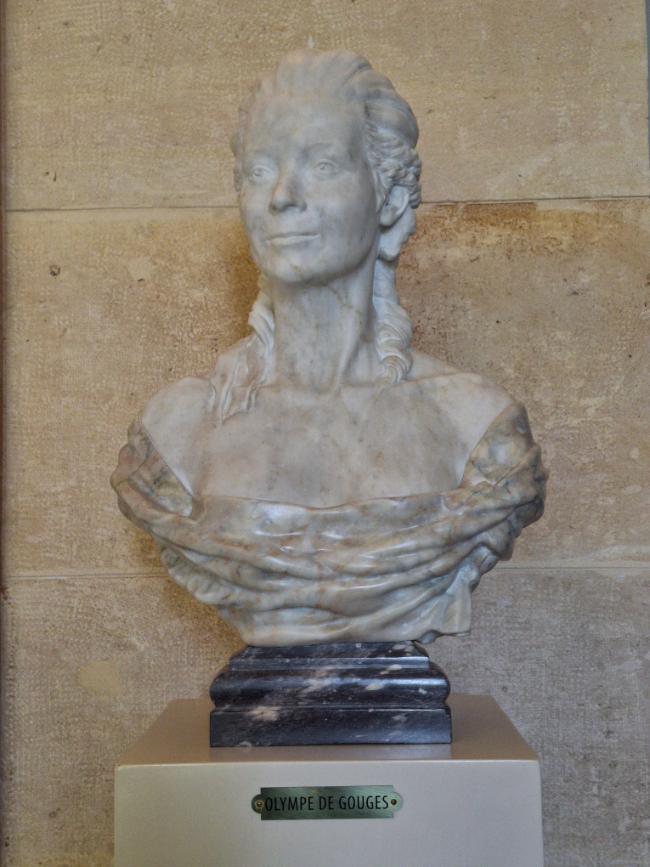
Bust of Olympe de Gouges at the Assemblée nationale. Photo: John Eigenauer
As the Revolution gathered steam, de Gouges wrote more forcefully. Her play, Mirabeau in the Elysian Fields, portrayed several philosophers — half of them women — in favor of a constitutional monarchy in France. But her most famous publication is without doubt The Declaration of the Rights of Women and Female Citizens. This remarkable document, which details injustices towards women under the Ancien Régime, was foundational for establishing and spreading women’s rights over the following centuries.
The Revolution became more divided and The Terror ensued, forcing de Gouges to abandon Paris. Suddenly without friends or protectors, “she found the house of her dreams, nestled against the hillsides overlooking the Loire [near Tours]. She immediately named it her ‘cottage’ and bought it with her last savings.”
And there, she might have lived out a peaceful existence, far from the madness that gripped Paris. But she could not help herself. She believed too fervently not to publish her thoughts. And so, she returned to Paris to publish her message in the form of a poster, much like a large government document, and posted it for Paris to see. Titled “The Three Urns, or The Salvation of the Fatherland,” it was subsequently lost to history.
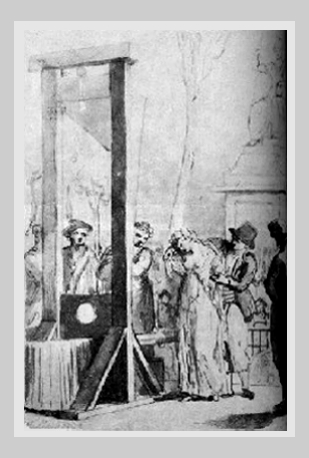
Olympe de Gouges at the guillotine. Anonymous. Public domain
Until a single copy turned up in the British Museum Library in 2013, buried in a bundle of posters and innocuously labeled “URNES.”
In it, de Gouges declares that God inspired her to publish the words that He spoke. “I am interested,” God declares, “in the mass of mankind, whom I have placed, in Nature, to live there free and equal, and if I have sometimes consented that the great populations name a leader, it was so that he would always seek their happiness, and not so that he surround himself… with parasitic men in charge of the State, who have become privileged… priests having subtly stolen half of the public’s fortune, nor nobles [who] succeed in building palaces next to peaceable cottages, and to insult… the indigent laborer, the virtuous farmer… whose tears nourish the fields for these vain and proud men.”
God’s voice continues, calling for free elections in which the people will choose from among a “republic, federalist [government] or constitutional monarchy.” It was simply too much for those in power. She was arrested on July 20, 1793, and ushered off to La Conciergerie and guillotined on November 3rd of that year. She went to the scaffold in the Place de la Concorde declaring, “Children of the Fatherland, you will avenge my death” just before she lost her head to the injustice she so despised.
Related article:
Meet the Golden Women of the Olympic Opening Ceremony
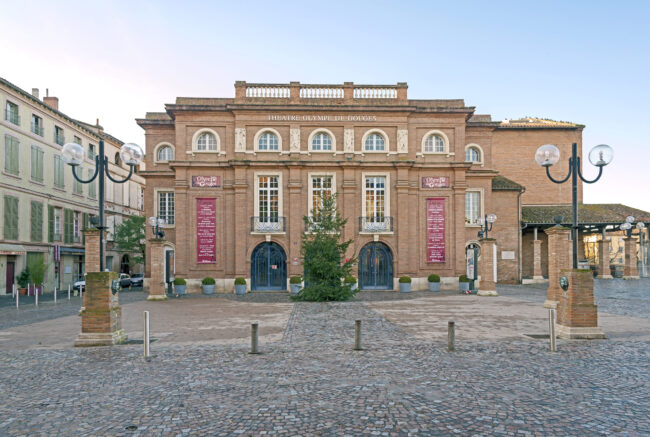
Le théâtre Olympe-de-Gouges in Montauban. Photo: Didier Descouens / Wikimedia commons
Lead photo credit : Rue Saint-Honoré. Photo: John Eigenauer
More in Olympe de Gouges, The smart side of Paris
Related Articles