
Flâneries in Paris: Explore the Viaduc des Arts
- SUBSCRIBE
- ALREADY SUBSCRIBED?
BECOME A BONJOUR PARIS MEMBER
Gain full access to our collection of over 5,000 articles and bring the City of Light into your life. Just 80 USD per year.
Find out why you should become a member here.
Sign in
Fill in your credentials below.
This is the 44th in a series of walking tours highlighting the sites and stories of diverse districts of the Paris region.
Another look at a map, another intriguing idea. Moving my finger a little eastwards from the Bastille metro station, I came across a hospital called Quinze Vingts and the Viaduc des Arts, represented as a long colored streak along the Avenue Daumesnil. Both names needed explanation, I felt. Why would a hospital be called “the fifteen twenties” and what would an “arts viaduct” look like? In search of answers, I tapped my Navigo to exit the metro at Bastille and set off down the Rue de Charenton.
Before long I came across one of those helpful brown Histoire de Paris signs which explain many a mystery if you stop to read them. The imposing building stretching down the Rue de Charenton was once the barracks of the Mousquetaires Noires, an elite royal cavalry unit, but in the mid-18th century, after they were disbanded, Louis XVI repurposed it by moving the Quinze Vingts hospital here. In its original 13th-century location, the hospital, which treated knights injured on crusade, had 300 beds, counted by multiplying the medieval unit, a vigesimal, ie 20, by 15. Under Louis it was expanded to 800 beds, and from this has grown the renowned National Opthalmology Hospital which occupies the site today.
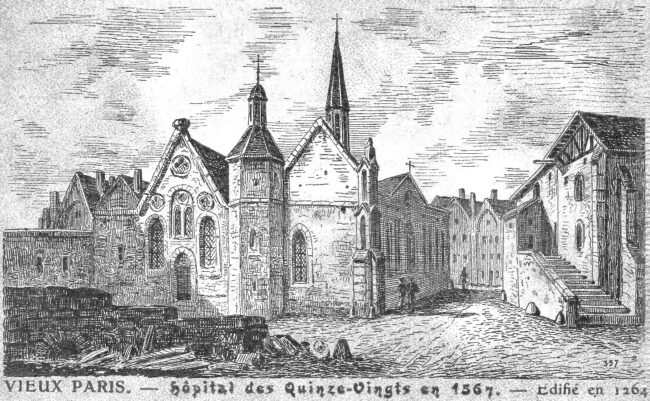
L’hospice des Quinze-Vingts en 1567. Public domain
Excuse the pun, but my newly gained knowledge opened my eyes because as I continued my route along Rue de Charenton and then right into Rue Moreau, I saw several people with white sticks, presumably making their way to or from appointments at France’s top eye hospital. Their website tells me they carry out over 350,000 consultations and procedures every year and are home to a renowned center for “ocular research and innovation.” It’s amazing to think that the roots of this state-of-the-art medical facility go right back to the Middle Ages.
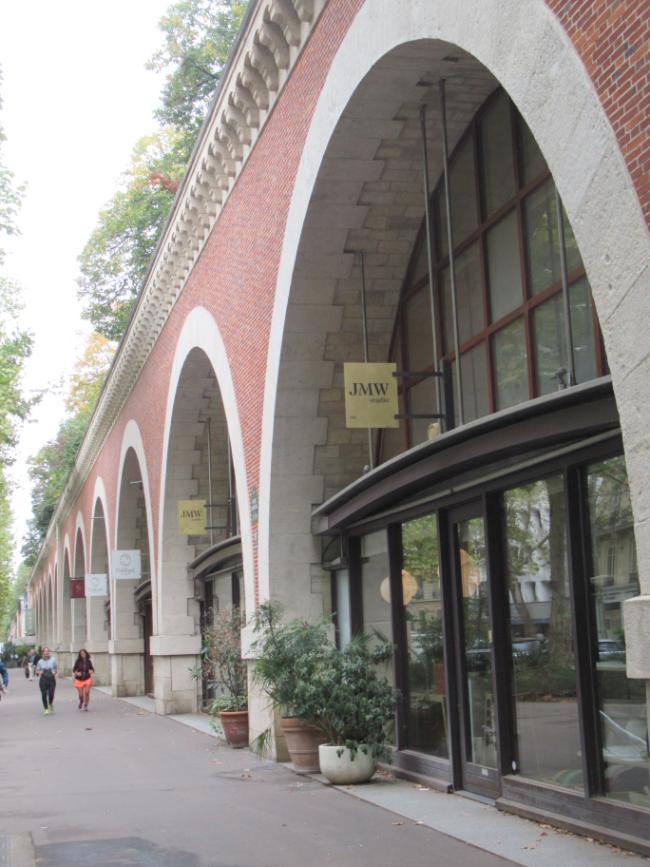
Viaduc des Arts. Photo: Marian Jones
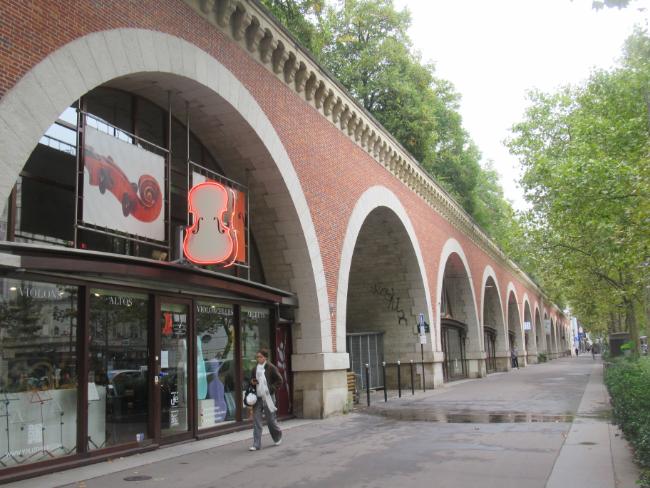
Turning left into Avenue Daumesnil, the Viaduc was right there, its redbrick arches stretching down into the distance, topped by the decorative balustrade along the Promenade Plantée which sits above it and which immediately sparked an idea for another flânerie. For now though, I wanted to explore the little shops and businesses in each archway and I soon came across two which summed up the flavor of the whole project.
At the Ateliers Chutes Libres, posters invited the public to workshops where tools and advice would be available to help them turn scrap wood – also provided – into something useful or decorative. Come in, it said, and make something to take home. It was the first of many workshops clustered here.
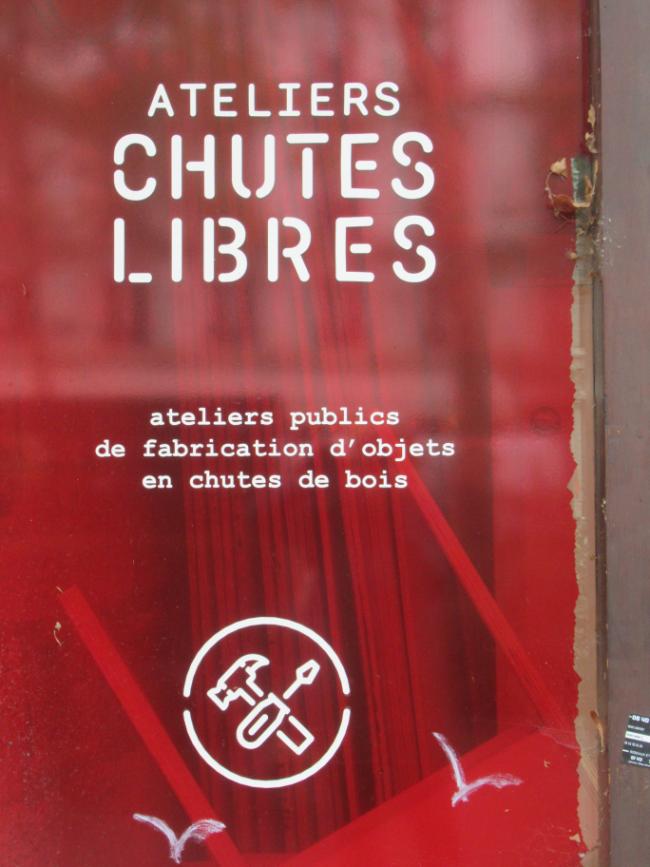
Ateliers des Chutes Libres. Photo: Marian Jones
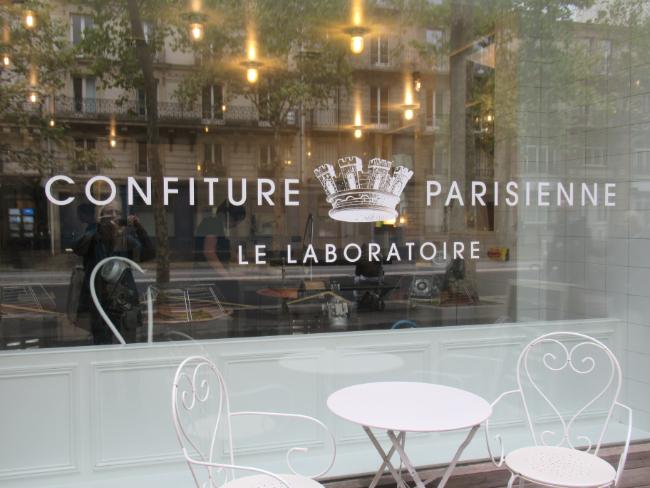
And, just nearby, was Confiture Parisienne, half laboratoire, half boutique, a working jam factory where you can watch the bubbling and stirring and buy the resulting produce. The homely aroma hit me as soon as I walked in and the little pots for sale revealed a mix of traditional flavors – strawberry, apricot – and new-to-me notions such as carotte passion and poire-châtaigne (chestnut and pear). Just because something is an established tradition, read their slogan, it doesn’t mean it can’t also be reinvented. Here, you can sit in the little tasting corner and sample the flavors or browse the shelves to select purchases in pots labeled (in French) “Summer breakfast” or “World’s Best Grandad.”
I began to appreciate the idea behind the Viaduc des Arts, where an old, 19th-century viaduct on a now disused railway line has been repurposed to promote the arts and small businesses. Along its 1.5 km length, some 40 artisans have space to create and promote their wares, perhaps also to share their talents through workshops and demonstrations. It’s a chance to get started, to try things out, perhaps to grow into a business which can move elsewhere and continue to flourish. For those who know it’s a place to find services not often on offer – do you want your tuba reconditioned, or your photograph taken in dress from a bygone era? For flâneurs and passers-by it’s a fascinating walk where the unexpected arises at every new archway.
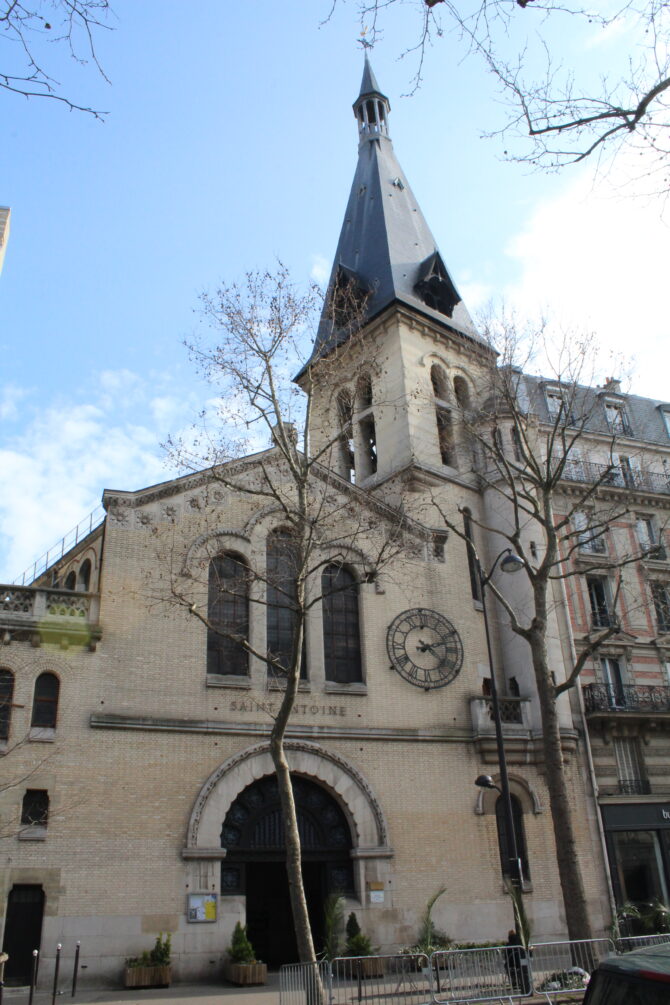
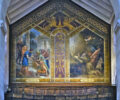
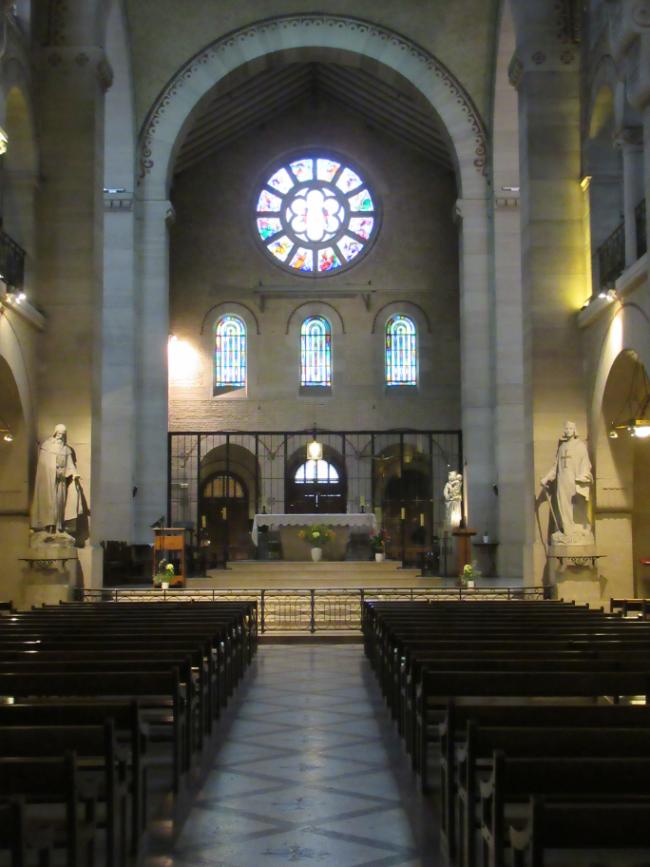
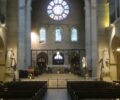
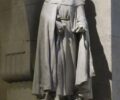
Finding a church amid all this creative bustle was a surprise. Turning just a few yards left into the Rue Traversière brought me to Saint-Antoine des Quinze-Vingts, built around 1900 to serve local residents and the patients and staff of the hospital whose own chapel was too small. Through the porched entrance I found a large space dominated by ceiling arches leading towards the altar and the rose window behind it and prominent statues of the two saints most closely connected with the area. St Louis, who founded the original Quinze Vingts hospital, watched over one side of the altar, opposite St Antoine after whom the area’s other large hospital is named.

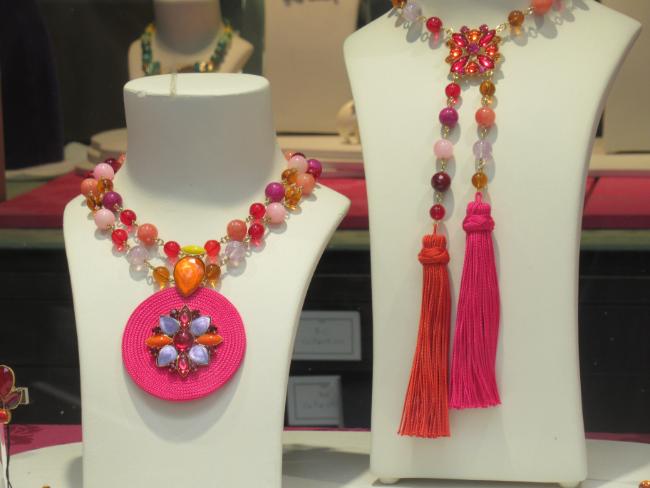
Further along the Viaduc des Arts a whole array of creative outlets opened up. Window displays of African fashion and bright splashes of artisanal jewelry sat alongside Un Jour dans le Temps where you dress up in period costume and have your hair and make-up styled before a photo shoot to generate “vintage” pictures like those displayed in the window. An old-fashioned sign explains that Meriguet Carrère specialize in picture restoration and gilding, while at the Atelier Guigue you can drop off your furniture for restoration or book into a painting class. In other arches you could commission an engraver or have an exquisite piece of marquetry crafted by a master cabinet-maker.
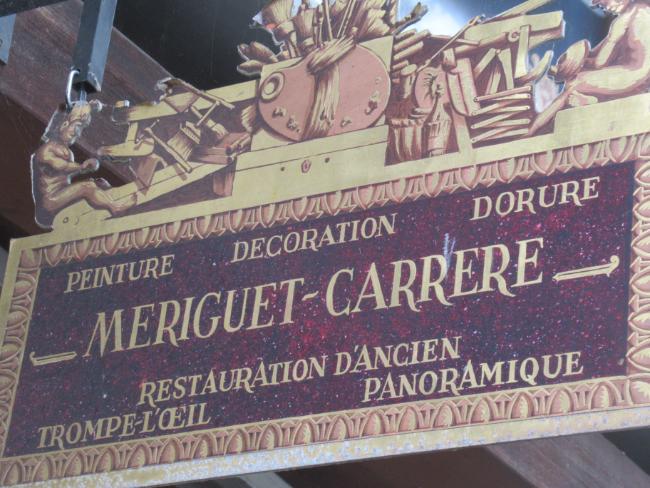
Meriguet Carrère. Photo: Marian Jones
Fascinating though it all was, these are purchases not generally made on a whim, so the real interest of my little tour was the chance to see such a variety of skills in action. Through the window of Olifant I glimpsed two men at work on the repair of a brass instrument, while at Yann Porret – Master Lutemaker and member of the Union Française des Experts – everything revolved around stringed instruments, except perhaps for harps which had their own emporium, Harposphère, a few arches further on. They offered everything from instrument repairs to lessons, sheet music and concert tickets.
New worlds seemed to open up and if some seemed rather niche, Atelier C came to the rescue. The C stands for chocolat, a white-coated chocolatier was in action in the open kitchen and the sign above the door promised une expérience carrément chocolat, that is “a very chocolatey experience.”
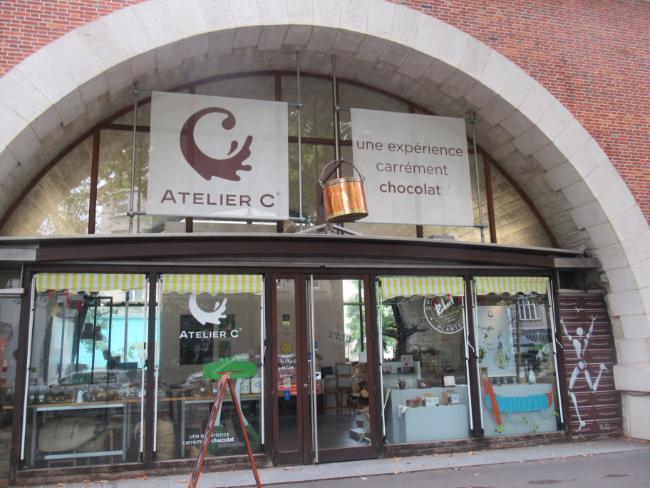
Atelier C. Photo: Marian Jones
As I paused at one window to watch a little group enjoying an embroidery workshop, a man on his way in offered me a leaflet. Did I know about Paris Ateliers, a network of workshops run on 24 sites all over the city in arts and crafts, in writing, in furniture restoration and over a hundred other activities? Each invites you to join with other enthusiasts and learn from the experts. I squirreled the leaflet away, noting that if I ever fancy trying my hand at, say, engraving or writing a poem in French, the Ville de Paris runs subsidized classes to help me achieve it. They could, said the leaflet encouragingly, act as a révélateur de vos talents. I like the idea that I may have talents lurking somewhere, just waiting to be revealed!!
All in all, the Viaduc des Arts provided a most thought-provoking couple of hours. I enjoyed learning that right here, near the Faubourg Saint Antoine where cabinet-makers and carpet-weavers plied their trade in the Middle Ages, due attention is still being paid to skilled craftsmanship. Yes, within each archway sits a business, but one celebrating the art of making things by hand, of preserving traditional techniques, of sharing old knowledge and keeping it alive to pass on to future generations. It’s all achieved in a unique setting, a wonderful example of regenerating an area which might have fallen into disuse. I will certainly return.
But for now, I turned towards Place du Colonel Bourgoin, pleased to notice a large boulangerie, the Maison Landemaine, sitting in one corner. I happen to know that it’s been praised by none other than David Lebovitz, who wrote of their baguettes that “each one is perfectly cooked; crisp and well-browned on the outside, chewy, moist, and rip-apart airy inside.” A great place to buy lunch then, especially as there were a couple of little tables set up outside where I could savor my purchases before continuing to the nearest metro station at Reuilly-Diderot. It made a perfect end to an inspiring morning!
Lead photo credit : Viaduc des Arts general view. Photo: Marian Jones
More in Flâneries in Paris, Viaduc des Arts
Related Articles
By Marian Jones
REPLY