An Interview with Author Meg Bortin
- SUBSCRIBE
- ALREADY SUBSCRIBED?
BECOME A BONJOUR PARIS MEMBER
Gain full access to our collection of over 5,000 articles and bring the City of Light into your life. Just 80 USD per year.
Find out why you should become a member here.
Sign in
Fill in your credentials below.
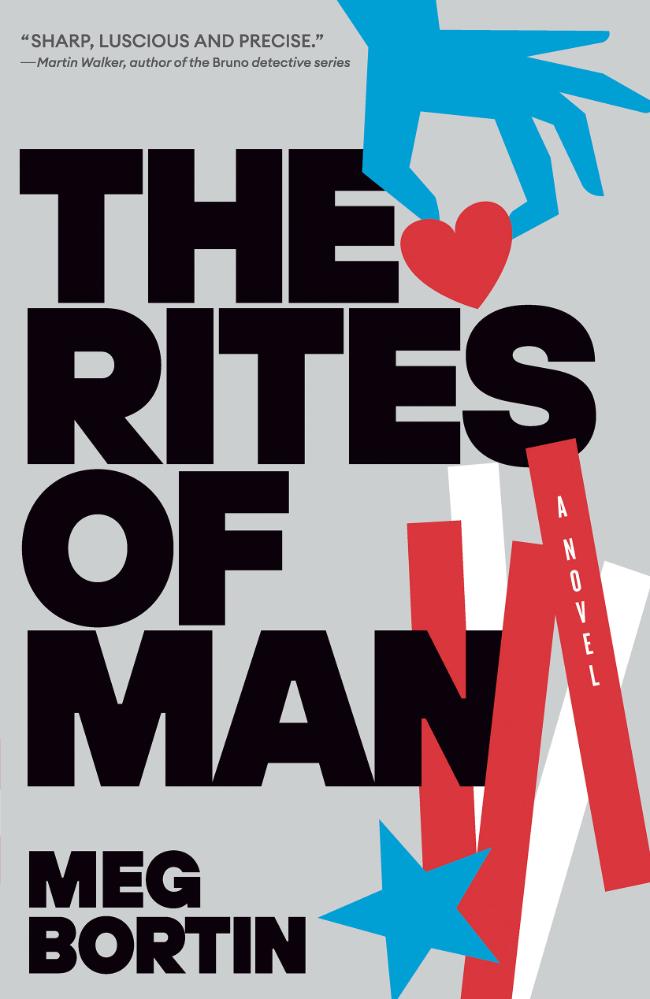
Meg Bortin is an award-winning American journalist and author based in Paris. As a reporter and editor, she covered international affairs for 30 years, with postings in Paris, London and Moscow. She was the founding editor of The Moscow Times, the first independent English-language daily in Russia, and a senior editor at the International Herald Tribune. She has written for The New York Times and many other publications. Most recently she published her first novel, The Rites of Man. She took the time to answer Janet Hulstrand’s questions about her life and career in this exclusive interview for Bonjour Paris.
Thanks, Meg, for doing this. First of all, what brought you to Paris, and how long have you lived here?
I moved to Paris with only a backpack in 1974, never expecting to stay more than a year. I was taking a break from graduate school, and also wanted a little distance from Nixon’s America and the Vietnam War. But 52 years later I’m still here! The reasons are simple. I fell in love with Paris, I fell in love with a Frenchman and in time, through a great stroke of luck, I fell into journalism. Although I’ve been based elsewhere in the course of my career, I always wanted to return to my favorite city.
You’ve just come back from a book tour in the US to promote your recently published novel, The Rites of Man. Can you give us a brief description of that book? What was your impetus for writing it? Also, what’s the last time you were in the States, and how did it feel to be back there now?
The Rites of Man is about a creative 40ish woman, Sherry McManus, who falls in love with an author named Tom Paine. As is often the case in a love story, things start out well but complications arise – in their case, complications that become public and set off a storm of controversy over literary legitimacy and the rights of women. The story is set in New York and Long Island in 1996, that is, about 25 years after the social revolutions – sexual, political, feminist, gay – that roiled American life. So that gives the characters the opportunity to reflect on the impact of those revolutions.
The story also raises issues like fairness, truth vs. falsehood, and fake news – issues that remain relevant today. My impetus for writing this book was an incident that took place in my own life around that time involving an Italian lover who wanted to be a writer, and the home and garden of the late author Marguerite Duras. I won’t say more because I don’t want to give the story away… As for the States, my previous visit was on the eve of the 2024 presidential election and I found it frankly disquieting to go back there now, when so many fundamental American values are under attack.
I’m fascinated to learn that you were the founding editor of the first independent English-language daily newspaper in Russia. How did that come to be?
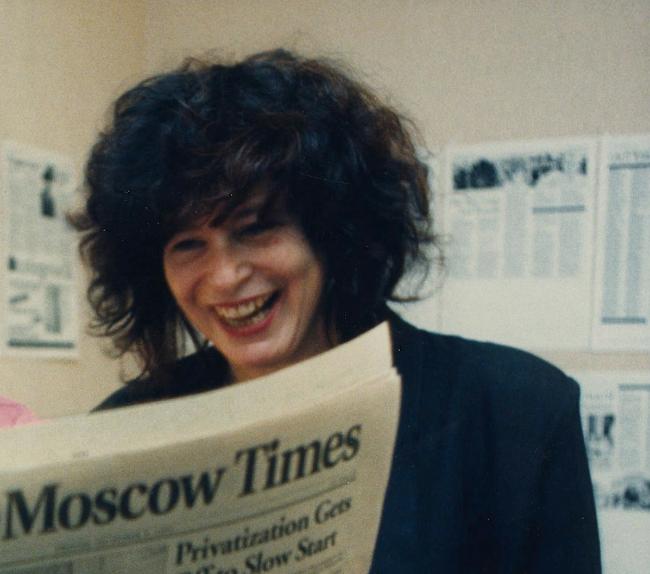
I had worked in Moscow as a correspondent for Reuters in the 1980s before joining the International Herald Tribune in Paris. One day in 1991 I got a call from Derk Sauer, a Dutch entrepreneur who had already started two English-language publications in Moscow, a magazine and a weekly newspaper. He said he wanted to turn the weekly into a daily and was looking for an editor who a) had worked in Moscow, b) spoke Russian, c) had experience on an American newspaper and d) was crazy enough to contemplate this sort of thing. A mutual acquaintance had suggested me. I wasn’t that eager to move back to Moscow, but this was a once-in-a-lifetime opportunity, so I took it.
What was one of the most exciting experiences you had as a journalist working for the International Herald Tribune?
On Sept. 11, 2001, I was alone on the newsdesk when our financial correspondent in New York phoned up and told me a plane had flown into one of the twin towers. When I didn’t believe him, he told me to look at the TV, and I saw the entire disaster unfold. I alerted the main editors, who were out at lunch, and coordinated the start of our coverage. It was a terrifying day – the attacks kept coming and we didn’t know if they would spread beyond the States – but it was also very exciting to be involved in recording the history of that moment.
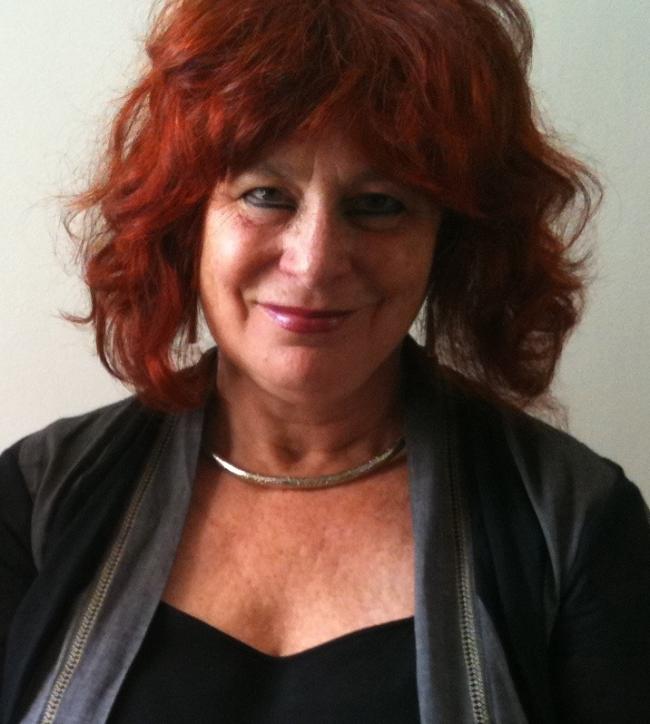
Meg Bortin
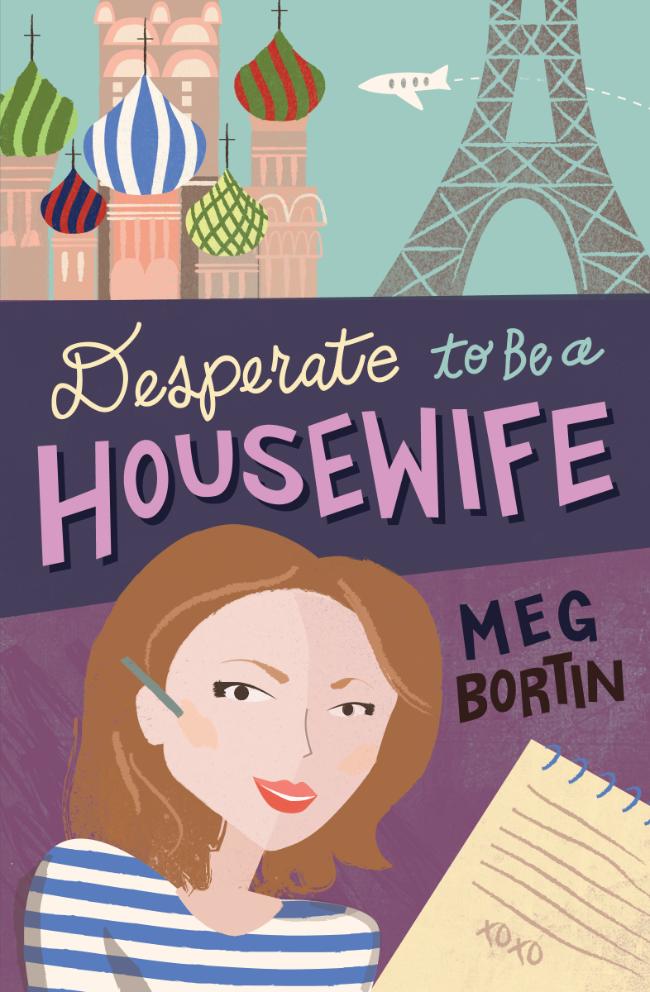
You’re also the author of a memoir, called Desperate to Be a Housewife. I’d love to know more about that. Were you really truly desperate to be a housewife?
Yes, I was! Of course, the title was a play on the name of the hit television series, but it was also serious in that – like many women of my generation who came of age when American values were undergoing seismic shifts – I had always longed for marriage and children but kept falling in love with men who wanted sexual freedom without commitment. In lieu of a settled life, I found a truly exciting career. The memoir, which follows my life from around 20 to 40, is a true story, but I renamed all of the people portrayed – in order, as I’ve mentioned on occasion, to protect the guilty. For myself I chose the name Mona Venture, a clin d’oeil at my non-housebound life (mon aventure).
Your essay Dear Djeneba was published in an anthology titled Family Wanted: True Stories of Adoption. That essay is about your decision to adopt a baby at an age when many people would have thought it’s too late to start a family. Tell us a little bit about that story. Was it hard being a first-time mom at your age? And how is it going now?
Adopting my daughter as a single woman at the age of 50 was the easy part. The hard part had been waiting for a man to decide that he wanted to raise a family with me. Once I found out that adoption was possible in France for someone of my age who was single and not even French, I applied – and 18 months later (yes, the span of two pregnancies) I became the mother of a darling girl who is now 26 and still the apple of my eye. Djeneba Rosa Barbara Bortin was born in Bamako, the capital of Mali, where I first met her when she was about one year old. We bonded immediately and have managed to stay close despite the usual ups and downs of relations between parents and children. There have been challenging moments in raising a child without a partner, but on the other hand I didn’t have someone second-guessing me every step of the way. So I’m a very happy mama indeed.
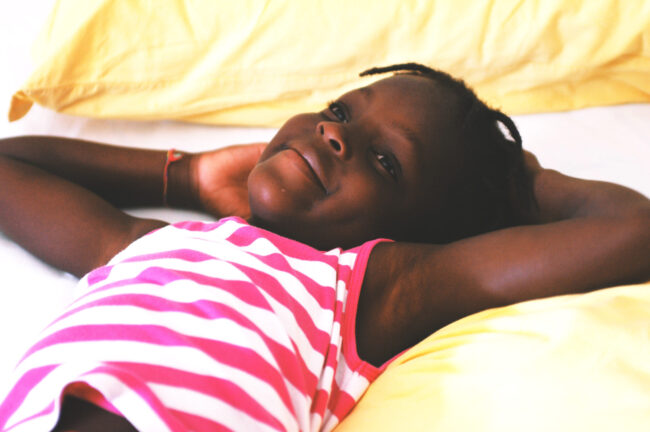
Djeneba at age 5
You’re a seasoned writer but The Rites of Man is your first novel. What were some of the particular challenges of writing a novel for the first time?
The Rites of Man went through many iterations before being published, and I think the biggest challenge for me, as for many journalists who turn to fiction, was detaching from the facts. In the early versions there were no chapters, only three main parts, and I actually included the date at the start of each small section within these parts. Eventually I realized that this would be a distraction for readers seeking to suspend their disbelief in order to enter the story. I also struggled with voice — creating a narrator’s voice that was different from my own. But I think this is a problem that affects many writers trying their hand at fiction, and not just journalists.
I think many writers – and aspiring writers – would love to know your thoughts about the advantages/disadvantages of publishing with a major publisher, a small press, or self-publishing. I think you’ve had experience with at least two of those, right?
I’ve actually had experience with all three, but I didn’t deal directly with the major publishers (Granta and Random House), as I merely contributed one piece to the anthology on adoption, and getting it published was handled by its editor. I had a very good experience publishing my novel with Ten16, a small press based in my home state of Wisconsin. The publisher, Michael Braun, was extremely helpful every step of the way. In contrast, self-publishing was more challenging as it meant editing and laying out the book on my own. In both of these cases, promotion was largely up to me, and that’s not my forte. But this is an issue that’s affecting writers across the spectrum today. If I’d written and published my novel when I first thought up the story back in 1996, before the proliferation of self-published books, I think I would have had a very different experience.
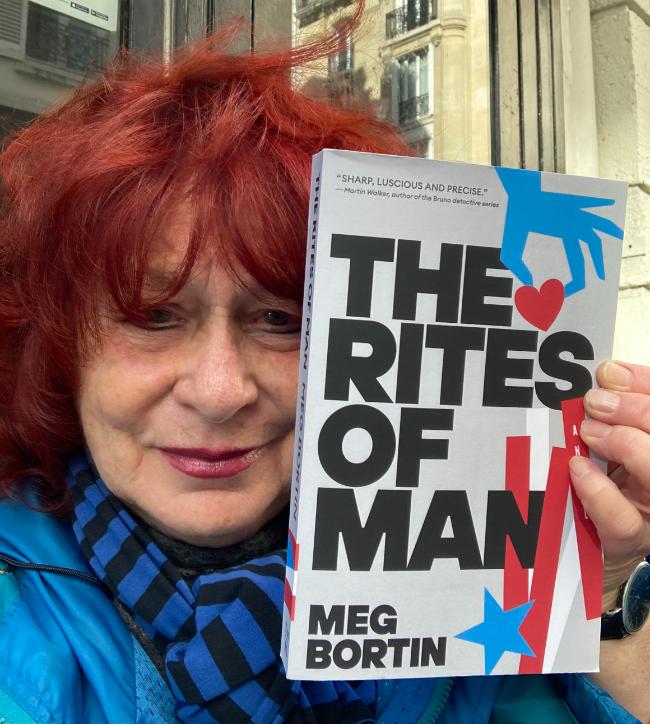
Meg Bortin
I hear you are a marvelous cook! And you have a blog called The Everyday French Chef right? Tell us more, please.
Many thanks for the compliment! I’ve always loved to cook, and as a young woman worked briefly as a chef both in Ithaca, New York, and in Paris. In 2011, after I’d left the International Herald Tribune, a friend asked me to give her cooking lessons. She brought along a couple of friends, and we had a lot of fun meeting once a week in my kitchen to create a three-course meal – starter, main course and dessert. Each time I wrote up the recipes, and after a year or so I had built up quite a collection. So I thought, why not write a cookbook? But when I sent in my proposal to a cookbook agent, she replied, yes, great, but unless you have tens or hundreds of thousands of followers, you have no hope of getting a cookbook published these days. I found this seriously depressing. But my daughter said, “Mom, no problem, just start a blog.” So now I’ve been writing The Everyday French Chef for 14 years. I still don’t have tens of thousands of followers, but there are more than 500 recipes on the site and I’ve had more than two million visits over time. So that’s enough of a reward. I enjoy writing the blog every couple of weeks – it allows me to keep my hand in – and I have no plans to stop anytime soon.
Any final thoughts you want to share? And/or do you want to tell us about what’s next for you?
I’d like to thank Bonjour Paris for this interview and invite your readers to get in touch. I can be reached via the Contact page of my author website, megbortin.com, and would be happy to answer questions about my novel, the writing life or anything else that may interest them. Also, I’ve prepared a recipe booklet featuring dishes that appear in The Rites of Man that I can send to anyone who’s read the novel (the recipe booklet contains spoilers, so it’s best to read the novel first).
As for what’s coming, I’d like to share some exciting news with your readers: I’m currently involved in editing a 50th anniversary special edition of The Paris Metro, the iconic little newspaper where I got my start. It will be available around town from June 1.
I also have a nonfiction work in progress. It’s a conversation among French Jews of my generation talking about how their parents managed to avoid deportation during WWII. These are riveting stories that risk being lost because the parents were reticent to talk about their harrowing experiences and even their children, now 70-something adults, are afraid to open up on the subject, especially given the current rise in anti-Semitism both here and abroad. I’m hopeful that a publisher will find this topic as compelling as I do.
Lead photo credit : Meg Bortin at the Moscow Times launch
Related Articles