
Lunching at the Bouillon Julien
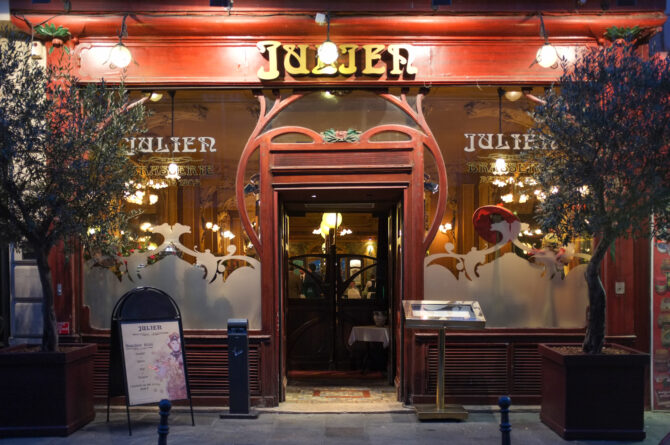

For me, the most enjoyable kind of meal in a Paris restaurant comes with a side of historical interest. The city’s famous bouillon restaurants offer precisely that with – even better! – traditional French cooking at great value prices, all set in gorgeous Belle Époque surroundings. To explore this irresistible combination, I set off to the 10th arrondissement in search of the Bouillon Julien, handily sited close to the Strasbourg St Denis métro station on Lines 4, 8 and 9.
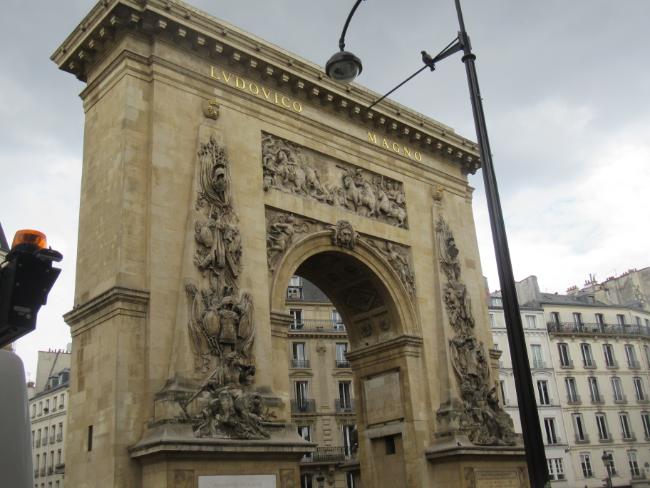
Unexpectedly, a little historical appetizer awaited me before I even reached the restaurant. At the start of the Rue du Faubourg Saint Denis I found the Porte St-Denis, a 25-meter triumphal arch built by Louis XIV. He chose this spot where La Voie Royale (royal road) crossed the remains of the city wall and led north to the Basilique St Denis. It was a route used by kings entering the city after their coronation at Reims and through which their coffins were processed in the opposite direction for their burial at St Denis. The king commissioned carvings to commemorate some of his battle victories and to represent the royal coat of arms, three golden fleur-de-lys topped by a crown. Then he ordered a gilded inscription to himself – Ludovico Magno (“Louis the Great”), dated 1672 or in Latin, Anno Domini MDC LXXII.

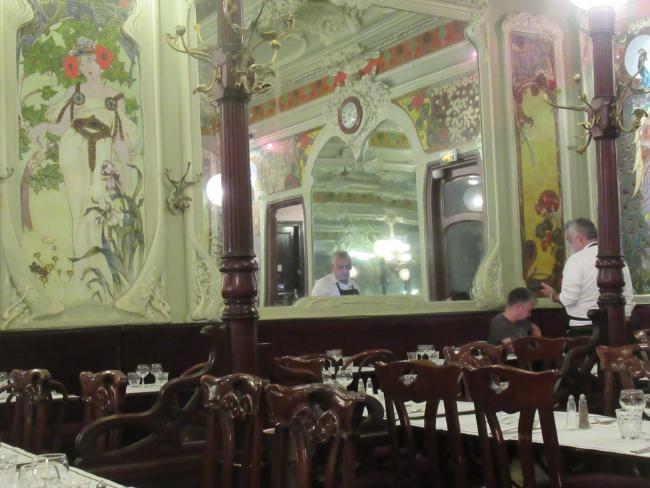
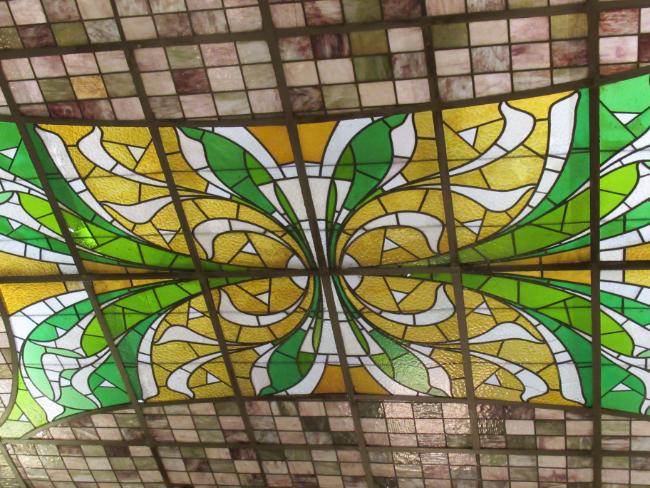
The Bouillon Julien was just a few doors beyond the arch, its entrance decorated by a tiled welcome greeting complete with Art Nouveau flourishes. A pair of bright blue peacocks flanked the lettering, reading Bouillon Julien depuis 1906. Stepping over it, the splendor of the interior struck me immediately. Globes of light on carved wooden pedestals lit up the intricately carved moulding on the walls and ceiling, art nouveau figures of women standing amid flowers and trailing foliage were painted directly onto the walls. Above the mahogany tables and carved wooden chairs, light shone through the floral designs of the stunning glass ceiling panels. In this Belle Époque setting, lots of 21st century customers packed the space and were enjoying lunch.
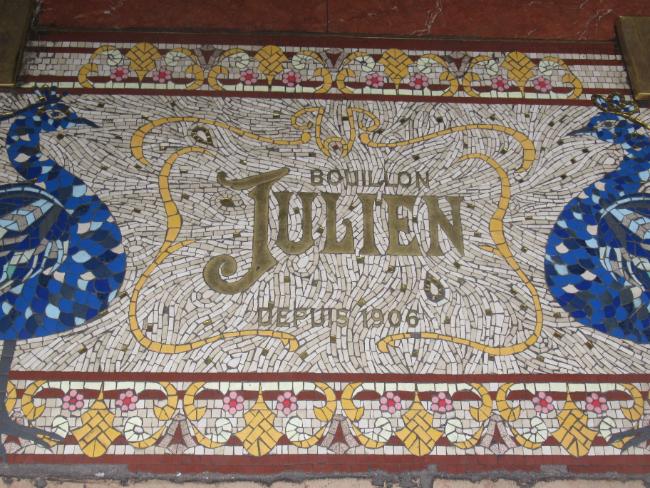
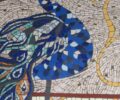
Edouard Fournier, who opened this restaurant in 1906, based it on other bouillons which served inexpensive, but nourishing food to workers at lunchtime. But he also wanted un décor somptueux, highlighting the Art Nouveau style in fashion at the time and no expense was spared. Mahogany was sourced in Cuba to create the bar, the artist Louis Trezel was commissioned to create the wall paintings, taking his inspiration from Alfons Mucha’s femmes-fleurs. Decorative peacocks strut prominently across the restaurant’s back wall, mirrors multiply the visual effects and light floods down through the colored glass ceiling, inspired perhaps by the glass canopies in the city’s covered arcades which date from the same period. Little wonder then that the restaurant was soon attracting large numbers of diners every lunchtime and its fame grew.
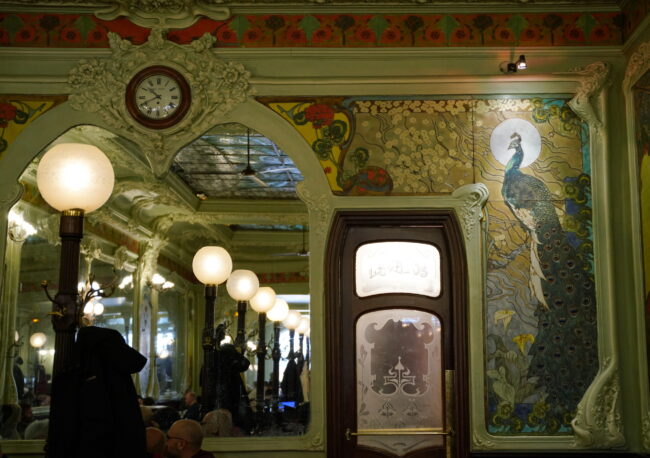
Ceramic peacock and other ornamental decor at Bouillon Julien. Photo: G.Garitan / Wikimedia commons
The menu, as we’d expected, was full of the things French grandmothers have been preparing for decades and I was determined to have the most traditional meal possible. I was tempted by leeks vinaigrette or snails in parsley butter from the hors d’œuvre list, but in the end it had to be œufs mayonnaise, just as the diners featured in the textbooks I used to teach from always seemed to choose. Then I opted for chicken as a main course, enticingly listed on the menu as suprême de volaille jaune, sauce champignons. My husband chose something typically bouillon too, namely the pièce du boucher or “butcher’s cut.” We were tempted by bream or trout, perhaps less so by calf’s head, and impressed by the vegetable options such as carrot purée, fried courgettes, crispy onions and mixed salad.
The food took me back to family meals at a penfriend’s house some five decades ago and I remembered the father of the family who always ate heartily through two courses and then, when dessert was expected, declared gleefully that it was now “time to get serious”: Passons aux choses sérieuses. All the old favorites were there, crème brûlée, baba au rhum, mousse au chocolat, fromage blanc, meringue and I fondly recalled eating all of them during the two weeks of my first ever stay with a French family. Today, I branched out just a little and had a Dessert Julien, a rum and raisin flavored delight smothered in chocolate sauce. Cheeses were on offer too, charmingly listed under the heading dernière touche salée, or “last savory touch”: comté, camembert, fromage de chèvre, so again, the classics.


For just over 20 euros, I had feasted on three courses of well-cooked, traditional French fare, definitely in keeping with the early bouillon owners’ desire to provide good, nourishing meals for a very reasonable cost. The original bouillon was opened in 1855 by Pierre-Louis Duval and its name – bouillon means “stock” – reflected the fact that he served soups and braised dishes, often using the cheaper cuts of meat, to the workers of Les Halles, teasing maximum flavor from ordinary ingredients at a price they could afford. Hugely popular, bouillons proliferated all over Paris until, by the end of the 19th century, there were about 250 of them. Although they largely disappeared over the 20th century, they have been undergoing a recent revival and today you will find quite a number in the city.
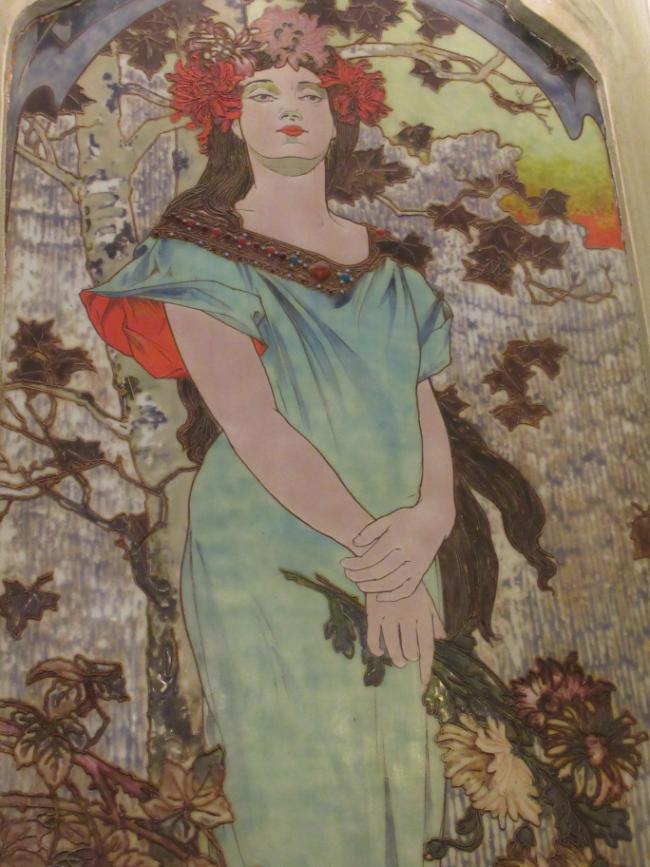

What to expect? Bouillons are unstuffy restaurants, despite their often sumptuous décor. For example, you can book ahead for Julien, but you don’t have to. You can just turn up and, if necessary, wait to be seated. The service is brisk and efficient, designed to cater for relatively large numbers without rushing people through. Inside you will find many French customers, often colleagues lunching together or friends meeting for a tasty, but not too expensive, meal. And, as word spreads, you’ll probably find a sprinkling of tourists too. There’s a degree of informality; for example you may be asked to share a table with others if that’s where a space comes up. Yet you will also typically find that the serving staff are dressed in black and white and that you are surrounded by an Art Nouveau décor which will take you back a century or more.
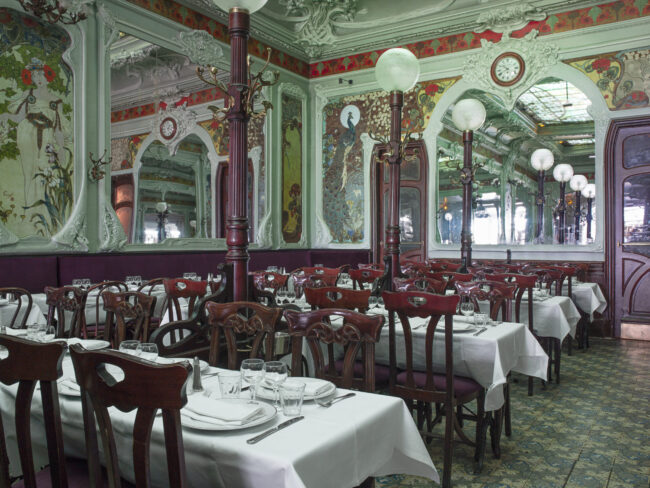
Art Nouveau decor at the Bouillon Julien. Wikimedia commons
The Bouillon Julien is very proud of its history and of keeping to bouillon traditions, as summarized in the slogan printed on the back of every menu. It reads “ici, tout est beau, bon, pas cher” – here everything is beautiful, good and inexpensive – and the text underneath elaborates. It’s beautiful because its classic bouillon style has been lovingly restored and the restaurant looks just as it did in its early 20th century heyday. It’s good because the head chef, Christophe Moisand, bases the menu around top-quality seasonal produce chosen for its freshness. And, pas cher, it offers an excellent balance between quality and price. Julien is, ends the text, “proud to be a bouillon authentique.” Indeed, thanks to its Art Nouveau design, it is classified as monument historique.
I‘m not surprised that bouillons are back in vogue. Who wouldn’t want to eat traditional French cuisine in stunning Belle Époque surroundings, all for a modest price? I loved dining at Bouillon Julien and will certainly return. But I also plan to work my way through the city’s other bouillon options, starting with those listed below.
16 Rue du Faubourg Saint-Denis, 10th
Open seven days a week from 11:45 am-12 midnight
Other bouillon restaurants to try include:
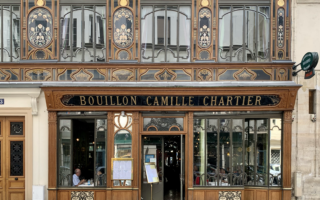
Bouillon Chartier: 3 different restaurants: Grands Boulevards, Montparnasse and Gare de l’Est
Lead photo credit : Façade of Bouillon Julien. Photo: Vinceloo / Wikimedia commons
Related Articles
By Marian Jones