Can Dry January Work in France?
There is a program called Dry January that encourages drinkers to forgo alcohol for the month and ask themselves questions like: How many drinks do I have a day? Why? And how do I deal with the social pressure to drink?
Begun in the UK in 2013, Dry January has spread throughout the world. In 2020 it was launched in France as Défi de janvier (January challenge), but it was unclear if it would be welcomed in a country where wine is an important part of daily life.
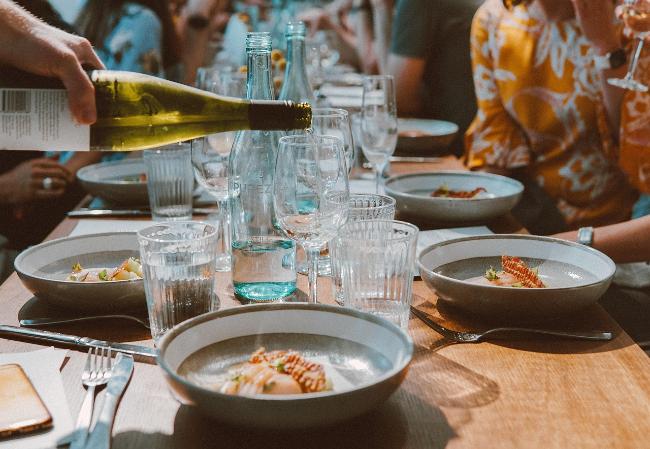
Dry January meal. Photo credit: Pixabay
A Controversial Start
At first, the French government indicated that it would support Défi de janvier, just as it supports an annual tobacco-free-month initiative. But after meeting with representatives of the wine industry, President Macron chose to not to do so.
Repeated attempts to garner government support have gone nowhere, with anti-addiction groups accusing the government of succumbing to “pressure from the alcohol industry.” French Health Minister Yannick Neuder has responded by saying, “Let’s stop attacking our winemakers.” Thus, the latest Défi de janvier, launched this month, is again without the backing of Macron’s government.

courtesy of defi-de-janvier.fr
Success!
Despite the lack of government support, the initiative has been embraced by the French. In 2025, an estimated 4.5 million of them participated, especially those who consider themselves “at-risk” drinkers. They reported numerous positive health effects, like better sleep, and the effects lasted well beyond January — nine months later, a majority of participants reported a reduction in their drinking.
Trending Down
Perhaps the success of Défi de janvier should not be a surprise, given the downward trend of alcohol consumption in France. Recent research on the dangers of alcohol have accelerated this trend, and tougher standards for drinking and driving have caused many to avoid that extra glass at dinner.
Today the amount of alcohol consumed in France is less than half what it was 60 years ago, with most of the reduction being of wine. Today, wine makes up barely more than half of alcohol consumption, with beer a quarter and spirits the rest.
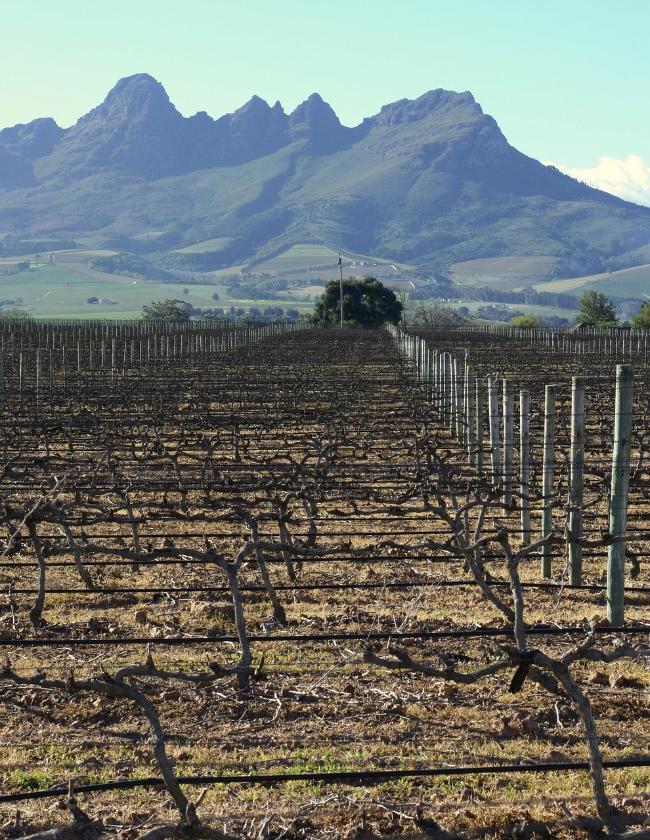
Vineyard. Photo credit: Pixabay
No wonder the winemakers don’t want to be “attacked.” The ever-dwindling amount of wine consumed has led to thousands of vineyard acres being converted to other crops, or even abandoned. Many winemakers are in financial difficulty, and demands for government aid have increased.
New Kids in Town
What is replacing all that wine? In many cases, it’s no- and low-alcohol beverages, referred to in France as NoLo.
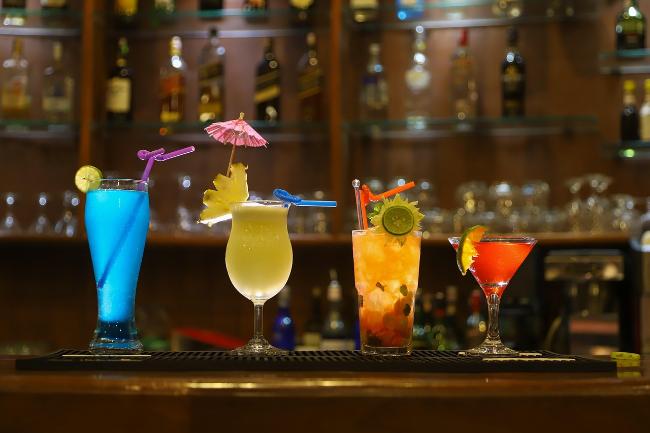
Dry January mocktails. Photo credit: Pixabay
No-alcohol beer is the biggest winner, making up nearly three-quarters of NoLo sales— popular brands are Heineken 0.0 and the French “sport beer” Goxoa. After beer come NoLo aperitifs, also called mocktails, from companies like Petit Berét. As for NoLo wine, outside of sparklers like “No-secco”, sales remain modest, as making a tasty version remains a challenge.
Specialty shops are thriving, with chains like La Cave Parallèle and Gueule de Joie, and NoLo products can be found in many supermarkets.
Interest in these new drinks tilts heavily towards the young, who are less wedded to tradition and are attracted to “clean” living. Their elders, by contrast, remain fond of their wine. France remains one of the top wine-consuming countries in the world, after only Portugal and Italy, so there is hope for French winemakers.
Santé!
Lead photo credit : Dry January empty glass. Photo credit: Pixabay
More in Défi de janvier, Dry January, mocktails in Paris, wine
Related Articles