
The Smart Side of Paris: Two Sides to Every Story

Every year, France’s half a million high school graduates line up for the rigorous BAC exam which, if they pass, opens the door to university life. To pass, they must write essays on philosophy that demonstrate their ability to analyze complex texts and, above all, present a nuanced argument that shows their ability to effectively relate both sides of the argument: le pour et le contre (the “for” and the “against”). In 2025, they faced, “Is the truth always convincing?” In 2024, it was “Can science satisfy our need for truth?” Le Parisien reported that one 17-year-old fretted after answering a question on John Rawls’ theory of justice, “There were so many avenues one could explore to analyze the text… I chose one, but when I reread it, I wondered if I hadn’t gone off-topic…”
You might wonder how a 17-year-old high school student could even conceive of there being multiple options available to write about an American philosopher. Perhaps the answer lies in France’s long cultural history of always looking at le pour et le contre.
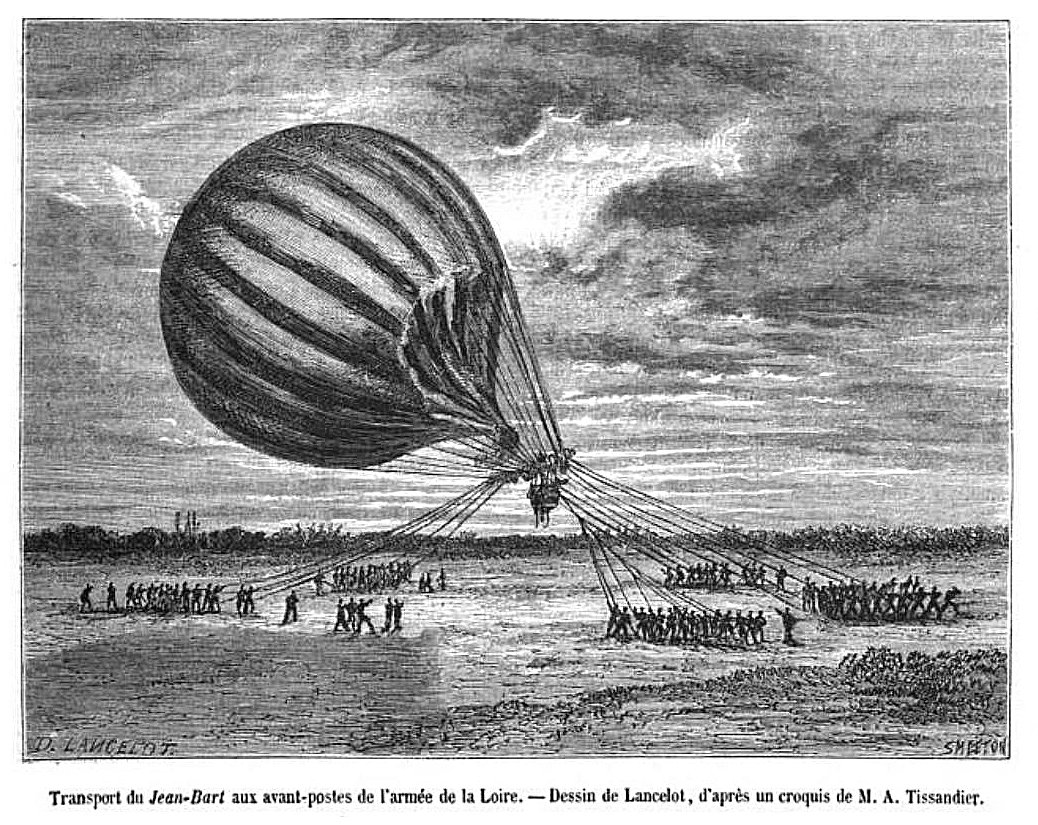
Enfoncement dynamique du Jean-Bart, Le Magasin Pittoresque, 1872. Public domain
If you have ever visited the peaceful Square Saint Lambert, you may well have walked right past the answer without knowing it. It begins with the name of a tiny street along its edge: rue Théophraste Renaudot (1586-1653). If you walked down it, perhaps you were taken with Square Saint Lambert’s simple beauty, its fountain, or even a plaque explaining its history as the launching site for hot air balloon flights among the wealthy escaping the Franco-Prussian war in 1870. But if you didn’t wonder about the street with the unusual name next to it, don’t worry: most people haven’t heard of one of the most influential and least remembered thinkers in the history of Paris.
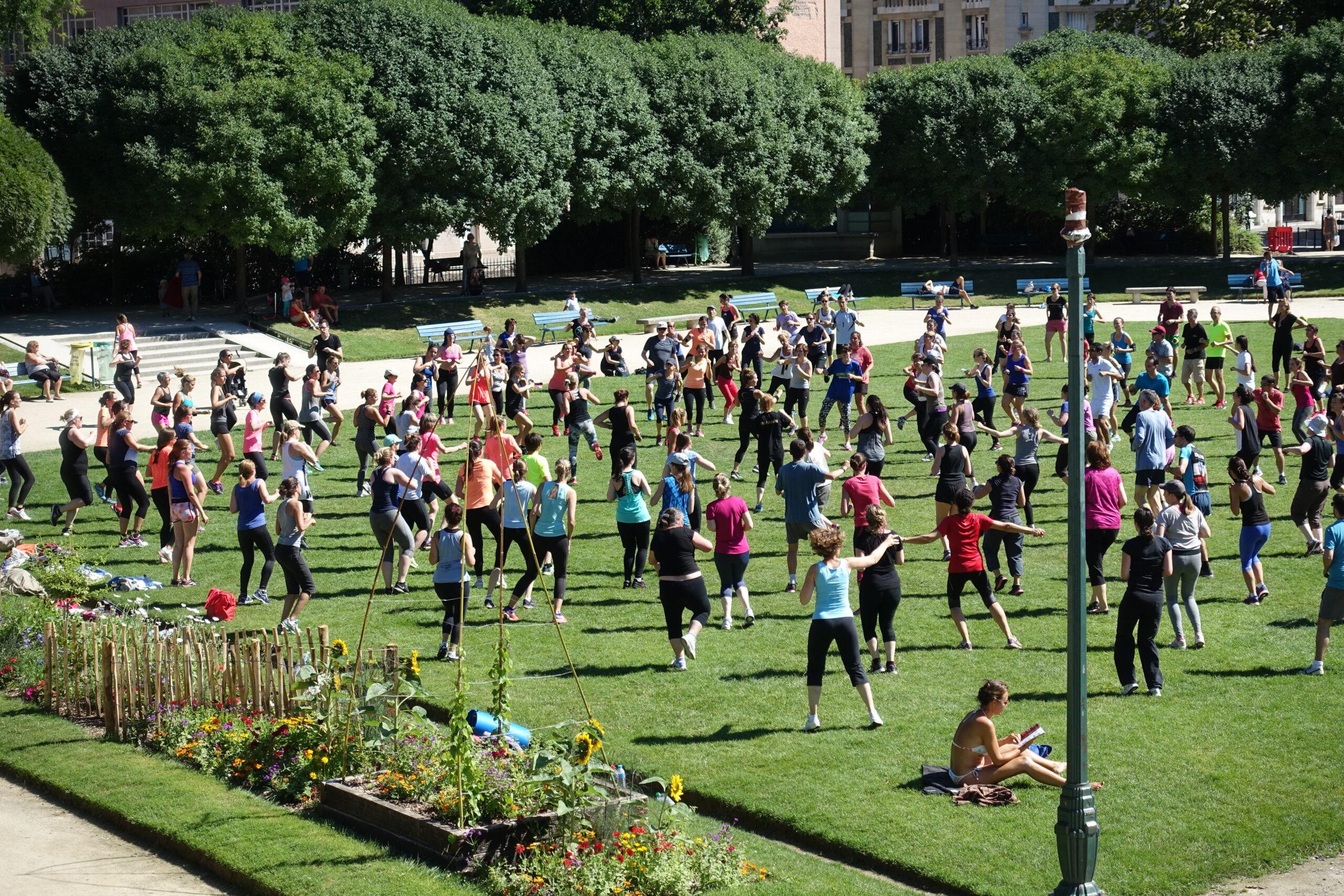
Outdoor exercise class in the Square Saint-Lambert. Photo: Guilhem Vellut/ Wikimedia Commons
Théophraste Renaudot was King Louis XIII’s physician and a man of remarkable ingenuity. For example, he began what was probably the first employment agency, a “market” where employers and the unemployed could meet. In 1631, he founded France’s first newspaper, La Gazette de France. Around 1630, he began to sense that Paris was filled with curious people who wanted to know things, but for whom university life was unavailable. And so, he formed an institution that offered weekly conferences “on intellectual topics of interest for anyone and everyone.” They ran “every Monday for nine years from 1633 to 1642,” and offered discussions on everything from windmills to wine, from medicine to marriage, from military enlistment to public speaking. People of every social class came to watch scientific demonstrations, read poetry, and learn.
The conferences’ defining characteristic was that no matter the topic offered, two sides of the issue were offered: le pour et le contre. In an age that looked to Antiquity for answers, Renaudot and his speakers highlighted modern learning and innovation. Rather than accept what Aristotle or Galen wrote about science, medicine, or philosophy, he “voiced the suspicion that too many things were opposed simply because they were new…” This allowed a comparative approach in which ancient ideas could be critically analyzed, rather than passively accepted.
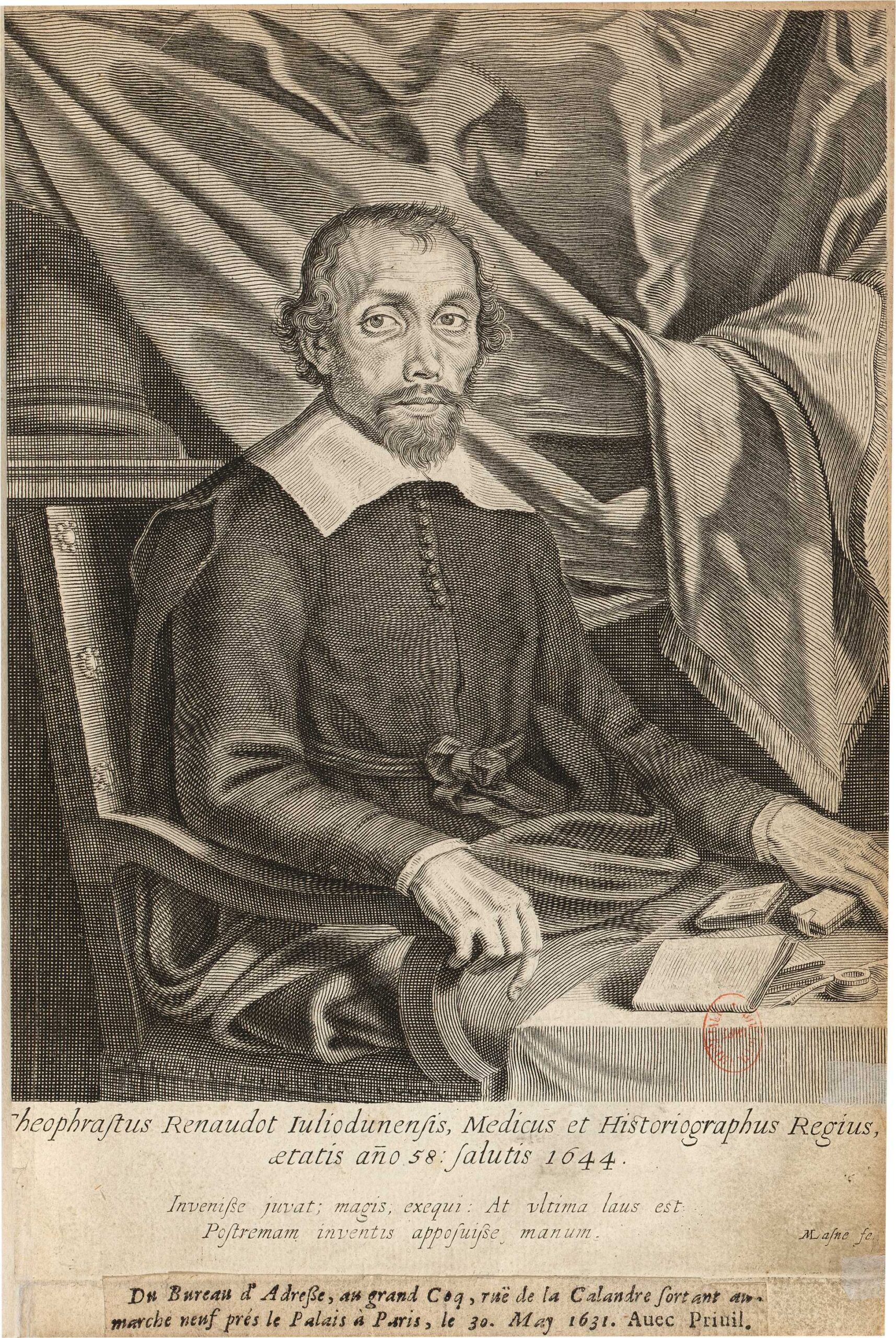
Theophraste Renaudot, Recueil des Gazettes de l’année 1631 via Gallica. Public domain
Renaudot’s conferences are alive and well in France and in Paris. Every issue of Philosophie Magazine (2024 “magazine of the year” in France) holds a conversation between two or more thinkers expressing different views on a topic: a debate about the virtues and vices of faith and reason (June 2024); another about the dangers or blessings of “wokeism” (June 2023); one that questions whether something is broken in public discourse (April 2026). And every issue contains a dialogue between famous philosophers: Husserl vs. Bergson; Sartre vs. Merleau-Ponty; Rousseau vs. Voltaire; Locke vs. Hobbes; Habermas vs. Nietzsche. And in the true spirit of Renaudot, the magazine gives voice to common people to offer their opinions and experiences on important issues such as personal identity and conflict resolution. The magazine is a veritable lesson in French conversation that survives in the art form known as le pour et le contre.

Plaque to Théophraste Renaudot, 8 quai du Marché-Neuf. Credit: Wikimedia Commons / Mu
But if you really want to see Renaudot’s ghost, you need to go to a café-philo: a philosophical café. In Paris, there are two famous ones held every Sunday in cafés on the Place de la Bastille. Forty or so everyday people, led by one moderator, proffer eight to 10 questions that are put to vote for debate: Is there such a thing as forgiveness? Is the division between body, mind, and spirit an illusion? Can we still live together in an increasingly fragmented society? The question with the most votes becomes the topic for debate for the day. What follows is two hours of amicable exchange of views showing that there are two sides to every story.
So, if you still wonder how a high school student could fret about properly covering the many sides to John Rawls’ theory of justice, look no further than Renaudot’s ghost, which continues to remind us through the centuries that dialogue is one of the great passions of French life.
Lead photo credit : Café des Phares, Place de la Bastille. Photo credit: Booklover206/ Wikimedia commons
Related Articles


REPLY
REPLY