
Queen Elizabeth II’s Special Relationship with Paris
- SUBSCRIBE
- ALREADY SUBSCRIBED?
BECOME A BONJOUR PARIS MEMBER
Gain full access to our collection of over 5,000 articles and bring the City of Light into your life. Just 80 USD per year.
Find out why you should become a member here.
Sign in
Fill in your credentials below.
President Macron knew that when Queen Elizabeth II died on September 8th, 2022, France – and Paris especially – had lost a very special ally. In his warm and heartfelt tribute, delivered in English the very next day, the president spoke of the queen’s “deep affection” for his country and her unparalleled links to those who governed it. He recalled that in the 70 years since her coronation in 1952 she had “known and spoken with all of our presidents.” No other country, he emphasized, “had the privilege of welcoming her as many times as we did.”
It’s true. Queen Elizabeth made many private visits to France, but it was her five state visits which will linger in the memory of all who saw them, whether at first hand or through the media. From the first state visit, centered on Paris, as a new young queen in 1957, to the final one in 2014 when she was nearly 90, each was a triumph of diplomacy which deepened the bond between her country and its next-door neighbor. Now, in 2026, the year which marks the centennial of her birth, is a poignant moment to remember these unique visits, each special in their own way.
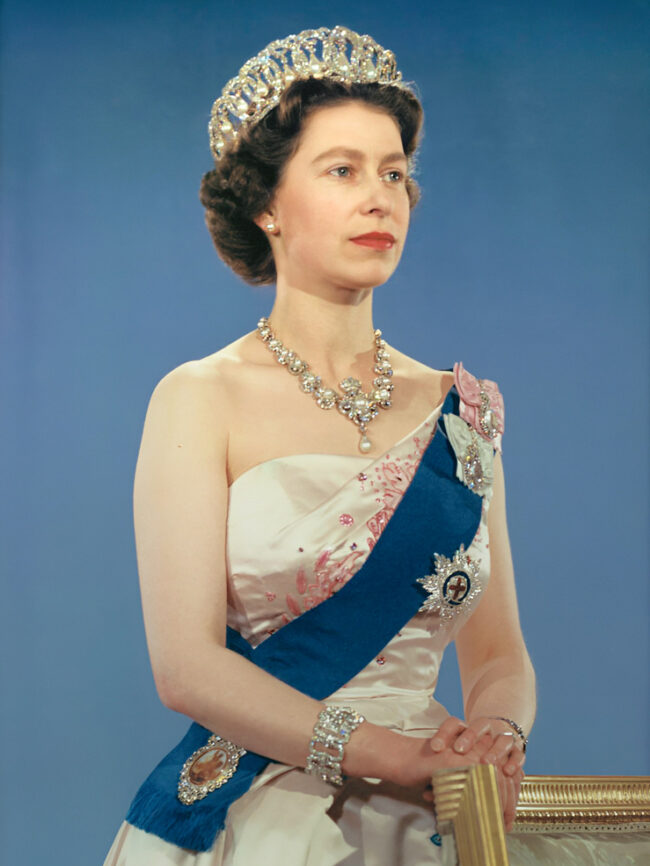
Official portrait of Queen Elizabeth II before the start of her 1959 tour. Public domain
The whole of Paris was excited in April 1957 when it was announced that Queen Elizabeth would be making her first state visit to Paris. Maybe she would bring a little of the glamour she represented in post-war Britain with her? Paris pulled out all the stops. Glittering events were staged at big-hitter venues such as Versailles, the Opera Garnier and the Louvre, but there were also moments for reflection, including laying a wreath at the Arc de Triomphe’s tomb of the unknown soldier, a moment which recalled the sacrifices so recently made by both Britain and France in the Second World War and underlined the special relationship between the two countries.
Showcase events made the headlines in both countries. After attending a gala performance at the Opera, the queen was pictured waving from the balcony, paying tribute to her hosts through her Norman Hartnell gown, embroidered with “the flowers of the fields of France.” She enjoyed a concert in front of the rose window in Notre Dame, traveled along the Seine to watch a firework display over the iconic Alexander III bridge, lunched in the Galérie des Glaces at Versailles. At the state banquet at the Louvre – where she went on a private tour of the galleries – one of the courses served became a talking point ever after. Queen Elizabeth was said to be delighted by the “Perigord hedgehog in its nest,“ a ball of foie gras served with slivers of truffle arranged to look like spikes and the pâté went on to be served on every subsequent state visit.
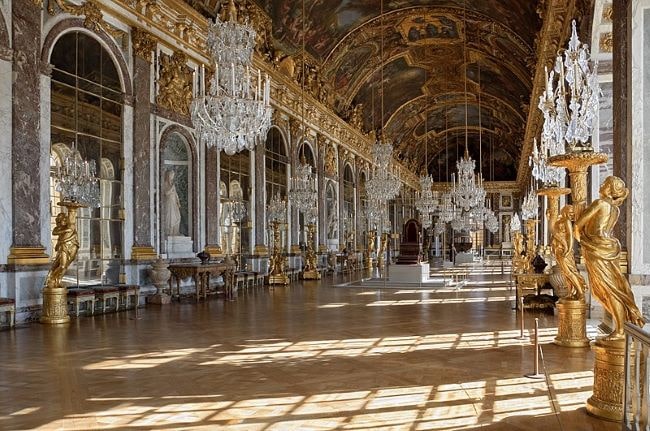
Hall of Mirrors at Versailles. Photo: Myrabella / Wikimedia Commons
The next state visit took place in 1972, designed at least in part to mark Britain’s entrance into the European Common Market, the forerunner of the EU. The five-day visit, hosted by President Pompidou, began with a 101-gun salute as the royal party drove though Paris and included a gala theater performance and state banquet at the Palace of Versailles. In a clever play to Her Majesty’s well documented love of all things equestrian, she watched a horse show on the Champ de Mars. She was also taken to see horse-racing at the Longchamp course at Vincennes, sure to have been another personal highlight for her!
The queen toasted the president and said “I have come to express to you the friendship of my people for France.” But the visit had a poignant personal goal too because, accompanied by her husband, Prince Philip and her son and heir Prince Charles, she took the opportunity to visit her uncle, the former Edward VIII whose abdication in 1936 had led directly to her becoming queen. Edward, then known as the Duke of Windsor, had been living in exile with his wife, Wallis Simpson, in the Bois de Boulogne ever since. He was now terminally ill and the queen, who had not seen him since the abdication, spent 15 minutes in private conversation with him.
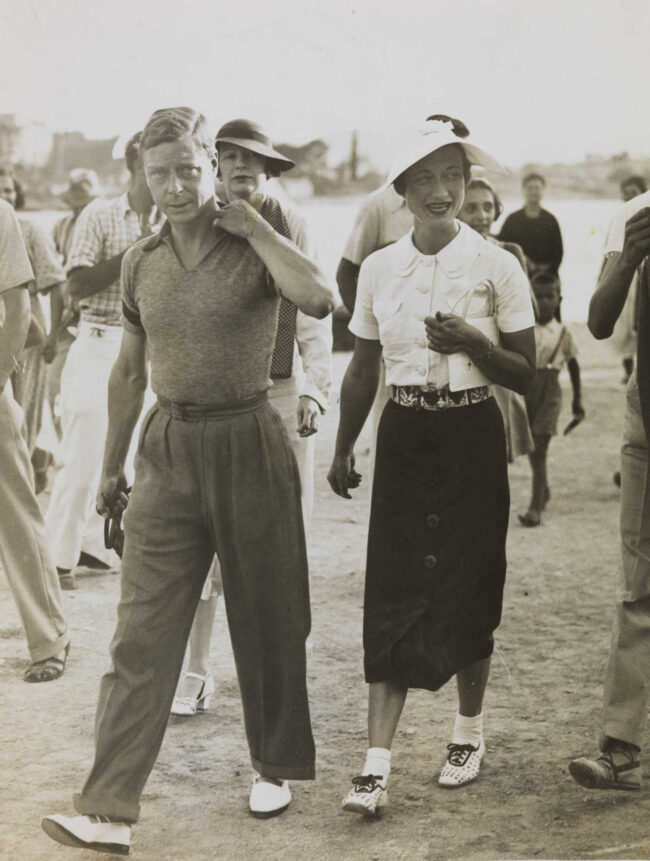
King Edward VIII and Mrs Simpson on holiday in Yugoslavia, 1936. National Media Museum UK
In 1992, Her Majesty was welcomed back to Paris by President François Mitterrand. This visit was arranged partly with the imminent opening of the Channel Tunnel in mind, another historic link between the two countries. There were some familiar events such as a motorcade trip down the Champs Élysées and a return visit to the Louvre – partly to see Ai Wei-Wei’s recently installed pyramide entrance – but also some “firsts.” The queen toured the rose garden at the Bagatelle Park in the Bois de Boulogne and hosted a state banquet on the royal yacht Britannia.
Following this Paris visit, the queen and Prince Philip went on to tour the vineyards of the Bordeaux area, using the royal yacht as their base. Her Majesty was later to declare 1992 as her personal “annus horribilis,” the year when Windsor Castle was badly damaged in a fire and she was beset by family problems. Three of her four children’s marriages broke up including the high-profile drama of the separation of the Prince and Princess of Wales. Perhaps a visit to France provided a welcome change of scene and a chance to focus on other things?
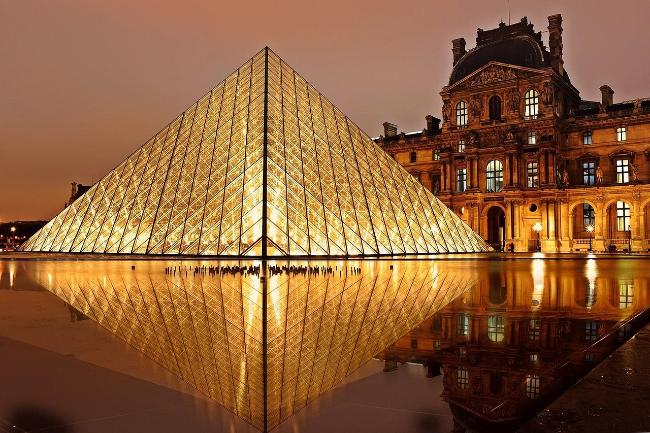
The Louvre Pyramid by I.M. Pei. Photo credit: Edi Nugraha / Pixabay.
2004 saw the centenary of the Entente Cordiale, the treaty signed between Britain and France at the beginning of the 20th century which was designed to resolve old quarrels and see the two countries enter the new century in a spirit of unity. The anniversary was an excellent reason for another state visit and this time Her Majesty traveled to Paris by Eurostar and was hosted by President Jacques Chirac. New ways were found to entertain the queen, for example when President Chirac took her pastry shopping at the renowned patisserie Stohrer in the foodie haven of Rue Montorgeuil. She was also treated to a display by members of France’s elite cavalry, the Cadre Noir, performed for her on the Champ de Mars.
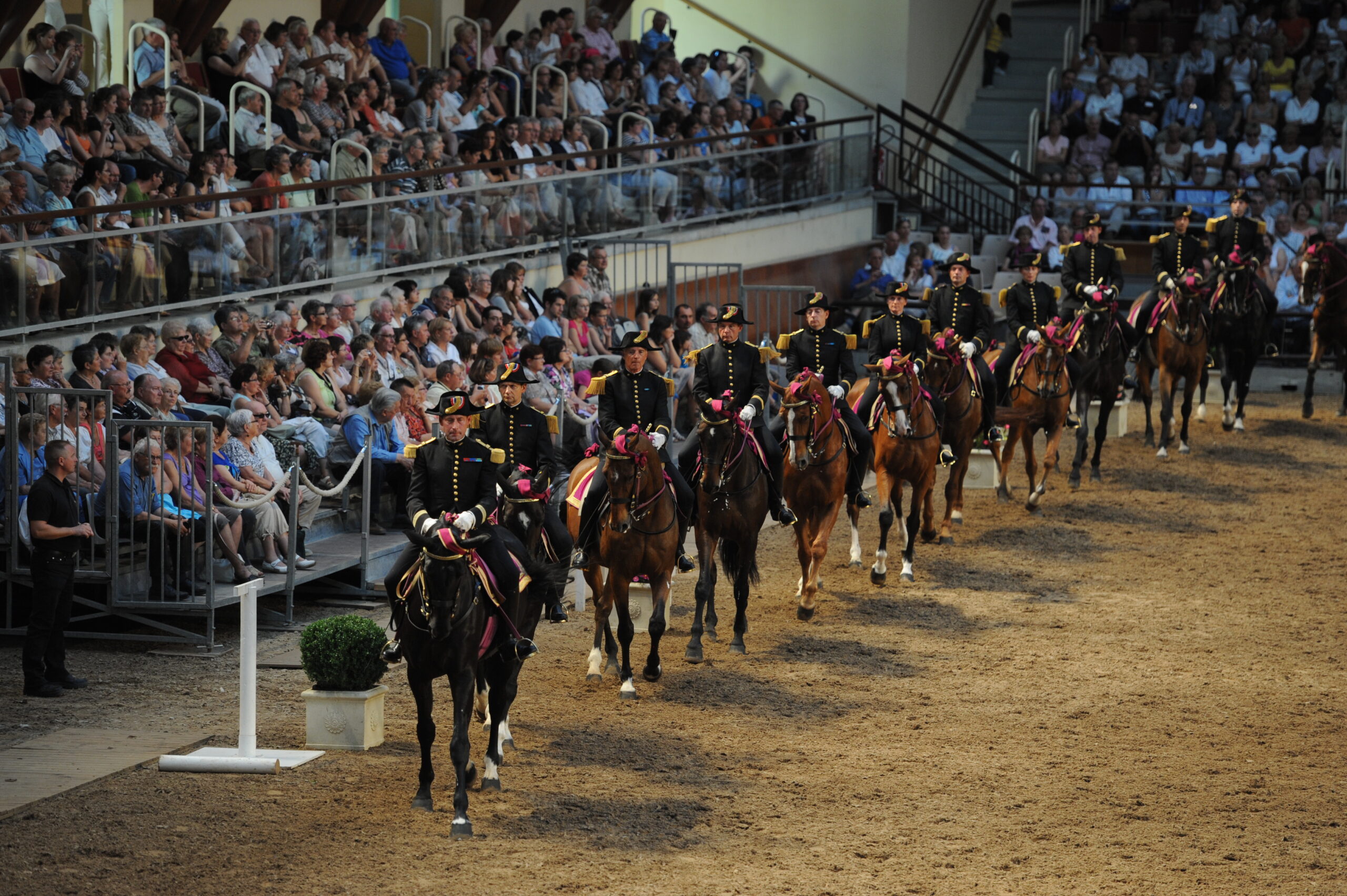
The Cadre Noir. Photo credit: Alain Laurioux/ Wikimedia commons
The speech Her Majesty gave at the state banquet summed up much that is special about the relationship between Britain and France. She highlighted the importance of a continuing entente cordiale between the two countries. Their shared history includes many conflicts, she acknowledged, but they have not been to war since 1815. “On the contrary,” she continued, “we have stood together, resolute in defense of liberty and democracy, notably through the terrible global conflicts of the 20th century.” The two countries may be different, she said, but “Vive la différence” and – more importantly, “Vive L’Entente Cordiale.”
Her visit in 2014 was in commemoration of the 70th anniversary of the D-Day landings and she was joined in Normandy by Presidents François Hollande and Barack Obama to mark the occasion. A memorial event was held on Sword Beach and the queen also met Commonwealth veterans in person at Bayeux Cemetery. In her speech that evening at a state banquet at the Élysée Palace, she praised the courage of the Allied forces who had liberated France. But, mindful as ever of all the sacrifices made, she continued, “Our peace and prosperity can never be taken for granted and must constantly be tended, so that never again do we have cause to build monuments to our fallen youth.”

Flowers In The Marché des Fleurs. Photo credit: Jim Linwood/ Wikimedia commons
This turned out to be her last state visit to France and by now Queen Elizabeth had very much become a revered elder stateswoman and so it seemed a fitting moment for the city to express its affection for her. On her very first visit to Paris, the queen had visited the flower market on Île de la Cité and had always kept fond memories of it. So, in tribute to her, it was decided to rename it the Marché aux Fleurs – Reine Elizabeth II and to install a plaque marking the occasion. The queen must surely have been very touched by this.

Marché aux fleurs – Reine Elizabeth II plaque. Photo: Geralix/ Wikimedia commons
There is no doubt that she had a special tie to Paris, summed up in one of her speeches when she said “Like so many of my countrymen I can never tire of this city’s elegance and charm.” Paris – and France – loved her back, I think, and I was especially struck by something President Macron said on the day after she died. Expressing his condolences to UK citizens in English, he said “To you, she was your Queen. To us, she was THE Queen.” From the proud president of a republic, that seemed especially moving. He then added that “Elizabeth II mastered our language, loved our culture and touched our hearts.”
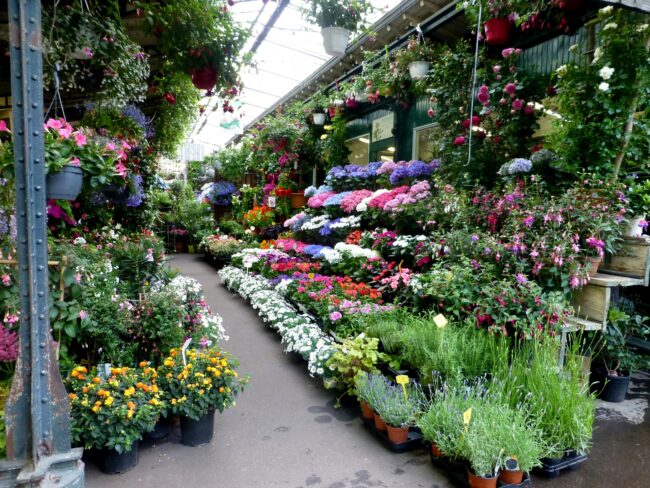
Marché aux Fleurs – Reine Elizabeth II. Photo credit: Als33120 / Wikimedia commons

Marché aux fleurs Reine-Elizabeth-II. Photo credit: Alexander Baranov / Wikimedia commons
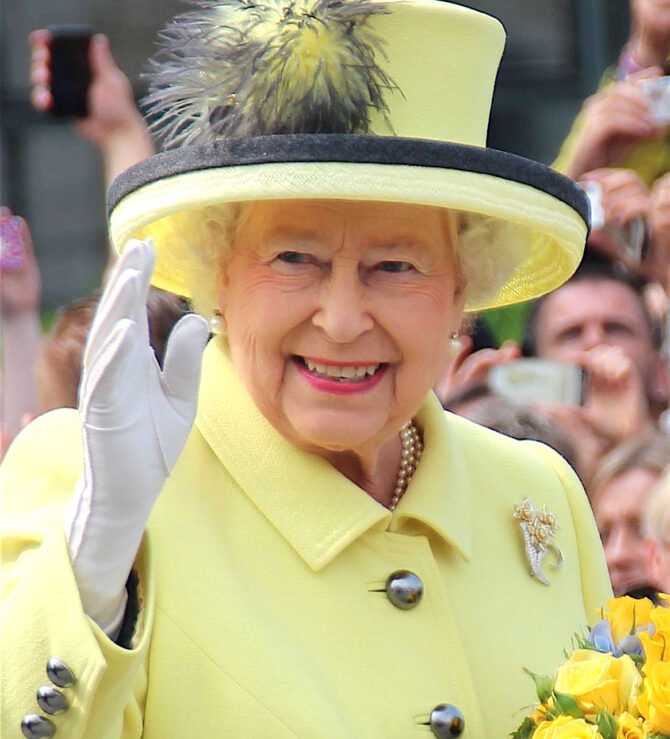
Lead photo credit : Queen Elizabeth II in Berlin 2015. Photo credit: PolizeiBerlin/ Wikimedia commons
Related Articles
By Marian Jones