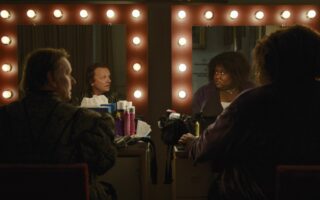
Adèle Exarchopoulos is Brilliant in Garance
- SUBSCRIBE
- ALREADY SUBSCRIBED?
BECOME A BONJOUR PARIS MEMBER
Gain full access to our collection of over 5,000 articles and bring the City of Light into your life. Just 80 USD per year.
Find out why you should become a member here.
Sign in
Fill in your credentials below.
Jeanne Herry’s last film, Je Verrai Toujours Vos Visages (All Your Faces), was an ensemble piece with a clear theme and dramatic situation. With Garance she focuses on the eponymous heroine, powerfully played by Adèle Exarchopoulos (who was also in Je Verrai …). Seeing Ms Exarchopoulos in a film one always mourns the great roles this French female Brando isn’t getting. While her role here is still not certifiably great, she’s been given latitude for a wide spectrum of emotion, as well as character development over time.
Freed from the constraints of a central drama, the director seems to lose herself in the life of Garance. Her story often seems like one tumultuous thing after another, with not much logic or coherence. In some ways we can appreciate this type of storytelling: It feels intensely real in ways a carefully laid-out thesis or hammered-together plot does not. With conventional films it’s all of a piece and on the surface, while Garance gets under your skin from the get-go and stays there.
“Garance.” Chi-Fou-Mi Productions/ Trésor Films/ Artémis Productions/ Studiocanal/ France 3 Cinéma/Canal+
Ms Herry tries to gives a semblance of order by implicitly dividing her film into discrete parts. At first we see Garance in her vocation as an actress. In her early 30s, she supports herself not with a day job but with basic acting work: prop girl in a theater, school-kid entertainment, film dubbing. She’s a talented actress who throws her all into these jobs, refusing to admit frustration, pretending that they’re more meaningful than they are.
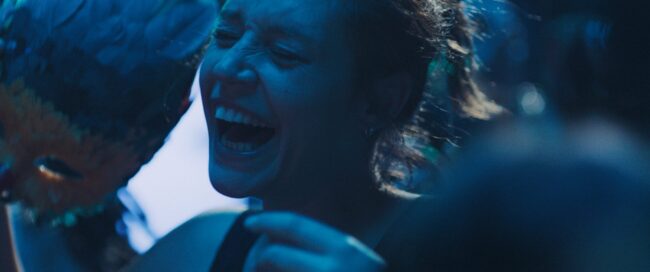
There’s also a personal dimension as we see Garance drained by an assortment of reckless men. Her family can also be demanding. Most of all she hangs out with a cohort of friends (who tellingly don’t seem to be actors) doing an extended bar-and-party crawl that seems to dominate their lives. It may look like mere urban decadence, but it gradually becomes clear that Garance has a dire drinking problem.
Mi Productions/ Trésor Films/ Artémis Productions/ Studiocanal/ France 3 Cinéma/Canal+
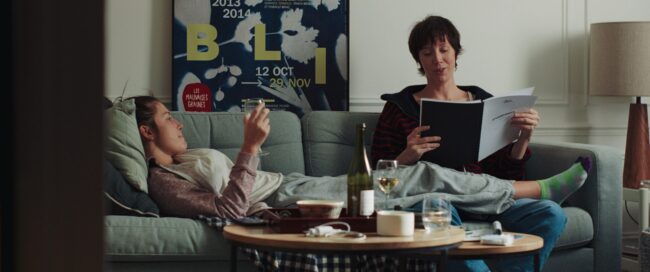
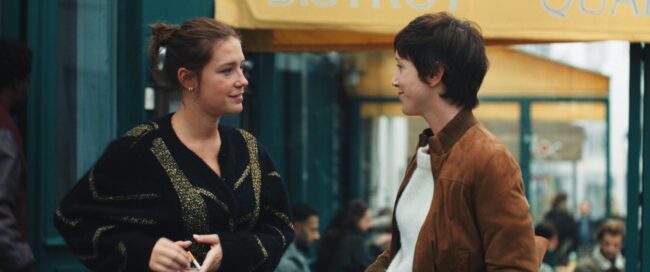
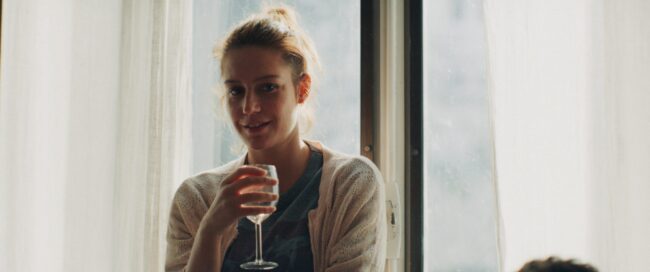
After her disillusionment with men leads Garance to experiment with a woman acquaintance, she never turns back. She meets Pauline, a theater set designer, and finds the emotional solace she’s been searching for, or simply needed. This aspect of the film is affecting, but is curiously unerotic. It’s as if the director wanted to make an anti-Blue Is the Warmest Color. Instead of two lesbian beasts of passion, she depicts Pauline as the archetypal good partner: wise, tolerant, supportive. Garance turns normal in her company, while males disappear from the picture, or are relegated to subordinate positions (like Garance’s likeable schlub of a flatmate).
A problem with this sequential approach to Garance’s story is that as we move to a new section the previous one is all but forgotten. So what’s happening with the acting? we wonder. This may have to do with Garance’s character, running away from problems (without admitting them), searching for some ultimate solution (without admitting that either). It’s what the French call the fuite en avant.
Mi Productions/ Trésor Films/ Artémis Productions/ Studiocanal/ France 3 Cinéma/Canal+
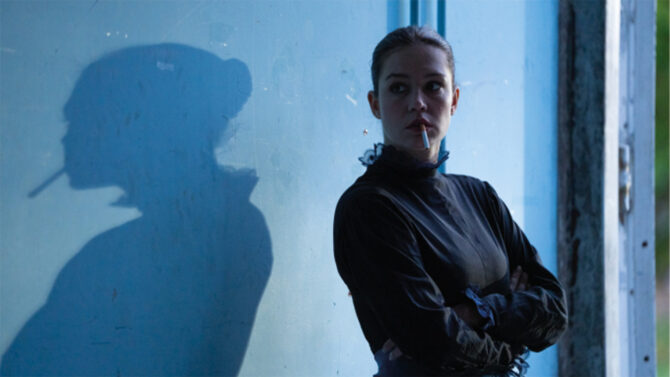
Adèle Exarchopoulos is extraordinary, as usual. In this role (as in others) she can be both electrically emotive and profoundly still. The director shoots her face in an unadorned way, which only sets off her magnetic eyes and mouth even more. The rest of the cast is very good, though none of the characters fully challenges her. The men are feckless, the band of friends convivial but light as a feather. The two major counterweights to Garance are Sara Giraudeau as her partner and Hélène Alexandridis as the doctor she sees about her alcoholism. Ms. Giraudeau does a sturdy, professional job as Pauline; but the role needed a stronger actress, a Valeria Tedeschi-Bruni, say.
Mi Productions/ Trésor Films/ Artémis Productions/ Studiocanal/ France 3 Cinéma/Canal+
The final section is a clinical account of how Garance recognizes the seriousness of her alcohol addiction — that it’s on the brink of killing her. Ms. Herry seems comfortable with this kind of rationalistic, reformist subject. Je Verrai … was about restorative justice, a new and intriguing concept, and the objective treatment meshed well with the human drama. The alcoholism theme has been dealt with by many films over the years, so we have the feeling of well-trodden ground. What’s new is the emphasis on a woman’s particular experience of this pernicious disease. Just as Garance’s boomer mother says that she’d worried about drugs rather than drink (Garance and her sister have never touched narcotics), so we often think of alcoholism as a male problem. Garance’s interactions with the kindly, tough-minded doctor (perhaps a stand-in for the director) do work, but in an old-fashioned, conventional way. The director may have perceived that this was on the facile side, and overcompensates by piling on: Garance’s sister’s leukemia gets worse, her partner starts drinking herself.
This earnest dimension of the story is too tidy, even if it comes as a relief after the more chaotic early scenes. As a writer, Ms Herry means well, but doesn’t seem to have fully digested her material. We’re interested, we follow along, but are not fully convinced. The gritty realism of her camera is bracing, more convincing than her writing. But she’s best as a director of actors, whether zooming in on lone individuals or tête à têtes between two characters, or zooming out to groups and ensembles.
Someone I know underwent very similar problems to Garance’s, making the story more than just clinical for me. That person too managed to overcome problem drinking, and achieve balance in his life. But the ravaged years were gone for good. The director and others associated with the film might be content to know that it succeeds in being “uplifting”. But what we really take away from it is the tragic loss tortuously, but beautifully, expressed by the star of Garance.
Production: Chi-Fou-Mi Productions/Trésor Films/Artémis Productions/Studiocanal/France 3 Cinéma/Canal+
Distribution: Studiocanal
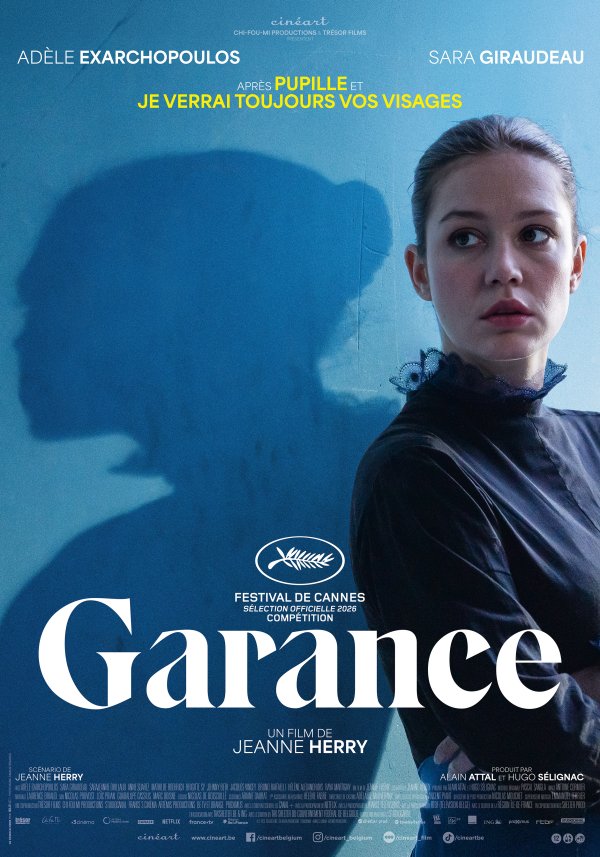
Lead photo credit : "Garance" by Jeanne Herry. Photo: Marie-Camille Orlando
More in Adèle Exarchopoulos, French film
Related Articles