In Conversation with Chef Gaylord Merlet of Liquide Paris
- SUBSCRIBE
- ALREADY SUBSCRIBED?
BECOME A BONJOUR PARIS MEMBER
Gain full access to our collection of over 5,000 articles and bring the City of Light into your life. Just 80 USD per year.
Find out why you should become a member here.
Sign in
Fill in your credentials below.
Of all the restaurants, in all of Paris, in all of France, I happened to fall in love with Liquide. I could blame it on the surprise oysters, wrapped in bacon and lightly seared on the grill, swimming in citrusy sauces with hints of soy and sesame. Or perhaps on the truite en crôute (trout in puff pastry) I still daydream about, a dish that gives any beef Wellington some serious competition. But it would be unfair to pick just a dish or two, when everything coming out of Liquide’s kitchen is worthy of applause.
The man behind the magic is Gaylord Merlet, a young chef who got his training in fine establishments in Brittany and Paris, and rose to the podium of prestigious competitions such as Un des Meilleurs Apprentis de France (2014) and Concours Création & Saveurs (2019). Now at the helm of his own kitchen, he is opening up about what it means to find his culinary style, the influences that have shaped his cooking, and what makes a restaurant experience memorable.
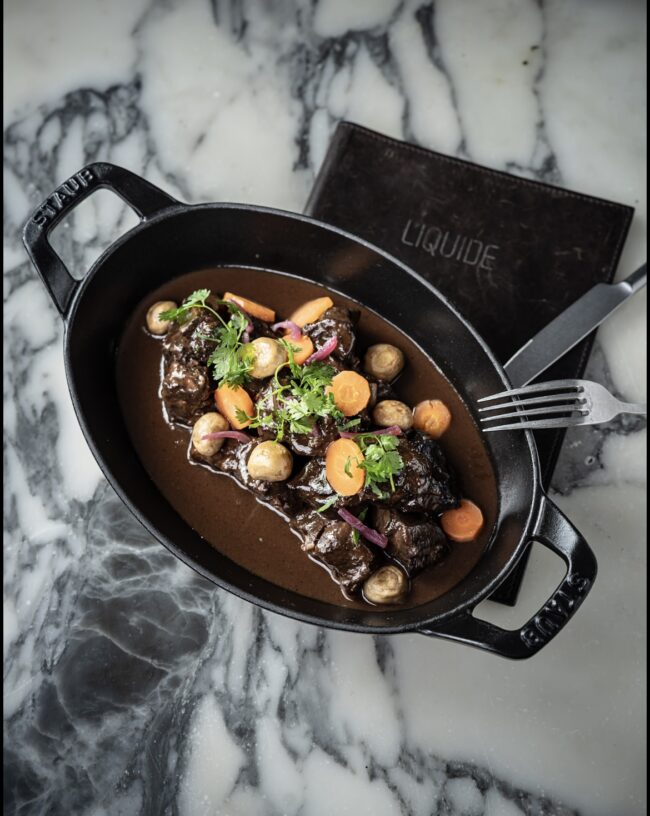
Liquide Paris. Photo credit: Ilya Kagan (@ilyafoodstories)
You trained and worked in some refined, technique-focused kitchens (2-Michelin-starred Anne de Bretagne in La Plaine-sur-Mer, 1-Michelin-starred Substance in Paris). What changed in the way you think about cooking after moving to the more convivial world of Liquide?
Technique remains important to me; it is what creates the foundation of my cooking. But at Liquide, I have learned to think more about the client’s immediate pleasure. I can put my technique at the service of cooking that is more generous, straightforward, and above all, convivial. I like a dish to be carefully crafted, but without needing 10 minutes of explanation to understand that it’s good.
Liquide is very much about sharing food and being together at the table. How does that reflect in the way you create a new dish?
I think a lot about what is going to happen at the table before thinking only about the dish itself. Does it make you want to share it? Do you want to taste what’s on your neighbor’s plate? Does it create a moment of conviviality? I like generous dishes, with character, that make you want to take a bite from your neighbor’s plate.
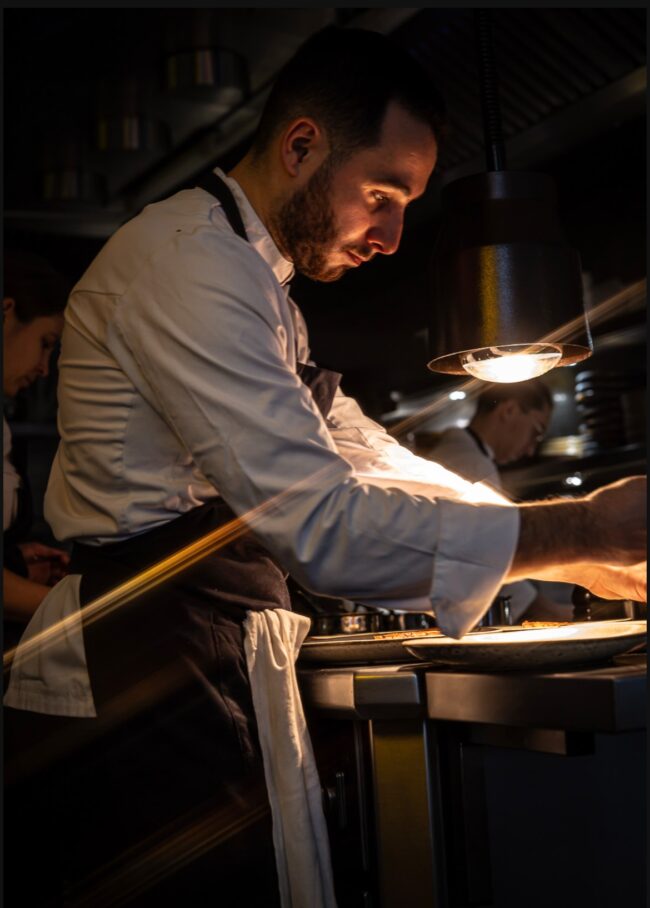
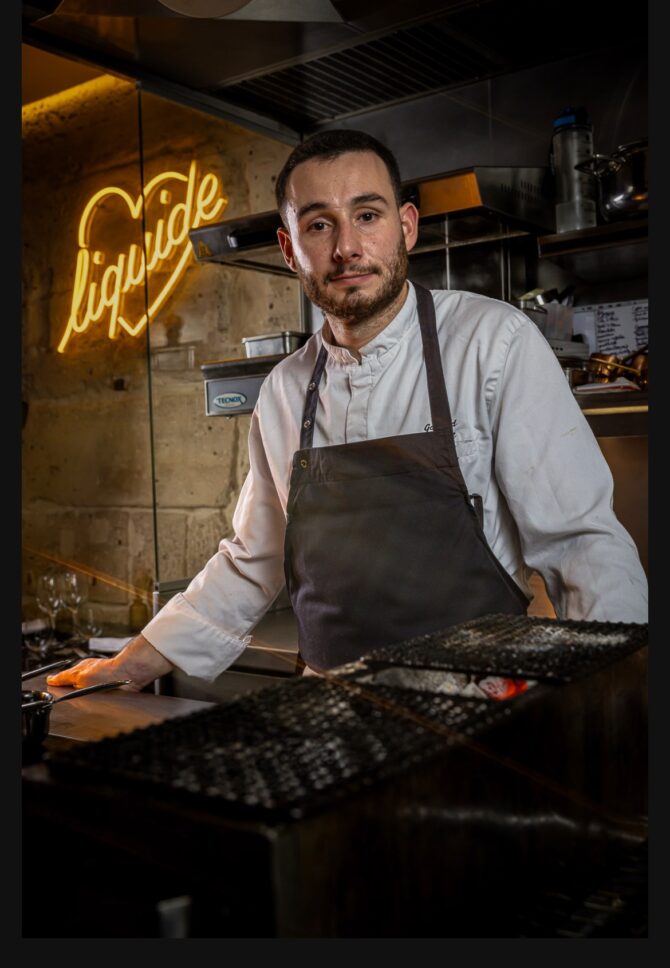
Chef Gaylord Merlet at Liquide Paris. Photo credit: Ilya Kagan (@ilyafoodstories)
You’ve worked alongside chefs and restaurateurs with very strong identities. What have you learned from them that has influenced the way you run your own kitchen?
I learned that there isn’t just one way to be a chef. Each restaurant taught me something: rigor, high standards, organization. Today, I try to keep the best from all those experiences while developing my own way of working.
If I came to Liquide tonight and asked you to choose just one thing from the menu for me to try, what would you choose, and why?
It’s difficult to choose just one! I would recommend the VGE-style scallop dish (duck broth, scallop, foie gras, black truffle, puff pastry). It probably represents my cooking at Liquide better than anything else: tradition, indulgence, and generosity, inspired by Paul Bocuse’s famous VGE soup. It’s the kind of dish I like to send out: it should give pleasure from the very first bite.
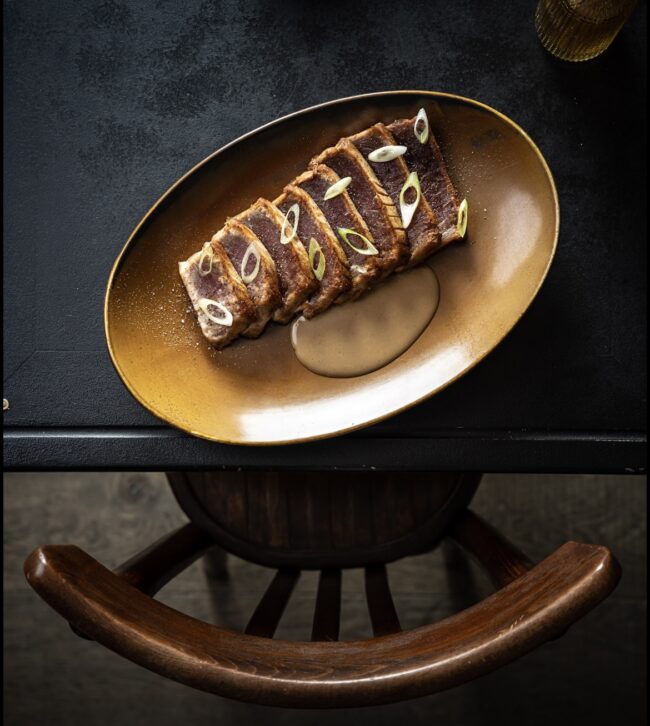
Liquide Paris. Photo credit: Ilya Kagan (@ilyafoodstories)
High-end chefs often have a secret soft spot for the most unpretentious, comforting foods. At the end of a busy Saturday night service, what do you actually want to eat?
After a big service, I generally don’t want to do gastronomy all over again on my plate! I’d rather have something simple, generous, and comforting. A good croque monsieur with aged Comté and a good country loaf.
French cuisine has many traditional dishes that people feel very protective of. Are you reluctant to reinterpret a classic, and if not, how do you decide you’ve pushed it far enough?
No, I don’t hesitate, and in fact, that is the foundation of my cooking today. I like taking the great classics of French cuisine and reworking them. At Liquide, I always have an œuf mayonnaise on the menu, which I make with merguez sausage and trout roe. There is also the leek, with a vinaigrette sorbet, cockles, and samphire.
Clients like to find dishes they know; it’s reassuring, and it can also bring back memories. My goal is to start with that traditional foundation and rework it, modernize it, while preserving what gives the dish its identity.
Ultimately, each of my dishes is built around this traditional French cuisine. For me, that is the foundation: from there, you can evolve it, modernize it, and bring your own personality to it.
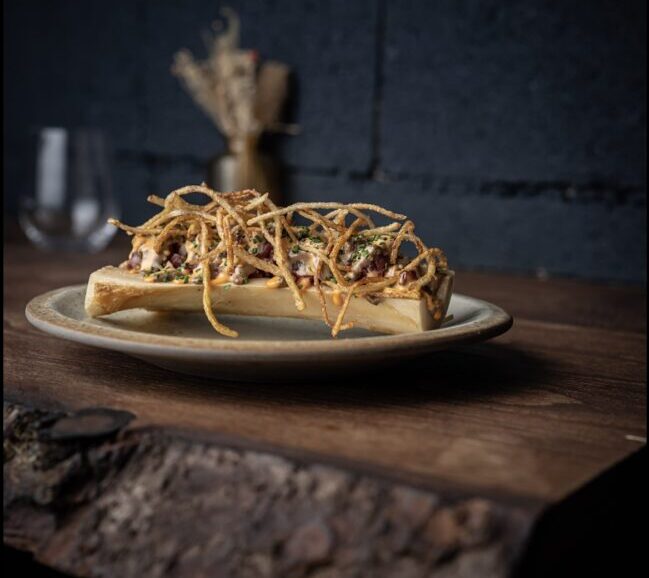
Liquide Paris. Photo credit: Ilya Kagan (@ilyafoodstories)
Liquide has such a strong energy: the noise, the movement, the guests, that large communal table. Can you feel that energy from the kitchen, and does it affect you while you’re cooking?
Absolutely. The open kitchen contributes to that energy: you can feel what is happening in the dining room. The noise, the dishes going out, the customers’ reactions — all of that is part of the service.
That energy pushes me to cook in a fairly instinctive way: it has to be precise, but also generous and lively. And the kitchen team also contributes to that energy. Customers pay attention to the calls announcing the dishes, the plating, everything that is happening in the kitchen. It is part of the spectacle.
Liquide is not a restaurant where you come only to eat; it’s a place where something is happening.
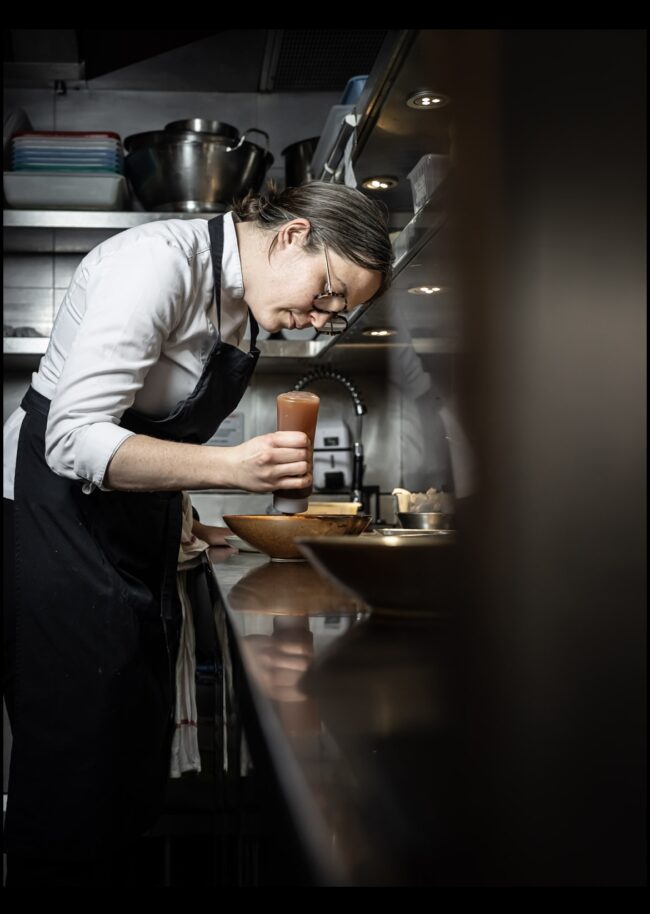
Liquide Paris. Photo credit: Ilya Kagan (@ilyafoodstories)
Paris is an extraordinary place to be a young chef because there is always something new happening. What still makes you curious about your craft?
What I like is that you can always keep learning. A new restaurant, a producer, an ingredient, a technique, a combination of flavors… There is always something to discover. And after 14 years in the kitchen, I think it’s important to keep that curiosity and never feel that you’ve seen everything the profession has to offer.
At what point did cooking stop being simply something you were learning and become an integral part of your identity?
I think it happened fairly quickly. I was lucky, from my very first experience at age 14, to find myself on a team that was passionate about cooking and about the product. It immediately made me want to learn and understand this profession.
Over the years, through different restaurants, services, and responsibilities, cooking has become a true way of life. Today, even when I’m not in the kitchen, I’m thinking about what I could create: an ingredient, an idea, or a combination.
I think that’s when you realize that cooking has truly become part of who you are.
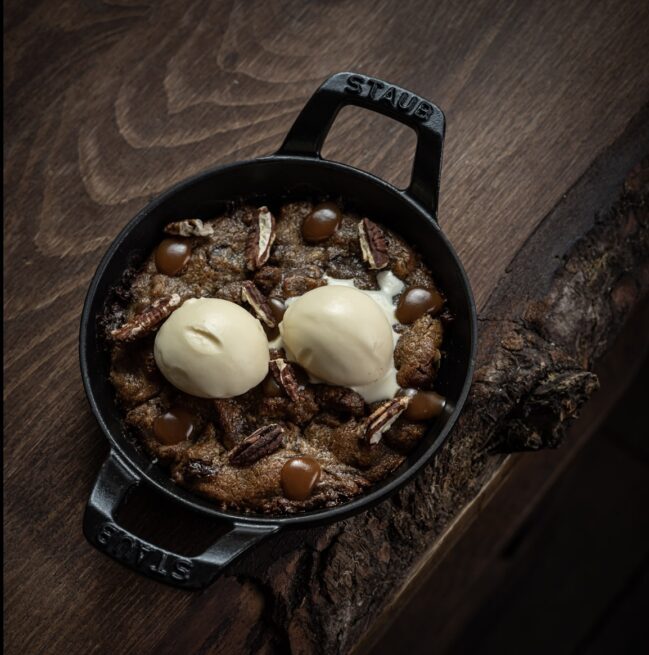
Liquide Paris. Photo credit: Ilya Kagan (@ilyafoodstories)
When someone leaves Liquide after spending an evening there, what do you hope they remember about the experience, and about you as a chef?
Above all, I’d like them to have had a good time. To have eaten well, discovered new things, but above all, to have the desire to come back. I’m not necessarily looking for a guest to leave thinking that they have just witnessed a technical demonstration. I’d rather they simply think: “I had a great evening and I ate really well.”
DETAILS
Liquide
39 Rue de l’Arbre Sec, 1st arrondissement
Tel: 01 42 36 50 05
Closed Sunday and Monday
Lunch: 12noon- 1:30pm. Dinner: 7-9:30 pm
Weekday lunch menu: 32 euros/ three courses
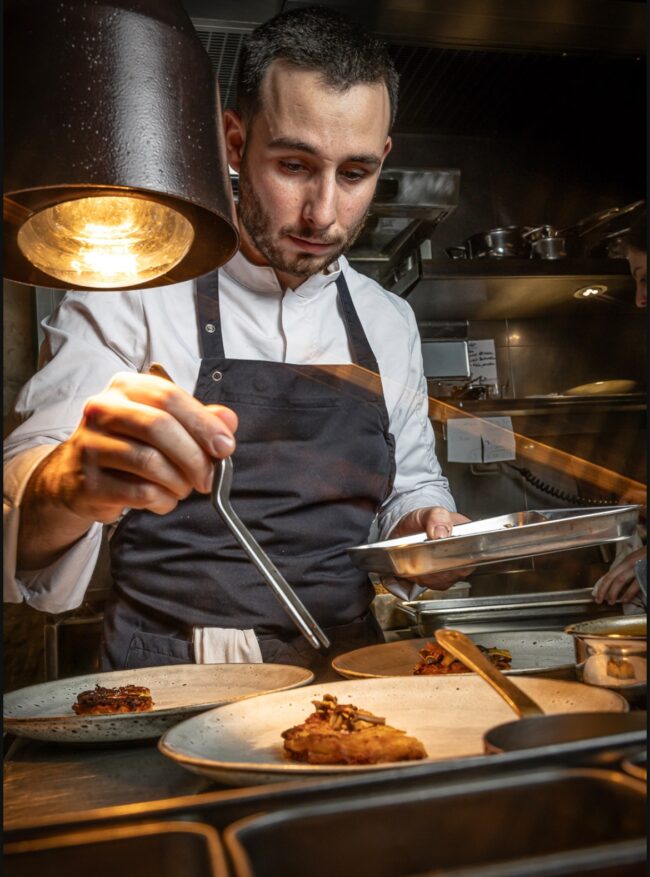
Chef Gaylord Merlet at Liquide Paris. Photo credit: Ilya Kagan (@ilyafoodstories)
Lead photo credit : Chef Gaylord Merlet at Liquide Paris. Photo credit: Ilya Kagan (@ilyafoodstories)
Related Articles