16th: Trocadero, Bois de Boulogne

Paris - 16th Arrondissement

If arrondissements were women, the 16th would be the exquisite Catherine Deneuve—cool, with that certain je ne sais quoi, wearing Chanel, pearls and sipping Veuve Clicquot Champagne. Being haute residental, most people tend to ignore this arrondissement's tourist side—and for the most part, that's understandable. But if you've already been to Paris once, the 16th might be the next best arrondissement to explore.

In order of most-interesting on down, we recommend: the Trocadéro (with the gorgeous horse sculptures fountain and straight-on view of the Eiffel Tower from directly across the Seine); a stroll past chic boutiques on Avenue Foch and up to place de l'Étoile to garner a different view of the Arc de Triomphe; the Bois de Boulogne (where one can go horseback riding, play tennis, even camp); Palais de Chaillot, Maison de Balzac, Musée de l'Homme, Musée du Vin, Musée Marmottan-Monet, Palais de Tokyo, Musée du Cristal de Baccarat, Cimetière de Passy, Musée de la Contrefaçon, and Musée du Cinéma Henri Langlois. Stay tuned for more. There's money here, so the Paris 16th will always hold the new best thing taking place.

Destinations in the 16th: Trocadero, Bois de Boulogne

  • Avenue Foch

    (Tuesday, 22 July 2008)
    This roadway is the widest in Paris and runs from the Arc de Triomphe to the Porte Dauphine in Bois de Boulogne. It is beautiful, tree-lined, and quite possibly one of the most expensive streets in Paris both to shop and live on.
  • Bois de Boulogne

    (Tuesday, 22 July 2008)

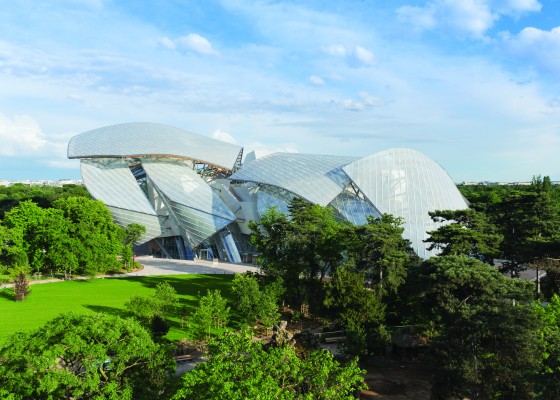
    Bois de Boulogne is by far the largest park in Paris. It is over half the size of New York City’s Central Park and almost triple London’s Hyde Park. During the daylight hours it is filled with fun for the whole family including an amusement park, beautiful gardens like d’Acclimation and the chateau. However, come nightfall, it turns into one of Paris’ hottest red light districts.

  • Cimitiere de Passy

    (Tuesday, 22 July 2008)
    By order of Napoleon I, all cemeteries in the 19th century were to begin using new plots on the outskirts of the city, including Passy. There are many notable (and noble) citizens buried here including many members of the Russian Romanov dynasty, Edouard Manet (artist), Madeleine Renaud (actress), and Pearl White (American silent film star).
  • Guimet Museum (Musée national des Arts asiatiques-Guimet)

    (Friday, 26 June 2009)

    The Guimet Museum houses one of the largest collections of Asian art outside of Asia, and is a must-see in Paris for the beauty of its art and simplicity of its displays. Located in the 16ème arrondissement, it receives far fewer visitors than central staples like the Louvre or Orsay museums, making it possible to view the exhibits serenely and unrushed, a true luxury in Parisian museums of this quality (indeed, many objects come from the Louvre itself when its Department of Asian Art was transferred to Guimet in 1945).

  • Jardin d'Acclimatation

    (Monday, 09 June 2008)

    After seeing all the grownup tourist stops, your children might want to have some-child fun instead. Jardin d'Acclimatation is the perfect place to take them. 

  • Maison de Balzac

    (Wednesday, 03 March 2010)

    After seeing Gerard Depardieu in “Balzac: A Life of Passion”, my wife and I had to make a pilgrimage to the Maison de Balzac in Passy at #47 rue Raynouard.

  • Musee Marmottan-Monet

    (Tuesday, 22 July 2008)

    This gem of a museum is hiding on the western edge of your city map on a quiet street near Bois de Boulogne.  The scope of the collection is similar to that of the Orangerie, thus providing an opportunity to see some fantastic works of art in a setting that’s much less overwhelming than some of Paris’ larger museums.

  • Musee de l’Homme

    (Tuesday, 22 July 2008)
    This museum holds the largest collection in France on, well, mankind. It features different sections like anthropology, ethnology, prehistory, and what’s in store for us all in the future.
  • Palais de Chaillot

    (Tuesday, 22 July 2008)
    Recently renovated, this beautiful structured was originally erected in 1937 as a part of the World Exhibition. It still houses the Maritime Museum, the Museum of Mankind, and the National Chaillot Theatre. The renovation added the French Monuments National Museum and Chaillot School to that list.
  • Palais de Tokyo

    (Saturday, 25 July 2009)

    This white building, whose back terrace has a great view of the Eiffel Tower, houses the city’s modern art museum.  Though much smaller than the collection at the Centre Pompidou, the permanent collection of the museum is completely free and absolutely worth a visit.  Many of the big name artists, like Picasso and Matisse can be seen here, as well as some fascinating and lesser-known works.  The permanent collection is perfect for a quiet afternoon indoors.  Unlike the larger museums, the collection is small enough that you could be satisfied seeing everything in an hour or two.  Despite the fact that the museum is free, it seems to remain off the beaten path, so you can look at the art undisturbed by the throngs who crowd Pompidou and others.

  • Palais de Tokyo

    (Tuesday, 22 July 2008)
    Though the building was always there, it was not always the forward thinking Palais de Tokyo. It was opened in 1937 as a part of the World Fair and then closed until 1995. At this time it was renovated and re-opened in 2002 as an international center for contemporary art.
  • Parc des Princes

    (Tuesday, 22 July 2008)
    This park is the very place where athletes end up after the Tour de France. It also hosts many other sporting events, most notably the Racing Club de Paris football team.
  • Statue of Liberty

    (Saturday, 11 July 2009)

    Homesick Americans can get a little taste of their native land in the middle of the Seine, where a scaled-down Statue of Liberty awaits.  This miniature Lady Liberty, on the Allée des Cygnes near the Eiffel Tower was designed by Bartholdi, who designed the American statue, and erected in 1889.  She looks southwest, in the direction of her counterpart in New York.  Walk from Pont Bir-Hakeim to the Quai des Cygnes and walk all the way down to visit the statue.  Some of the Seine boat cruises also circle around the statue, which is a great opportunity to get a photo of Lady Liberty with the Eiffel Tower in the background.

    Metro: Passy (16ème) or Mirabeau

    Address/directions: Allée des Cygnes, walk down Pont Bir-Hakeim to get to Allée des Cygnes and walk to the end of the manmade isle to see the statue; alternatively visit the statue from the Pont de Grenelle, further down on the Seine

  • Trocadero district

    (Tuesday, 22 July 2008)
    This district is a very avant-garde and museum oriented part of Paris. It boasts the Musee de la Mode which has more than 80,000 fashion garments, the Musee d’Art Moderne, and the Palais Tokyo. There is also the Palais de Chaillot which hosts two museums including the Musee de l’Homme, dedicated to mankind. The softer side of the district features a lovely marketplace and Jardins du Trocadero which has excellent views of the Eiffel Tower.
Print

POST AC OMMENT


Ask a Question on Bonjour Paris