
The Story Behind Hammams in Paris, and Where to Find the Best
- SUBSCRIBE
- ALREADY SUBSCRIBED?
BECOME A BONJOUR PARIS MEMBER
Gain full access to our collection of over 5,000 articles and bring the City of Light into your life. Just 80 USD per year.
Find out why you should become a member here.
Sign in
Fill in your credentials below.
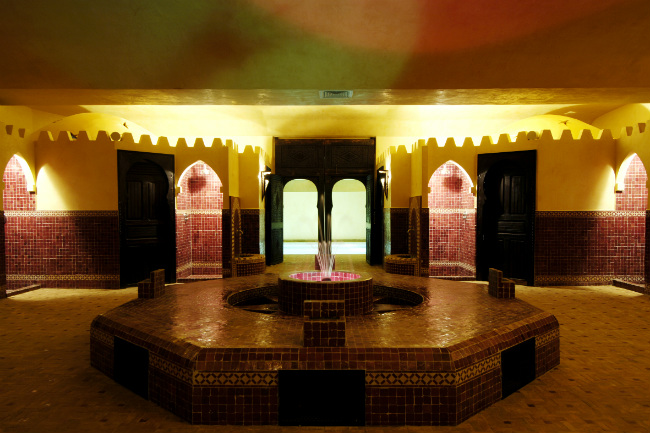
In the heart of Paris, hidden behind ornate doorways and tiled archways, lies a world of warmth and rejuvenation. Often nicknamed the “silent doctor,” the hammam has long been cherished for its power to heal without medicine. A sanctuary where steam and scent work together to restore balance and vitality. In North Africa, hammams have been a centuries-old tradition, valued not only for cleansing the body but also as a social and spiritual ritual. When Paris turns gray and cold, stepping into a hammam feels like being transported somewhere sunlit and serene, easing everything from fatigue to winter chills. And if you’re fighting off a sniffle, this ancient ritual might just be the most luxurious way to cleanse and recover. Today, the hammam endures in Paris as both a wellness retreat and a living bridge to the city’s North African heritage.
The hammam’s story in Paris begins in the early 20th century, when communities from North Africa, particularly from Algeria, Tunisia, and Morocco, brought with them their traditions of wellness and community. These steam baths, modeled after the Ottoman and Roman bathhouses, were first built to serve North African communities in Paris who longed for the familiar comforts of home.
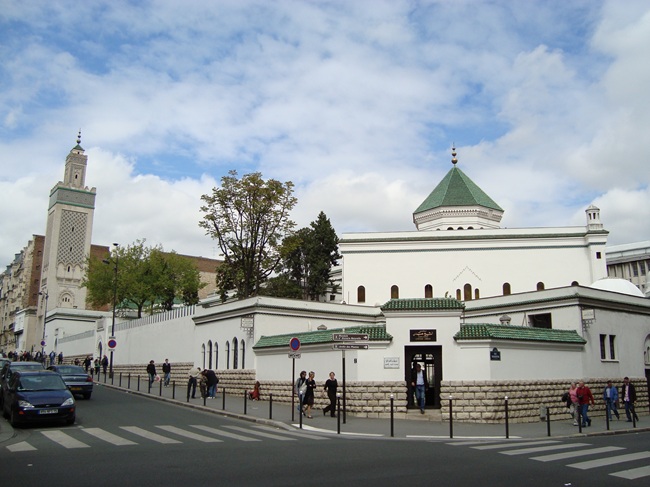
Grande Mosquée de Paris. Photo: LPLT – Own work/ wikimedia commons
What began as a functional place for bathing and ritual purification soon became something much deeper: a space of connection, solidarity, and continuity for those living far from their native lands. By mid-century, these hammams attracted curious Parisians and tourists eager to experience their tranquil rituals. Today, hammams dot the city, each a small universe of warmth and steam linking modern France to its North African past.
The most emblematic hammam in the city lies within the Grande Mosquée de Paris, in the 5th arrondissement. Completed in 1926, the mosque was built as a memorial of the tens of thousands of Muslim soldiers from French colonies who died fighting for France during World War I. Covering 7,500 square meters, the complex includes a madrasa, library, conference hall, Moorish gardens, and, tucked away behind elegant courtyards, a traditional hammam and tearoom.
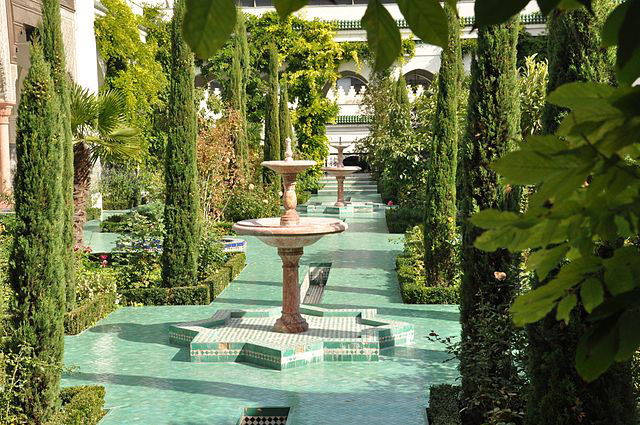
Fountains and courtyard garden in the Grande Mosquée de Paris. Photo: Marc Cooper/ Wikimedia Commons
The hammam here remains one of the most atmospheric in Paris. Under domed ceilings and beneath blue-and-white tiles, clouds of steam carry the scent of black soap and rose water. After the purifying rituals, visitors are invited to linger with a glass of sweet mint tea in the sunlit courtyard. This space embodies calm within just steps of the Jardin des Plantes.
In the lively neighborhood of Barbès-Rochechouart, Hammam Bains Vapeurs offers a more down-to-earth experience reminiscent of the true Maghreb. Adorned with marble and softly lit rooms, it’s one of the few hammams in Paris that welcomes both men and women, with separate spaces for each. Locals have been returning here for decades, drawn by its modest prices, generous hospitality, and the sense of community. After a long steam and a vigorous black soap scrub, guests can recline in the spacious relaxation lounge – perhaps sharing mint tea or quiet conversation as the city hums outside.
Across the Seine, in the elegant 6th arrondissement, Hammam Pacha has been a holistic haven for women since its founding in 1988 by Tunisian entrepreneur Georges Nataf who created it in homage to his mother and his own childhood memories of hammam visits in Tunisia. Visitors can also enjoy a leisurely meal in the adjoining restaurant serving organic food, where fragrant tagines and pastries complete the experience. A delicious journey to Morocco without leaving Saint-Germain-des-Prés!
Run by four Moroccan women – Wafae, Sovad, Fatiha, and Zineb – in the 2nd arrondissement, Aux Bains Montorgueil radiates warmth and care. For them, “happiness is a lifelong affair,” and each massage or scrub is given with heartfelt generosity. Raised with Morocco’s sacred tradition of the gommeuse, this women-only hammam offers a nurturing refuge from the city’s chaos, soothing body, spirit, and soul.
The hammam has long been woven into daily life across the Middle East and North Africa. A place where generations gather to rest, recharge, and reconnect. In Paris, these steam-filled sanctuaries carry that same spirit, highlighting the many cultural layers of the city. To step into a hammam is to feel warmth in every sense. The warmth of the water of course, but also of connection.
View this post on Instagram
Lead photo credit : Photo courtesy of Les Cent Ciels
Related Articles



By Poppy Pearce